

Tube Filling Sealing Machine
In many packaging environments, filling and closing tubes is a critical step that directly affects product appearance, dosing consistency, and downstream handling. For manufacturers working with creams, gels, pastes, ointments, or liquid formulations, a Tube Filling Sealing Machine helps combine dosing and end sealing into one controlled process.
This category covers equipment used for plastic and metal tube packaging in cosmetic, chemical, and similar production workflows. Depending on the tube material, product viscosity, target output, and level of automation, buyers can compare manual, semi-automatic, and fully automatic solutions for both standalone use and integration into a broader packing line.
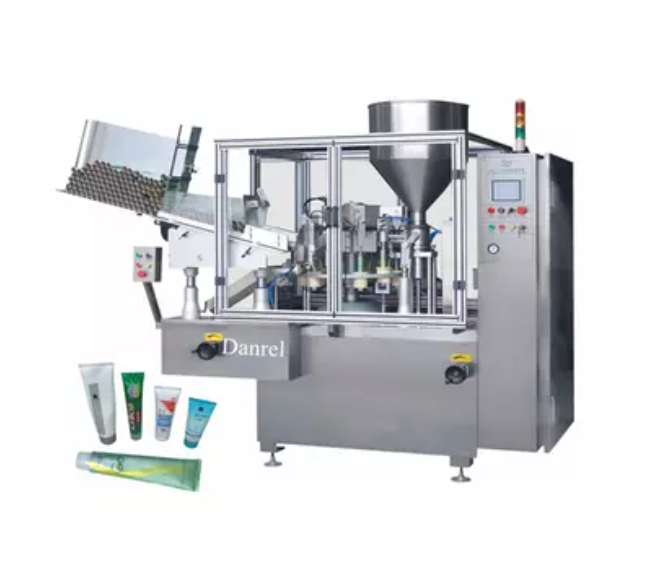
Where tube filling and sealing machines fit in production
Tube packaging is widely used when a product needs convenient dispensing, clean presentation, and reliable closure. Typical operations include product filling, tube positioning, sealing, and in some cases coding or finishing, making these machines relevant for repeatable packaging tasks where manual handling would limit throughput or consistency.
In a complete packaging workflow, this equipment often sits between upstream product preparation and downstream end-of-line steps. After tubes are filled and sealed, products may move toward a labeling machine or final carton handling, depending on the packaging format and line layout.
Plastic tube and metal tube applications
One of the key distinctions in this category is the tube material. Plastic tubes are commonly sealed using ultrasonic sealing or related methods suited to soft tube packaging, while aluminum or other metal tubes typically require a different mechanical sealing approach designed for fold-and-close tube ends.
This is why the category includes both plastic tube filling and sealing models and machines designed for aluminum tube packaging. Choosing the right machine family starts with the tube material itself, because sealing method, tube handling, and compatible product flow all depend on that basic packaging decision.
Manual, semi-automatic, and fully automatic options
Not every production environment needs the same level of automation. Smaller operations, pilot production, or flexible low-volume runs may prefer compact equipment that is easier to set up and operate. For example, the Danrel DR-2012T manual ultrasonic plastic tube sealing machine is suited to basic sealing tasks, while the Danrel DR-2012TF adds semi-automatic filling and sealing functions in a bench-top format.
For higher output requirements, automatic systems become more relevant. Models such as the Danrel DR-2018T and Danrel DR-2020T are designed for more continuous tube processing, with filling and sealing integrated into an automated workflow. On the metal tube side, the Danrel DR-FALG60, DR-FALG80, and DR-SALG40 illustrate how automation levels can also vary for aluminum tube applications.
Key selection criteria before you buy
When comparing a tube filling and sealing system, start with the product itself. Viscosity, target fill volume, and required filling precision influence machine configuration and pump style. Tube dimensions also matter, including diameter and height range, because the machine must match the physical format used in production.
Output expectations are equally important. Some machines in this category are intended for around 10 tubes per minute, while others support significantly higher throughput. Buyers should also review power supply, pneumatic requirements, working pressure, and the available footprint on the shop floor, especially when moving from bench-top equipment to larger automatic units.
It is also worth considering how the machine will fit into the next packaging stages. If sealed tubes are packed into retail or shipping formats, related equipment such as a carton sealer or a case packer may become part of the wider line planning.
Examples from the Danrel range
Danrel is the main featured manufacturer in this category, with equipment covering multiple tube packaging needs. For plastic tubes, the range includes ultrasonic sealing machines from manual and semi-automatic versions to automatic fillers with broader filling ranges and higher productivity. This gives buyers a practical path when scaling from laboratory, workshop, or small-batch production to more demanding output targets.
The category also includes specialized formats. The Danrel DR-2015T is oriented toward liquid filling with a peristaltic pump configuration, while the Danrel DR-2013T offers a five-in-one soft plastic tube sealing concept. For metal tube packaging, models such as the DR-FALG60, DR-FALG80, and DR-SALG40 address aluminum tube filling and sealing requirements where the tube material and closure method differ from standard plastic tube processes.
Another example is the Danrel GF-400L automatic plastic tube filling and sealing machine, which reflects the role of larger automatic equipment in production settings that need repeatable filling accuracy and adjustable output. Rather than focusing only on machine names, the more useful approach is to match each model type to the actual tube material, output level, and operating style needed on site.
How to compare machine suitability in real projects
For practical sourcing, it helps to think in terms of application scenarios. A small business launching a cream or gel product may prioritize a semi-automatic machine that balances cost, ease of use, and acceptable throughput. A higher-volume packaging line may instead need automatic indexing, larger hoppers, and more stable continuous operation.
Maintenance and operator workflow should also be reviewed early. Pneumatic drive requirements, cleaning access, product changeover, and control interface style can all affect day-to-day usability. In B2B purchasing, the right choice is rarely the machine with the largest specification set; it is the one that aligns with the actual package format, production rhythm, and downstream process.
Related packaging equipment around this category
Tube filling and sealing is often only one part of a broader packaging sequence. Depending on the finished product format, companies may also look at equipment for blister presentation, retail packing, or transport packaging. If your project includes secondary packaging, exploring a blister packing machine category can help clarify whether the product will move into an alternative or complementary pack style.
For shipping preparation, some lines may also combine sealed tubes with case forming and end-of-line packing equipment. Looking at the process as a system rather than a single machine often leads to better layout planning, smoother material flow, and fewer compatibility issues later.
Choosing the right category for your packaging process
This category is intended for buyers who need a clear starting point for tube-based packaging equipment, whether the requirement is simple plastic tube sealing, integrated filling and sealing, or automated handling of aluminum tubes. The available range supports different production scales and packaging materials without forcing every application into the same machine format.
If you are comparing options, focus first on tube material, fill range, required throughput, and the level of automation your operation can realistically support. With those points defined, it becomes much easier to narrow the selection and identify a machine that fits both current production and future line expansion.
Types of Tube Filling Sealing Machine (11.000)
-
-
-
-
-
-
-
-
-
-
-
-
-
-
-
-
-
-
-
-
-
-
-
-