

Labeling machine
Clear and consistent labeling is a small step in the packaging process, but it has a direct impact on traceability, product identification, warehouse handling, and downstream logistics. For many production lines, the right labeling machine or dispensing solution helps reduce manual work, improve placement consistency, and support smoother packing operations.
This category brings together equipment used to prepare, dispense, and create labels for industrial and commercial workflows. It is relevant for businesses that need faster label handling on packing benches, semi-automatic workstations, or integrated packaging environments where speed, repeatability, and label compatibility matter.
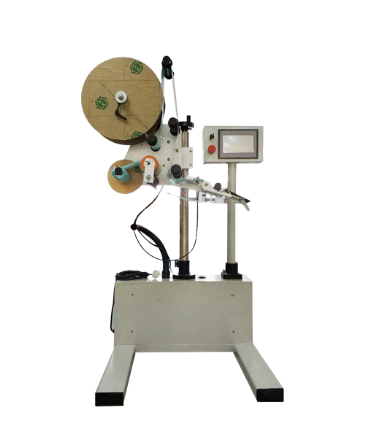
Where labeling equipment fits in the packing process
In practical use, labeling equipment supports more than one task. Some devices are designed to peel and present labels for manual application, helping operators work faster and more consistently. Others are used to prepare film or tape materials to a defined length, while desktop electronic labellers are suitable when labels must be created on demand for identification, inventory, or internal process control.
Because labeling is closely connected to end-of-line packaging, this category is often considered alongside equipment such as carton sealing systems or broader case packing equipment. In many facilities, these tools work together to create a more organized and efficient packaging flow.
Typical types of equipment in this category
A common solution is the label dispenser, which automatically separates the label from its liner and presents it for quick pickup. This is useful in production, warehousing, electronics, food packaging support tasks, and many other environments where repeated hand labeling would otherwise slow the process.
Examples in this category include compact units such as the FUMA 1150D Automatic Label Dispenser and the TEKI Q120 Label Dispenser, as well as broader-capacity models from Yaesu and Cab. These products illustrate the range available for different label widths, roll sizes, feed speeds, and installation preferences.
There are also orientation-specific dispensers. Cab HS Label Dispensers are designed for horizontal dispensing, while Cab VS Label Dispensers are built for vertical dispensing. That distinction can matter when the operator’s workflow, label presentation direction, or available installation space affects how labels should be delivered at the workstation.
Label dispensers for repetitive manual application
For operations that still apply labels by hand but need better consistency, an automatic dispenser is often the most practical choice. Instead of peeling labels manually, the operator receives each label ready for application. This can improve throughput, reduce handling time, and help maintain a more uniform process in repetitive tasks.
Several Yaesu models in this category show how selection can be matched to label dimensions and operating requirements. The Yaesu LDX-60, LDX-120, and LDX-180 cover different usable width ranges, making them suitable for anything from relatively narrow labels to larger formats. Feed speed control and roll capacity can also influence which unit fits best in a given production setup.
For users comparing manufacturers, pages for Yaesu and Cab can provide a broader view of available equipment families. This is especially useful when standardizing by brand, maintenance approach, or preferred operating style.
Film dispensers for cut-to-length material handling
Not every application in a labeling workflow involves pressure-sensitive labels alone. Some packing and assembly processes also require film dispensing with preset cutting lengths, particularly when protective film or similar material must be prepared repeatedly and accurately.
The Yaesu FD-160Ⅲ, FD-200Ⅲ, and FD-300 are examples of film dispensers in this category. These machines are built for controlled feeding and cut length adjustment across a wide range, which can help support repetitive packaging preparation tasks. When material width and target cut length are key decision points, these models show how the category extends beyond simple label peeling.
Desktop electronic labellers for on-demand identification
Some businesses need to create labels at the point of use rather than dispense pre-printed rolls. In these cases, a desktop electronic labeller can be the better fit, especially for asset tags, shelving labels, cable identification, barcode labels, or internal workflow markers.
The BROTHER PT-D400AD Desktop Electronic Labeller is one example for users who need flexible text creation and barcode support in a compact format. This type of device is different from an industrial dispenser: its role is to generate labels as needed, which can be valuable in maintenance departments, warehouses, offices, laboratories, and production support areas.
How to choose the right labeling machine
The best choice usually depends on the actual labeling task rather than the product name alone. Start with the label or material itself: width, length, roll diameter, core size, and whether the media is paper, plastic, textile, or transparent stock. Media compatibility is especially important when working with clear labels or specialized materials.
Next, consider the operating method. A bench-top dispenser for manual pickup may be enough for a small packing station, while higher-volume workflows may need faster feed rates, larger roll capacity, or a specific dispensing direction. If your process involves printing and applying labels as separate stages, it may also be helpful to review a dedicated label application equipment range alongside dispensing devices to clarify which setup fits your line.
Power requirements, machine footprint, and user environment also matter. Compact models can suit limited bench space, while heavier-duty units may be a better fit for continuous use. For B2B buyers, it is often worth checking whether the machine will be used as a standalone workstation tool or as part of a wider packaging sequence.
Applications across industrial and commercial environments
Labeling and dispensing equipment is used across manufacturing, contract packing, warehousing, electronics assembly, retail preparation, and logistics support. In these environments, labels may serve for product identification, barcode tracking, batch control, shipping preparation, internal routing, or simple visual organization.
In a semi-automatic packing setup, a dispenser can speed up repetitive hand application before cartons move to sealing or case handling. In smaller operations, a desktop labeller may support flexible, low-volume identification tasks without requiring pre-printed stock. The category therefore covers both production efficiency and day-to-day operational labeling needs.
Finding a solution that matches your workflow
This range is best approached by matching equipment type to process need: dispensing pre-made labels, cutting film to length, or creating labels on demand. Models from FUMA, TEKI, Yaesu, Cab, and BROTHER show that different workflows require different machine formats, media handling capabilities, and levels of operator interaction.
When selecting a labeling solution, it helps to look beyond headline dimensions and focus on how the device will be used each day. A well-matched machine can simplify repetitive work, support cleaner packaging operations, and make labeling more reliable across the full packing process.
-
-
-
-
-
-
-
-
-
-
-
-
-
-
-
-
-
-
-
-
-
-
-
-