

Blister Packing Machine
In many retail and industrial packaging workflows, the final presentation of a product matters just as much as protection during transport. A Blister Packing Machine is used to seal formed plastic blisters to backing cards or compatible materials, helping manufacturers create packaging that is organized, visible, and tamper-evident for a wide range of small goods.
This category is relevant for businesses packaging hardware items, consumer accessories, tools, and other products that benefit from clear display packaging. Whether the requirement is a compact manual setup for small batches or a more automated machine for higher throughput, the equipment in this range supports different production scales and sealing methods.
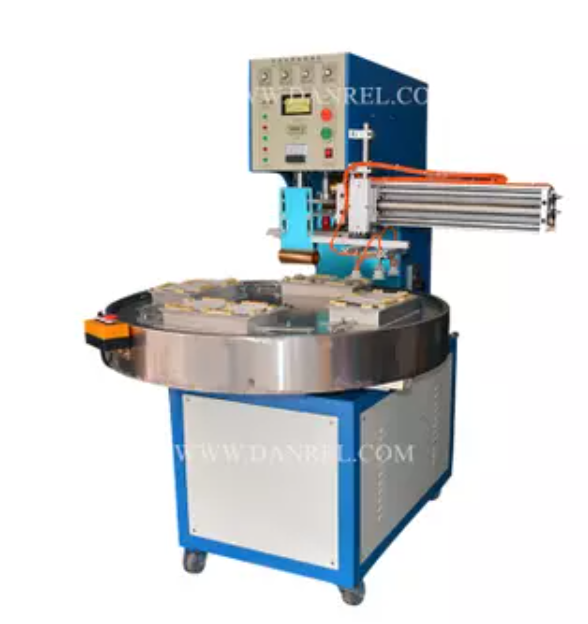
Where blister packing machines fit in a packaging process
Blister packaging is commonly used when products need to be presented clearly while remaining fixed in position and protected from handling. In practical production environments, these machines are often part of a broader packaging workflow that may also include product identification, carton handling, and end-of-line packing.
For companies building a more complete line, it can be useful to review related equipment such as labeling machines for product information and traceability, or a carton sealer when finished blister packs are grouped into shipping cartons.
Common machine types in this category
This category includes several equipment styles, from manual and semi-automatic systems to higher-frequency sealing and cutting machines. The right configuration depends on packaging material, desired output, product size, and the level of operator involvement acceptable on the production floor.
For example, the Danrel DR-50 Manually Paper Cards Blister Packing Machine is suited to operations that need a straightforward format for card-based blister sealing with manual or auto-assisted operation. For smaller hardware packaging tasks, the Danrel DR-2030 Small Blister Packing Thermal Sealing Machine For Hardware reflects a more application-focused approach where compact sealing formats are important.
High-frequency sealing for demanding blister applications
Some blister packs require more than simple thermal contact sealing. High-frequency sealing is especially relevant when working with materials such as PVC or PET in applications where a clean seal, repeatability, and integrated forming or cutting actions are important to the packaging result.
Models such as the Danrel DR-S8KW, DR-S12KW, and DR-S15KW blister package sealing high frequency welding cutting machines illustrate this part of the category. These machines are better understood as part of a sealing and welding process rather than basic tabletop packaging, making them relevant for manufacturers that need stronger process control, larger electrode areas, or more robust production capability.
Another example is the Danrel DR-T10 HF Blister Package Heat Sealing Machine, which combines high-frequency operation with a larger plate format. In practice, this type of equipment may be considered when seal area, cycle consistency, and compatibility with specific blister packaging formats are part of the selection criteria.
Rotary table and multi-station solutions for higher throughput
When output expectations increase, machine layout becomes a major factor. Rotary table and multi-station designs help distribute loading, sealing, and unloading steps more efficiently, reducing idle time and improving rhythm in repetitive production work.
The Danrel DR-T5KW-3S Turntable High Frequency PVC Blister Packing Machine and the Danrel DR-T5KW-4S Automatic Rotary Table High Frequency Blister Sealing Machine Cards with Unloader are good examples of this approach. Compared with simpler machines, these configurations can better support continuous operator flow and more stable cycle timing, especially where packaged products follow a repeatable format.
For businesses planning a broader automated packing setup, a blister sealing stage may also connect naturally with upstream and downstream equipment such as an auto case erector or a case packer, depending on how finished packs are collated and shipped.
How to choose the right blister packing machine
Selection usually starts with the packaging format itself. Buyers should review the blister dimensions, backing card size, product shape, and whether the process requires simple heat sealing or high-frequency welding and cutting. Plate size, electrode area, working stations, and operating mode all influence how well a machine fits the actual production task.
Production volume is another key factor. A manual or semi-automatic unit may be suitable for short runs, product changes, or smaller operations, while a high-speed automatic machine such as the Danrel DR-50 C High Speed Automatic Blister Packing Machine is more aligned with repeat production where output consistency matters over long shifts.
Utilities and installation conditions should also be checked early. Power supply, pneumatic requirements, available floor space, and operator access all affect implementation. In many B2B environments, machine choice is not only about speed, but also about how smoothly the equipment integrates into an existing packaging cell.
Danrel solutions in this category
Danrel is the main featured manufacturer in this category, with a range covering manual blister card sealing, rotary table systems, thermal sealing equipment, and high-frequency blister package welding machines. This gives buyers a useful spread of options for comparing machine structure and operating style within one brand context.
Rather than focusing only on one machine type, the range supports multiple packaging needs, from simpler card sealing tasks to more specialized PVC and PET blister processes. That makes the category practical for buyers who are still defining whether they need a basic workstation, a turntable format, or a more advanced sealing and cutting setup.
Typical application considerations
Blister packaging equipment is often selected for products that are relatively small, need front-facing display, or benefit from fixed positioning in retail-ready packs. Hardware items are one clear example, but the broader use case is any packaged product where visibility, seal integrity, and organized presentation are important.
In real purchasing decisions, the best machine is usually the one that balances material compatibility, cycle rate, operator workflow, and packaging consistency. That is why it helps to compare not just output figures, but also machine format, sealing method, and how each system will perform in daily production conditions.
Final thoughts
This Blister Packing Machine category is designed for buyers looking at practical sealing equipment for blister card packaging, from compact manual systems to larger high-frequency and multi-station machines. Reviewing the packaging material, target output, and level of automation required will make it easier to narrow the right option.
If your operation is expanding from a standalone sealing machine into a more complete packaging line, this category also sits naturally alongside related end-of-line equipment. A careful comparison of machine type and workflow requirements will usually lead to a more reliable and efficient packaging process over time.
-
-
-
-
-
-
-
-
-
-
-
-
-
-
-
-
-
-
-
-
-
-
-
-