

Tape cutting machine
Fast, repeatable tape preparation matters in packaging, assembly, electronics, and many light industrial workflows. When operators need consistent cut lengths, cleaner handling, and less manual effort, a tape cutting machine helps standardize the process and reduce variability across shifts.
This category brings together equipment designed to feed, measure, and cut tape for production or packing tasks. From compact bench units for narrow tapes to larger systems built for wide protective film and other roll materials, these machines support more efficient material dispensing in workstations and packing lines.
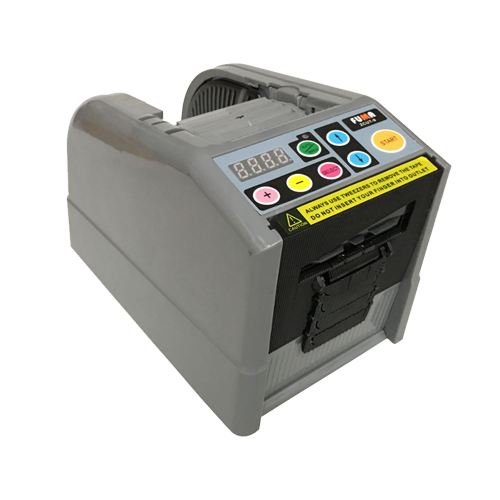
Where tape cutting machines are used
Automatic and semi-automatic tape dispensers are commonly selected for environments where operators must prepare many pieces of tape at the same length. Typical use cases include carton preparation, protective film cutting, electronics assembly, insulation work, and general-purpose packaging operations.
Compared with manual cutting, these systems help improve length consistency, reduce wasted tape, and keep the workstation more organized. In practical terms, that can make a difference in repetitive jobs where throughput and presentation both matter.
Common machine types in this category
The category covers several equipment formats rather than one single machine style. Compact desktop units are often suitable for narrow to medium tape widths, especially when fast setup and simple operation are priorities. Larger-format machines are typically chosen when working with wider materials such as protective film or broad rolls used in packing and surface protection.
Some models emphasize straightforward dispensing for standard packaging tape, while others are better suited to a broader range of materials such as cloth tape, double-sided tape, foil-based tape, or film. If your process sits within a wider packing workflow, related equipment such as a carton sealer or labeling machine may also be relevant when planning line efficiency.
Representative products and size range
For compact applications, models such as the Yaesu ZCUT-870 and Yaesu ZCUT-10 illustrate the kind of machines used for shorter cut lengths and narrower tape widths. These are well aligned with bench-top tasks where operators need repeatable output without a large machine footprint.
For broader width handling, the Yaesu XCUT and YCUT series show how the category extends into medium and wide-format tape dispensing. Examples such as the Yaesu XCUT-150, XCUT-300, YCUT-300, and YCUT-500 are aimed at processes that need longer programmable cuts or support for wider rolls. For smaller automatic cutting tasks, the FUMA ZCUT-9GR and Ezmro RT-3000 provide additional options for day-to-day production environments.
Brand preference often depends on workflow, available space, and the tape material being used. This page includes products from Yaesu, along with selected models from Ezmro and FUMA, giving buyers a practical range of formats within the same functional category.
What to consider when selecting a machine
The first point is the tape itself: width, thickness, roll diameter, and material type all influence machine compatibility. A unit intended for narrow adhesive tape may not be suitable for wide protective film, foil, or reinforced tape, so matching the machine to the actual consumable is essential.
Next, review the required cut length range and operating mode. Some applications need short, repeated pieces at high frequency, while others need long programmable lengths with either manual trigger or automatic feed. If multiple operators share the machine, simple controls and easy adjustment can be just as important as raw speed.
It is also worth checking footprint, power requirement, and maintenance considerations such as blade access or consumable replacement. In high-mix production, a machine that is easy to set up and reset may improve productivity more than a model that only offers higher maximum capacity on paper.
Material handling and process compatibility
Not all tapes behave the same during feeding and cutting. Paper tape, PP, cloth tape, double-sided tape, aluminum foil tape, copper foil tape, and protective film can each place different demands on the feed path and cutting mechanism. That is why material compatibility should be reviewed together with width and cut length, not as a separate afterthought.
For example, some Yaesu models in this category are positioned for a wide range of usable tapes, while others are more focused on specific tape constructions or backing conditions. The Yaesu ZCUT-9GRRP, for instance, is presented for tapes with backing paper as well as foil materials, which is a different use case from a general packing bench handling standard adhesive tape.
How these machines support packing-line productivity
Even a relatively small tape dispenser can have a measurable effect on workstation rhythm. Operators spend less time estimating lengths or using handheld cutters, and that helps create a more repeatable process. In environments where packing speed matters, reducing small interruptions can improve overall flow.
Tape cutting equipment is often part of a broader packing ecosystem rather than a standalone purchase. Depending on the application, businesses may also review upstream or downstream equipment such as an auto case erector or a case packer to align tape preparation with carton forming and final packing steps.
Choosing between compact and wide-format solutions
Compact machines generally make sense when the process uses narrow tapes, shorter cut lengths, and operator-level dispensing at a bench or cell. They are easier to place, simpler to move, and often suitable for repetitive preparation work in electronics, light manufacturing, and small-parts packing.
Wide-format models are a better fit when handling larger tape widths or protective films that would be inconvenient to prepare manually. These units may take more installation space, but they can support applications where broad material rolls must be cut accurately and repeatedly without slowing the operator down.
Final thoughts
A good tape cutting setup is less about choosing the most complex machine and more about matching tape width, material type, cut length, and workstation needs. Whether the priority is compact bench dispensing or wider-format film handling, this category is intended to help buyers compare suitable solutions from established manufacturers and select equipment that fits the process realistically.
If you are narrowing down options, start with the tape specification and required cut pattern, then compare machine format and operating mode. That approach usually leads to a more reliable fit than selecting by model name alone.
-
-
-
-
-
-
-
-
-
-
-
-
-
-
-
-
-
-
-
-
-
-
-
-