

Belt hole punching equipment
Accurate hole punching plays a bigger role in conveyor performance than many production teams expect. When holes are placed consistently and cleanly on PVC, PU, PVK, or rubber belts, it becomes easier to maintain proper tracking, support stable joining or guiding, and reduce installation errors that can lead to downtime. For operations that rely on repeatable belt preparation, belt hole punching equipment is not just a workshop tool but part of a more reliable conveyor process.
This category focuses on equipment used for pressing, stamping, perforating, and finger punching conveyor belts in industrial environments. It is especially relevant for users working with belt fabrication, belt repair, or custom belt preparation where precision and repeatability matter.
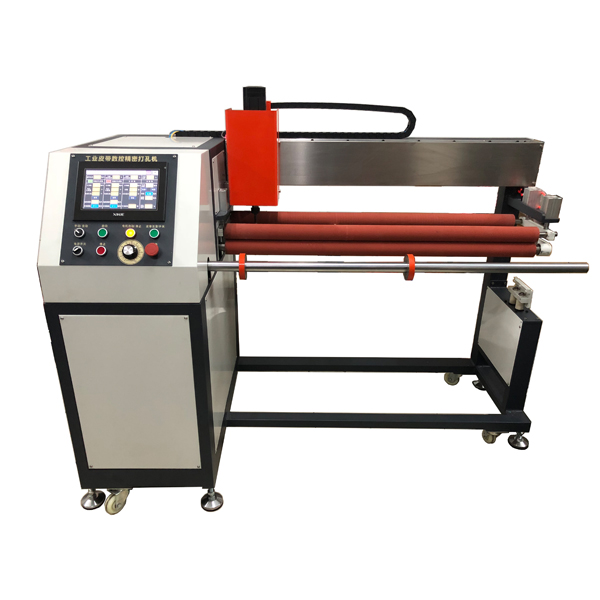
Why precision hole punching matters in conveyor belt work
Misalignment, unstable belt travel, edge wear, and vibration are often treated as problems caused only by rollers or frame structure. In practice, belt preparation also has a major impact. If hole positions are uneven, inaccurately spaced, or poorly aligned during fabrication, the finished belt may run inconsistently even when the conveyor structure is otherwise acceptable.
Using precision punching equipment helps reduce these risks by improving consistency from the start. This is important in both new belt production and maintenance work, where technicians need reliable hole placement for splices, guides, or application-specific belt processing.
Typical equipment covered in this category
This range includes several types of machines and tools designed for different belt processing tasks. Pressing, stamping, and punching tools are suitable for straightforward hole-making operations on conveyor belts, while wide perforating press machines are intended for larger working widths and more demanding production requirements.
The category also includes semi-automatic finger punch machines, which are relevant when finger-style belt preparation is needed. Together, these solutions support a broad set of workflows, from compact bench-level processing to wider and higher-capacity belt fabrication jobs.
Representative Loyicn solutions for different working widths
Loyicn is the main featured manufacturer in this category, with equipment covering multiple belt sizes and processing needs. For example, the Loyicn RLM350, RLM600, RLM900, RLM1200, and RLM1500 series are presented as tools for PVC, PU, and PVK conveyor belt pressing, stamping, or punching. This gives users a clearer path when selecting equipment based on the physical scale of their belt work.
For wider applications, the Loyicn HP1000, HP1500, HP2000, HP2600, and HP3000 models are designed for wide-hole perforating on PVC, PU, and rubber conveyor belts. These machines are particularly relevant where working width, repeatability, and fine hole accuracy are important factors. In addition, the Loyicn SAFP2500 and SAFP3200 semi-automatic finger punch machines support operations that need a more specialized belt-end preparation process.
How to choose the right belt punching equipment
The first selection factor is usually effective belt width. A small workshop handling narrow belts may prefer a more compact punching tool, while larger production or maintenance environments often need a wider perforating press that can support broader belts or customized dimensions.
Material type also matters. This category includes equipment intended for PVC, PU, PVK, and certain rubber belt applications, so buyers should match the machine to the belt material and the type of punching or perforation required. The required hole diameter range, the need for open or endless belts, and the expected production volume should also be considered before choosing a model.
Another practical point is workflow. If your process involves repeated belt preparation with higher throughput, a semi-automatic machine may be a better fit than a basic manual-style tool. If your need is occasional repair or localized punching, a simpler format may be more efficient and easier to integrate into maintenance operations.
Applications in manufacturing, handling, and packaging lines
Belt punching equipment is relevant anywhere conveyor belts are fabricated, modified, or repaired as part of a wider material handling process. This can include manufacturing plants, packaging lines, and facilities where conveyor reliability directly affects throughput and maintenance planning.
In broader end-of-line systems, these machines support the preparation work behind stable conveying and product flow. Companies building or maintaining related equipment may also review categories such as labeling machine systems or a carton sealer setup when designing a more complete packing line around conveyor-based transport.
Reducing misalignment and maintenance issues
One useful way to think about this category is not only as a source of punching machines, but as part of a preventive maintenance strategy. Poorly prepared holes can contribute to installation inaccuracy, uneven stress, and tracking issues over time. By improving consistency during belt preparation, teams can lower the chance of avoidable belt-running problems later in operation.
That does not mean punching equipment replaces inspection of rollers, shafts, or frames. Instead, it supports a more controlled starting point for the belt itself. Combined with routine cleaning, alignment checks, and component inspection, proper punching helps create a more stable conveyor system with fewer interruptions.
What to look for when comparing models
When comparing products in this category, focus on the working size, supported belt application, and how the machine fits your process. Some listed models emphasize compact dimensions for practical handling, while others focus on wider effective belt widths and fine punching accuracy for industrial belt preparation.
It is also helpful to compare whether the machine is intended for open and endless belts, whether it supports a broad hole-size range, and whether the level of automation matches your maintenance or production environment. If your operation extends into automated packing equipment, related categories like auto case erector solutions or a case packer may also be relevant within the same production ecosystem.
Conclusion
Choosing the right conveyor belt punching solution depends on more than just machine size. The best fit usually comes from matching belt material, working width, punching method, and production volume to the actual task on your shop floor. This category brings together practical options for users who need cleaner hole placement, better repeatability, and more dependable belt preparation.
Whether you are handling routine belt maintenance or building a more controlled fabrication workflow, the available equipment provides a useful starting point for improving conveyor consistency. Reviewing the listed models by application and width can help narrow down the most suitable option for your operation.
-
-
-
-
-
-
-
-
-
-
-
-
-
-
-
-
-
-
-
-
-
-
-
-