

Automatic workpiece feeding system
Stable material flow is one of the foundations of an efficient assembly and inspection process. When parts arrive in the right position, at the right time, and in the right orientation, downstream equipment can run more consistently, operators spend less time on manual handling, and overall line balance becomes easier to maintain. That is why many manufacturers evaluate an automatic workpiece feeding system as an important part of production automation rather than a simple transfer mechanism.
In practical production environments, feeding systems help connect stations, reduce repetitive loading tasks, and support smoother interaction between machines, fixtures, and inspection points. This category focuses on solutions used to move workpieces through automated processes where timing, repeatability, and integration matter.
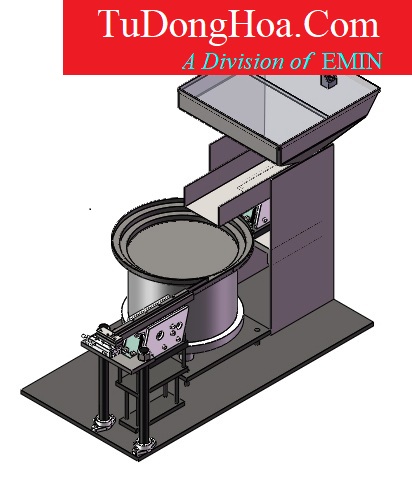
How automatic workpiece feeding supports line performance
In an automated line, feeding is not only about transporting a part from one location to another. It also affects cycle time, equipment utilization, and the consistency of the process at each station. A well-matched feeding system can help minimize waiting time between steps and reduce interruptions caused by manual part presentation.
Depending on the application, the feeding stage may need to coordinate with pick-and-place units, assembly fixtures, inspection devices, or packaging equipment. In broader production layouts, it is often used together with a conveyor system to create a controlled material flow across multiple stations.
Typical applications in assembly and inspection environments
Automatic feeding solutions are commonly used where parts must be supplied in a repeatable sequence for assembly, testing, or quality control. This can include production cells that require parts to be presented one by one, transferred in batches, or positioned for subsequent operations without frequent operator intervention.
In inspection-oriented lines, controlled part feeding becomes especially important because measurement or visual checks depend on stable positioning. When integrated with a vision inspection system, the feeding stage helps ensure that workpieces arrive in a predictable orientation, improving inspection reliability and process continuity.
What to consider when selecting a feeding solution
The right configuration depends on the workpiece itself and on the logic of the production line. Size, shape, surface condition, handling sensitivity, and required throughput all influence how parts should be fed. It is also important to consider whether the process needs singulation, buffering, indexing, accumulation control, or synchronization with upstream and downstream equipment.
Another key factor is integration. A feeding system should fit the available footprint, communication method, and control structure of the line. In many projects, selection is not limited to the feeder alone; it also involves sensors, transfer paths, station timing, and safety requirements. When the process includes loading into specialized cells, related solutions such as an automated production line may provide useful context for larger-scale system planning.
Role within a broader automation ecosystem
An automatic workpiece feeding system often acts as the link between separate process modules. It can bridge manual loading and automatic assembly, stabilize flow before testing, or maintain spacing between parts before packaging. Because of this, the feeder is usually evaluated as part of the full automation workflow, not as an isolated device.
For many manufacturers, the value comes from improved repeatability and easier system coordination. Consistent feeding can support better machine utilization, reduce handling variability, and create a more predictable operating rhythm across assembly and inspection stages. This is particularly relevant in lines where small disruptions at one station can quickly affect total output.
Example equipment within this category context
Depending on the project scope, feeding and transfer functions may also connect to end-of-line operations such as carton handling or packaging preparation. One example from the available product range is the CHALI CX2, a semi-automatic side double belts driving carton sealing machine from CHALI. While it is not a workpiece feeder in the strict sense, it illustrates how handling and movement functions continue beyond assembly into packing-related stages of the production flow.
This kind of equipment highlights an important point: automated lines are made up of connected modules. Workpiece feeding, transfer, inspection, and final handling should be considered together so that each stage supports the next without creating bottlenecks.
Benefits of a well-integrated feeding system
When the feeding stage is properly matched to the process, manufacturers can often achieve more stable operation with less manual adjustment. Benefits may include lower repetitive handling effort, more consistent station loading, and improved process rhythm across the line. These gains are especially relevant in applications where repeatability matters as much as speed.
From a maintenance and operational perspective, a suitable solution can also make troubleshooting easier because the flow of parts becomes more structured and observable. In many cases, clearer part movement helps teams identify where delays occur and where system coordination can be improved.
Choosing with the full process in mind
Evaluating an automatic workpiece feeding system is most effective when it is done in relation to the full production objective. Instead of focusing only on transfer speed, it is worth considering how parts enter the line, how they are presented to each station, and how they leave the process for inspection, assembly completion, or packaging.
For businesses building or upgrading assembly and inspection lines, this category is best viewed as part of a connected automation structure. A feeding solution that aligns with workpiece characteristics, line timing, and downstream requirements can contribute to a more controlled and scalable production process.
-
-
-
-
-
-
-
-
-
-
-
-
-
-
-
-
-
-
-
-
-
-
-
-