
Automate automobile production line
Modern vehicle manufacturing depends on stable throughput, repeatable quality, and tight control across every stage of assembly. When production targets increase and model complexity grows, manufacturers often need a more integrated approach that connects motion control, handling, inspection, and operator support into one coordinated workflow.
Automate automobile production line solutions are designed to improve consistency in high-volume and multi-station manufacturing environments. In practice, this category is relevant for businesses looking to streamline material transfer, reduce manual bottlenecks, and build a more traceable production process from component loading to final inspection.
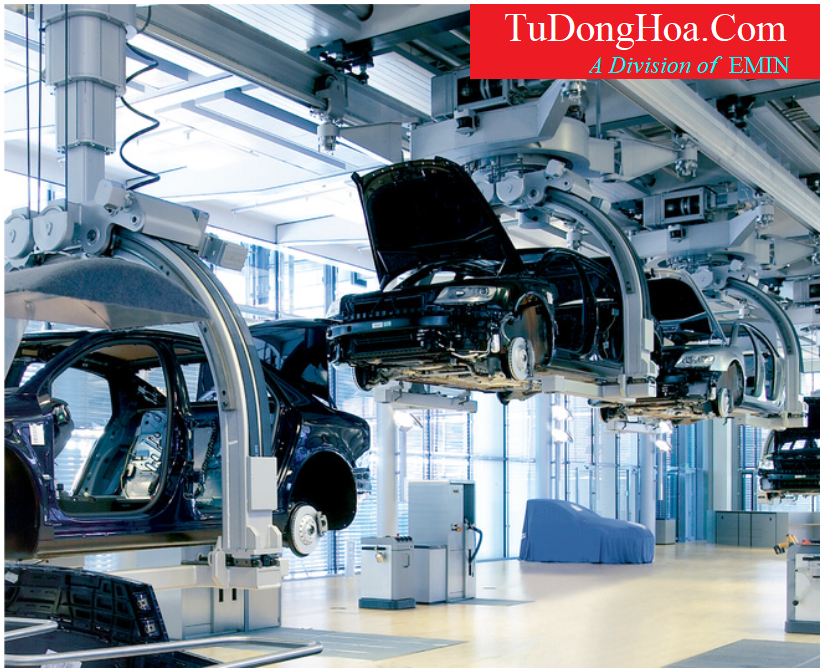
Where automation fits in automotive production
Automotive production lines typically involve many linked operations rather than one isolated machine. Parts must be moved, positioned, assembled, checked, and passed to the next station with minimal interruption. That is why line automation often combines transport systems, process control, sensing, and inspection within a unified architecture.
Depending on the production stage, automation may support body assembly, sub-assembly handling, station-to-station transfer, or end-of-line verification. In many projects, this also overlaps with related systems such as conveyor solutions and automatic workpiece feeding systems, which help maintain cycle time and part flow.
Core functions in an automated automobile line
A well-designed automotive line does more than move products from one point to another. It must coordinate material handling, machine timing, signal exchange, and process verification so that each station works in sync with upstream and downstream equipment.
Typical functions can include indexing, motor-driven transfer, fixture positioning, station interlocking, and data collection for process monitoring. In more quality-sensitive applications, manufacturers also integrate visual and electrical checks to identify deviations early instead of waiting until final assembly.
- Controlled transport between workstations
- Part positioning and repeatable handling
- Synchronization between mechanical and electrical subsystems
- Inspection checkpoints for process stability
- Scalable control logic for future line expansion
Drive control and motion reliability
One of the most important building blocks in line automation is the drive system. Motors, inverters, and control devices help regulate speed, torque, and movement behavior for conveyors, feeders, lifting units, and transfer stations. This directly affects productivity, mechanical wear, and process repeatability.
For example, the SIEMENS 6SL3210 5BE31 1UV0 Converter from the SINAMICS V20 series illustrates the type of inverter commonly used where controlled three-phase motor operation is required in industrial automation. In automotive line design, this type of component may be relevant for stable motor speed control, wall-mounted cabinet integration, and straightforward parameter setting through a keypad. Businesses that standardize around SIEMENS automation components often do so to simplify maintenance and system consistency across multiple stations.
Quality control as part of the line, not a separate step
In automotive manufacturing, defects discovered too late are expensive. That is why inspection is increasingly embedded directly into the line rather than handled only at the end. Automated checks can support dimensional validation, presence detection, surface review, and process confirmation before the product moves to the next operation.
For applications that need image-based validation, a vision inspection system can help detect alignment issues, missing parts, or visible defects without slowing the overall process unnecessarily. The goal is not only quality assurance, but also faster feedback for operators and maintenance teams.
How to evaluate an automotive line automation solution
Choosing the right setup starts with understanding the production objective. Some facilities prioritize throughput, while others focus on model flexibility, traceability, or reducing manual intervention in repetitive tasks. The correct configuration depends on line layout, part type, takt time, and the level of integration needed between handling, assembly, and inspection stages.
It is also important to look at practical engineering details such as control compatibility, available installation space, environmental conditions, and ease of maintenance. In motion-heavy applications, engineers usually review motor load, voltage requirements, I/O needs, operating conditions, and enclosure protection when selecting supporting hardware such as inverters and control modules.
Scalability and integration in real production environments
Automotive facilities rarely remain static. New variants, output changes, and process updates can all place pressure on an existing line. For that reason, automation systems should be selected with future integration in mind, allowing businesses to add stations, adjust handling sequences, or expand inspection capability without redesigning the entire production flow.
This is especially relevant in plants that need a combination of transport, guided handling, and downstream validation. In some cases, automotive assembly projects may also relate to broader testing and verification workflows, particularly where electronic modules or control boards are involved. A solution that supports modular upgrades is generally easier to adapt over time than one built around isolated standalone equipment.
Typical benefits for B2B buyers
For manufacturers, integrators, and industrial procurement teams, the value of automation is usually measured in operational results rather than in equipment count alone. A well-planned automobile production line can improve repeatability, support better resource utilization, and make troubleshooting more structured through clearer process segmentation.
Automated production lines may also help reduce variation between shifts, support safer material movement, and create a better foundation for data-driven process improvement. When matched correctly to the application, the result is a production environment that is easier to monitor, maintain, and scale.
Choosing with the full line context in mind
Automating an automotive production line is rarely about one machine or one component. It is about building a coordinated system in which drive control, transport, station logic, and inspection all support the same production target. Looking at the complete process flow usually leads to better decisions than selecting equipment in isolation.
If your project involves upgrading transfer sections, integrating controlled motor systems, or improving inspection consistency inside an assembly environment, this category provides a practical starting point for evaluating suitable solutions. The right approach should align technical requirements, production goals, and long-term maintainability across the full line.
-
-
-
-
-
-
-
-
-
-
-
-
-
-
-
-
-
-
-
-
-
-
-
-