

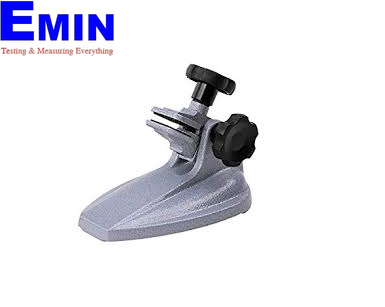
Micrometer Stand
Stable measurement results often depend on more than the micrometer itself. When operators need better repeatability, reduced hand fatigue, or easier bench inspection, a Micrometer Stand becomes a practical addition to the measuring setup. It helps hold the instrument in a fixed position so parts can be checked more consistently, especially during repetitive inspection tasks.
In workshop, QC, and lab environments, a stand is especially useful when the same type of part is measured many times throughout the day. By supporting the micrometer body and improving handling, it can make routine dimensional checks faster and more comfortable while helping users maintain better control over the measuring process.
Why a micrometer stand is useful in daily inspection work
A micrometer is designed for precise manual measurement, but hand-held use is not always the most efficient option. During repetitive checks, the operator must hold the frame, position the workpiece, and read the result at the same time. A stand helps simplify this workflow by supporting the instrument on the bench and freeing the user to handle the part more steadily.
This is particularly helpful for incoming inspection, small-batch production, and quality control stations where the same dimensions are checked repeatedly. For companies already using outside micrometers, adding a stand can improve ergonomics and support more stable measuring conditions without changing the core measuring method.
Common configurations and mounting styles
Micrometer stands are available in different mechanical forms depending on micrometer size, working posture, and bench layout. Some are basic bench stands for common hand micrometers, while others use bracket-style support or adjustable-angle construction to make positioning easier during use.
For example, the MOORE & WRIGHT MW279-02 Basic Micrometer Stand is designed for micrometers up to 100 mm, making it suitable for many standard inspection tasks. Bracket-type solutions such as the MOORE & WRIGHT MW279-01A Brackets micrometer or the MITUTOYO 156-101-10 Brackets Micrometer (~100mm) are relevant when users need secure holding for compact measuring ranges and convenient bench access.
Examples from MITUTOYO and MOORE & WRIGHT
Two of the most relevant brands in this category are MITUTOYO and MOORE & WRIGHT. Both are well known in mechanical measurement, and their stand options show how this accessory can be matched to different micrometer sizes and operating preferences.
For bench-top use with common handheld gauges, the MITUTOYO 156-105-10 Micrometer Stand is intended for 1" and 2" micrometers and uses a fixed-angle style. When larger capacity tools need to be supported, the Mitutoyo 156-102 Micrometer Stand (125-300mm) is a more suitable example, as it is intended for larger micrometer sizes. This range of options highlights an important buying point: the stand should match not only the instrument type, but also the actual measuring range used in production.
How to choose the right stand
The first selection point is micrometer size compatibility. Not every stand fits every frame size, so the clamping range or intended micrometer capacity should be checked carefully. A stand built for up to 100 mm instruments may not be suitable for larger 125-300 mm micrometers, even if the overall purpose looks similar.
The second factor is working style. A fixed-angle stand can be a practical choice for repeat bench inspection with a consistent measuring routine. An adjustable or bracket-based design may be more useful when operators need to change viewing angle, improve accessibility, or adapt the setup to different part shapes.
It is also worth considering the broader measuring workflow. If your inspection area handles different types of dimensional checks, you may also want to review related tools such as digital outside micrometers or inside micrometers to build a more complete measuring station.
Typical applications across production and quality control
A micrometer stand is often used where small parts must be measured repeatedly with controlled hand movement. Typical examples include metalworking, precision machining, maintenance workshops, and assembly lines where operators check outside dimensions as part of in-process inspection.
It can also be useful in training or metrology support areas, where a more stable setup helps less experienced users handle the instrument correctly. In these cases, the stand supports repeatability and easier operation rather than replacing the micrometer itself. The main measuring accuracy still depends on the instrument condition, user technique, and proper measuring procedure.
Practical points before ordering
Before choosing a model, check the supported micrometer range, clamp opening, and mounting style if those details are available. These factors affect whether the micrometer sits securely and whether the operator can use the spindle, ratchet, or thimble comfortably during measurement.
It is also helpful to think about the bench environment. A stand used in a compact inspection corner may need a simple footprint and quick access, while a dedicated QC station may benefit from a more permanent support arrangement. Even within the same category, the right choice depends on how often the micrometer is used, the size of the workpieces, and whether the setup needs flexibility or fixed positioning.
Supporting a more efficient measuring setup
Choosing the right micrometer stand is less about adding another accessory and more about improving how the measuring process works in real conditions. When the stand matches the micrometer size and the inspection routine, it can make repeated measurement more stable, more comfortable, and easier to manage at the bench.
Whether you are equipping a new QC station or refining an existing measurement workflow, this category brings together practical support options for handheld micrometers from established manufacturers. Reviewing the intended micrometer range, stand style, and daily usage pattern will help you identify the most suitable solution for your application.
-
-
-
-
-
-
-
-
-
-
-
-
-
-
-
-
-
-
-
-
-
-
-
-