

Panme
Precise dimensional control often starts with a simple question: how accurately can an operator verify a diameter, thickness, or gap on the shop floor? For many machining, fabrication, and inspection tasks, the answer involves a reliable micrometer selected for the measurement range, contact style, and reading method required by the application.
This Panme category brings together micrometers and related measuring solutions used for external and specialized dimensional checks. It is relevant for production engineers, quality teams, maintenance departments, tool rooms, and technical buyers looking for dependable instruments for routine workshop use as well as more controlled inspection work.
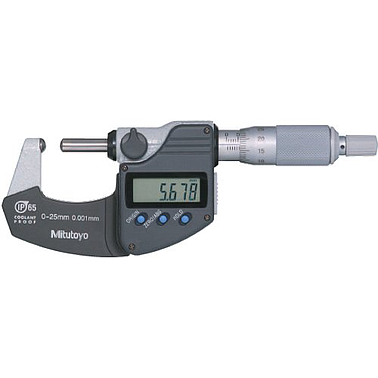
Where micrometers fit in mechanical measurement
Micrometers are widely used when a standard rule or general-purpose gauge does not offer enough precision. In day-to-day industrial environments, they support measurement of shaft diameters, sheet thickness, wire size, turned parts, and other features where small dimensional variation matters to fit, function, or process control.
Compared with broader measuring tools, a micrometer is typically chosen when users need finer resolution and a more controlled measuring force. In many workflows, it complements instruments such as callipers for quick checks and more specialized contact gauges for tighter evaluation points.
Common micrometer types in this category
The category scope includes conventional outside micrometers, digital outside micrometers, and specialized variants designed for specific contact geometry. That matters because not every workpiece can be measured effectively with a flat-anvil, general-purpose frame. Contact style directly affects whether the reading reflects the true feature being checked.
For example, an outside micrometer such as the MOORE & WRIGHT MW200 series is a practical choice for routine external measurements across common ranges like 0-25 mm or 25-50 mm. A digital option such as the Mahr 4157010 Digital Micrometer can be useful where faster reading, reduced operator interpretation error, or mixed metric and inch workflows are important.
Specialized designs also play an important role. The MOORE & WRIGHT MW270-06 Point Micrometer is suited to measurement tasks where pointed contacts help reach into narrow features, while the MW275-01 Workshop Blade Micrometer is more appropriate for workpieces that benefit from blade-style measuring faces. The MW279-01A Brackets micrometer highlights how micrometers can be adapted for less standard geometries rather than relying on a one-size-fits-all tool.
How to choose the right micrometer
A good selection process starts with measuring range. A 0-25 mm instrument may be ideal for smaller parts and general workshop checks, while larger capacities such as 75-100 mm are more suitable for larger diameters or thicker components. Choosing a range that stays close to the target dimension often improves handling and measurement control.
The next point is readability. Some users prefer the familiarity and simplicity of a mechanical scale, while others need digital readout for easier data entry and quicker training on the shop floor. Models in this category show both approaches, including mechanical outside micrometers and electronic versions such as the MOORE & WRIGHT MW200-01DBL and MW200-02DBL.
Contact geometry is just as important as range and display style. Point, blade, and standard anvils are not interchangeable in every application. If the measurement involves general outside diameters, a standard outside micrometer is usually appropriate; if the workpiece has edges, grooves, or narrow approach points, a more specialized contact design may give a more reliable result.
Typical applications across manufacturing and inspection
Micrometers are used in machine shops, metal fabrication, incoming inspection, maintenance workshops, and quality assurance stations. They are especially relevant where parts must meet tolerance bands that are too narrow for coarse measuring tools. This includes checking bar stock, turned components, sheet material, and intermediate process dimensions before final assembly.
In inspection routines, micrometers often work alongside other tools rather than replacing them. A team may use dial indicators to observe runout or comparative movement, while the micrometer confirms the actual size of a diameter or thickness. For thin materials or coating-related checks, users may also compare requirements with a dedicated thickness meter depending on the material and measurement method involved.
Featured brands and product examples
Several recognized manufacturers are represented in the wider measuring ecosystem, and this category context highlights brands such as MOORE & WRIGHT, Mahr, and MITUTOYO. In practice, buyers often compare these brands based on range availability, preferred reading format, accessory support, and suitability for workshop or inspection use.
Within the product examples available here, MOORE & WRIGHT is strongly represented with mechanical and electronic outside micrometers across common ranges, plus specialized versions such as point and blade micrometers. The Mahr 4157010 Digital Micrometer illustrates the digital side of the category, while the MITUTOYO 04AAA759 Micrometer Spindle serves as a reminder that some procurement needs are not for a complete instrument, but for a replacement or support component within the measurement system.
That distinction is important for B2B purchasing. Some buyers need a complete handheld tool for a new workstation, while others are maintaining existing inspection assets and only need a specific part, accessory, or compatible setup element.
What technical buyers should review before ordering
Before selecting a model, confirm the target dimension range, the required resolution, and whether the application calls for standard or specialized measuring faces. It is also worth checking whether the instrument will be used mainly in the workshop, in final inspection, or as part of maintenance troubleshooting, since operating conditions can influence the preferred format.
For teams standardizing inspection processes, consistency matters as much as accuracy. Using similar micrometers across multiple stations can simplify training, reduce reading mistakes, and support more repeatable measurement practices. Where higher-precision geometry evaluation becomes necessary, related categories such as roundness measuring machines may become relevant for broader quality control strategies.
FAQ
When should I choose a digital micrometer instead of a mechanical one?
A digital micrometer is often preferred when operators need faster reading, easier unit conversion, or reduced risk of reading-scale errors. A mechanical model may still be suitable for routine checks where simplicity and familiarity are the main priorities.
Are specialized micrometers necessary for all jobs?
No. Standard outside micrometers are sufficient for many common diameter and thickness measurements. Specialized types such as point or blade micrometers are most useful when part geometry makes standard contact faces less effective.
Can a micrometer replace callipers in every application?
Not always. Callipers are often better for quick, versatile checks across different features, while micrometers are typically chosen when higher precision and more controlled contact are required.
Choosing the right micrometer is less about buying the most complex model and more about matching the instrument to the actual measuring task. By comparing range, reading method, and contact style within this Panme category, technical buyers can narrow down options that fit both process requirements and day-to-day inspection practice.
Types of Panme (3,405.000)
- Digital inside micrometer (471.000)
- DIGITAL OUTSIDE MICROMETER (1,501.000)
- Inside Micrometers (393.000)
- Micrometer Heads (112.000)
- Micrometer Stand (8.000)
- Outside Micrometers (920.000)
-
-
-
-
-
-
-
-
-
-
-
-
-
-
-
-
-
-
-
-
-
-
-
-