

Colorimeter, spectrophotometer for measuring the color of materials and liquids
When color must be measured consistently rather than judged by eye, the right optical instrument becomes essential. In production, incoming inspection, laboratory work, and quality control, even small color deviations can affect product acceptance, batch matching, or compliance with internal standards. This category brings together colorimeters and spectrophotometers used to evaluate the color of materials and liquids with more repeatable and objective results.
Depending on the application, users may need a compact handheld meter for routine comparison, a device focused on whiteness measurement, or a spectrometer that captures a wider range of color and light data. The instruments here support typical industrial color workflows across solids, coatings, paper, plastics, food materials, and selected liquid measurement tasks where optical color evaluation is part of the process.
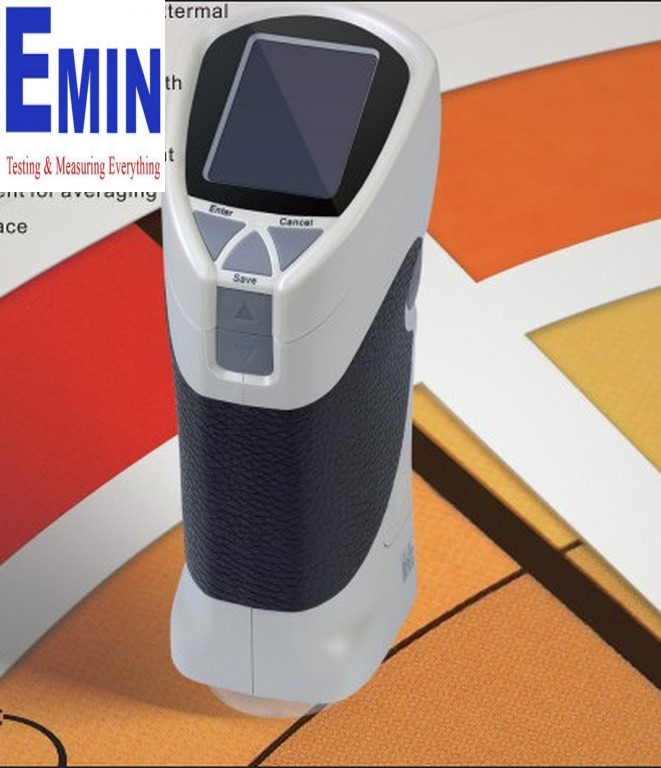
Choosing between a colorimeter and a spectrophotometer
A colorimeter is often the practical choice when the goal is fast color comparison against a reference, pass/fail inspection, or routine checking in production. These instruments typically report values in common color spaces such as CIE L*a*b*, XYZ, or related difference formulas like ΔE, making them suitable for standardized quality checks.
A spectrophotometer, by contrast, is better suited to applications that require more detailed spectral information. In addition to color coordinates, it can provide wavelength-based data that helps users analyze light behavior, transmittance, and other optical characteristics. This is especially useful when evaluating lamps, displays, transparent materials, specialty coatings, or samples where spectral distribution matters alongside visual color appearance.
For users whose main priority is illuminance or light intensity rather than color analysis, a dedicated light meter may be a more suitable complement to this category.
Typical applications across materials and process environments
Color measurement is used in many industries because visual inspection alone can vary with operator, lighting condition, and viewing angle. With an instrument-based approach, teams can compare batches, monitor process drift, and communicate results using shared numerical standards instead of subjective descriptions.
For surface measurement, handheld colorimeters are commonly used on painted parts, plastic components, textiles, paper, packaging, and finished goods. For application-specific whiteness control, instruments such as the PCE WNM 100 Whiteness Meter or the Kett C600 White rice flour measure are relevant where brightness or whiteness index is a key quality parameter. In broader optical testing environments, users may also combine these tools with color sensors for inline detection or automated sorting tasks.
What to evaluate before selecting an instrument
The first selection factor is the sample itself. Flat, opaque surfaces are measured differently from translucent materials or liquids, and some applications depend strongly on aperture size, measurement geometry, or the available color spaces and difference formulas. If your workflow requires reporting in CIE-LAB, HunterLab, XYZ, Yxy RGB, or whiteness and yellowness indices, those needs should be defined before choosing a model.
Measurement geometry is also important because it affects how gloss, texture, and surface structure influence the reading. Instruments in this category include examples with 45/0 and D/8-SCI configurations, each suited to different control strategies. In many industrial settings, repeatability, calibration method, memory, interface options, and portability are just as important as the headline measurement range.
If ultraviolet intensity is part of the optical evaluation process, especially in curing, radiation assessment, or UV-related testing, a dedicated UV meter may be needed alongside a color instrument.
Examples of instruments in this category
This category includes compact handheld models for everyday color control as well as more advanced spectrometric devices. The PCE XXM 30 and PCE XXM 30-ICA, for example, are positioned for portable color evaluation with support for multiple color spaces and color difference formulas. They are relevant for users who need quick spot checks, comparison against standards, and a mobile workflow with data transfer capability.
For established surface color measurement tasks, models such as the PCE CSM 1, PCE CSM 2, PCE CSM 4, and PCE CSM 6 illustrate different aperture and geometry options within a similar handheld format. Where the requirement shifts toward spectral light analysis, instruments such as the PCE PSR 100 and PCE PSR 200 provide a wider optical picture that can support color-related evaluation of light sources and materials. These examples are from PCE, while this category also highlights manufacturers such as KONICA MINOLTA, Xrite, Datacolor, BYK, Kett, and others depending on the application focus.
Understanding measurement data in practical use
Most users are not only looking for a number; they need a result that can guide a decision. That is why color spaces, ΔE formulas, and whiteness or yellowness calculations matter. A production team may define an allowable ΔE tolerance for incoming materials, while a laboratory may compare data under different illuminants or observer angles to understand how the same sample appears in different viewing conditions.
In more advanced optical evaluation, spectral information helps explain why two samples that look similar under one light source may behave differently under another. This matters in applications involving metamerism, quality disputes, or light-sensitive products. For imaging-related optical evaluation beyond color alone, some users may also explore tools in the Camera Tester category where relevant.
Brand ecosystem and application fit
Different manufacturers tend to be associated with different measurement priorities, whether that is portable QC, laboratory-grade color communication, appearance analysis, or optical testing around light and radiation. In this category, well-known names include Anton Paar, BYK, HACH, KONICA MINOLTA, Xrite, Datacolor, ELCOMETER, Kett, PCE, and Radiant.
The best fit usually depends less on brand alone and more on the measurement task: surface color control, whiteness evaluation, spectral light analysis, or compatibility with an existing internal standard. For that reason, comparing geometry, supported color models, data handling, and calibration approach is often more useful than comparing instruments on one specification line in isolation.
How this category supports purchasing and quality teams
For B2B buyers, the challenge is often to match the instrument to a real workflow rather than simply buying a generic color meter. A QA department may need a portable device for shift-based inspections, while an R&D or lab team may need richer spectral data for development and root-cause analysis. Maintenance, operator training, and data consistency across sites are also important factors when standardizing a color measurement process.
By reviewing the available models in this category, users can narrow down the right balance of portability, measurement method, reporting format, and application focus. Whether the priority is routine batch control, whiteness assessment, or more detailed optical characterization, selecting the right instrument helps create repeatable color decisions that are easier to document and communicate across teams.
Conclusion
Reliable color control starts with choosing an instrument that matches the sample, the method, and the decision you need to make from the data. This category covers practical options for measuring the color of materials and liquids, from handheld colorimeters for everyday comparison to spectrophotometers and spectrometers for deeper optical analysis. If you are refining a QC process or building a more consistent inspection workflow, these instruments provide a solid starting point for objective color measurement.
-
-
-
-
-
-
-
-
-
-
-
-
-
-
-
-
-
-
-
-
-
-
-
-