

Stretch film wrapping machine
When pallets, cartons, or luggage need stable protection during storage and transport, the wrapping stage has a direct impact on load security, product appearance, and handling efficiency. A well-matched stretch film wrapping machine helps apply film more consistently, reduce manual effort, and support repeatable packaging quality in warehouse and production environments.
On this category page, buyers can explore equipment for pallet wrapping and related wrapping tasks, from standard turntable machines to higher-capacity systems and accessories that support easier loading. The range is relevant for manufacturers, logistics operations, distribution centers, and packaging lines looking to improve end-of-line performance.
Where stretch wrapping machines fit in packaging operations
Stretch wrapping is typically used near the end of a packing process, after products have been packed into cartons, stacked on pallets, or prepared as transport units. The machine applies stretch film around the load to improve stability, limit shifting during movement, and add a level of protection against dust and handling damage.
In many facilities, wrapping equipment works alongside upstream packaging machines such as an auto case erector or downstream systems such as a carton sealer. This makes the category especially relevant for users building or upgrading a broader sorting and packing workflow rather than evaluating a standalone machine in isolation.
Common machine types in this category
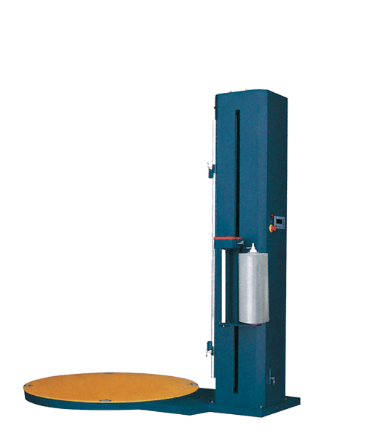
Most products shown here are designed for pallet stretch wrapping, with turntable-based operation being one of the most common formats. In this setup, the pallet remains on a rotating platform while the film carriage travels up and down to wrap the load according to the selected cycle. This approach suits a wide range of standard pallet dimensions and warehouse applications.
The category also includes specialized systems for different handling needs. For example, some models are intended for heavier pallet loads or higher throughput, while baggage wrapping machines are better suited to smaller items with different size and weight ranges. That distinction matters because film control, turntable dimensions, load height, and operator workflow can vary significantly between these use cases.
Representative equipment and solution examples
For general pallet wrapping, Mikyo is strongly represented in this category with models such as the MK-TP1650E, MK-TP1650EB, MK-1620-PS, and MK-1624-PS. These examples indicate a product range aimed at typical industrial pallet sizes, adjustable turntable speeds, and practical operation for routine shipping preparation. Depending on the model, buyers may find differences in control interface, film tension adjustment, and supported pallet height or load capacity.
For operations that need more controlled film delivery and sensor-based wrapping logic, the SIGNODE HLS Next Generation Sensor Stretch Wrapping Machine is another relevant reference point. It reflects the needs of users who prioritize more advanced control functions such as load sensing, programmable wrap patterns, and electronically managed film behavior. If brand-specific selection is important, you can also explore the SIGNODE and Mikyo brand pages for related product ranges.
Key factors to evaluate before choosing a machine
The first step is to define the actual load profile. Buyers should consider pallet length and width, maximum load height, total weight, and whether the load is stable, light, heavy, or irregular. These factors influence the required turntable size, machine structure, wrapping height, and film carriage performance.
Another important point is throughput and handling method. A facility wrapping a limited number of pallets per shift may focus on ease of use and footprint, while higher-volume users may care more about wrapping speed, repeatability, and integration with conveyors or forklift loading. Low-profile platforms and compatible accessories can also matter when operators use pallet trucks or forklifts for loading and unloading.
Film control should not be overlooked. Mechanical tensioning, powered pre-stretch, and electronically adjustable force each affect film consumption and load containment differently. For many B2B users, the right machine is not simply the one with the largest capacity, but the one that balances wrapping quality, material usage, and operator workflow.
Accessories and system considerations
Wrapping performance is not determined by the main machine alone. Accessories can improve usability and make a standard system better suited to site conditions. A clear example in this category is the Mikyo TP1650E-H83 accessory, which functions as a step-up solution for pallet shrink or stretch wrapping setups where forklift-based loading and unloading needs to be accommodated more effectively.
It is also useful to think about the machine as part of a packaging system rather than a single purchase. In many applications, wrapping comes after case forming, filling, sealing, and identification. If your line also includes product coding or shipment presentation steps, related equipment such as a labeling machine may be part of the same investment decision.
Typical applications across industries
Stretch film wrapping machines are widely used wherever palletized goods need secure transport or organized storage. Common environments include food and beverage warehouses, consumer goods production, industrial components distribution, contract packaging, and export preparation. The main requirement is usually the same: create a wrapped load that is stable enough for internal handling and outbound logistics.
Some applications focus on standard pallet wrapping, while others involve non-pallet items, bundled goods, or baggage-style loads. Models such as the Mikyo XL-01 and Mikyo LP600F-L illustrate that this category can also serve users with smaller packages rather than full pallet loads. That makes the selection process more application-driven than category-driven; the intended product format should guide the shortlist from the beginning.
How to narrow down the right option
A practical shortlist usually starts with four questions: what is being wrapped, how large and heavy it is, how many loads need to be processed, and how the load arrives at the machine. Once those basics are clear, it becomes easier to compare platform height, turntable diameter, control style, film carriage type, and expected wrapping output.
For buyers planning a wider automation upgrade, it may also be useful to review adjacent end-of-line equipment such as a case packer. Looking at the full process can help avoid bottlenecks where wrapping capacity, carton preparation, and shipping readiness are not aligned.
Final thoughts
This category brings together equipment for businesses that need more consistent and efficient film wrapping in packing and logistics operations. Whether the priority is a straightforward pallet wrapper, a higher-control system, or supporting accessories for easier load handling, the best choice depends on real operating conditions rather than headline specifications alone.
By comparing load requirements, workflow, and integration needs, buyers can identify a stretch wrapping solution that supports stable packaging quality and smoother end-of-line operation. If you are building a broader packing line, this category is also a practical starting point for connecting wrapping equipment with the rest of your packaging process.
-
-
-
-
-
-
-
-
-
-
-
-
-
-
-
-
-
-
-
-
-
-
-
-