

Strapping wrapping machine
In many packing lines, the final presentation of a product matters just as much as throughput and protection during transport. When products need to be bundled, sealed, stabilized, or prepared for shipment, a Strapping wrapping machine category helps buyers compare equipment used to secure packages for warehousing, retail display, and distribution.
For B2B users, this type of machinery is typically evaluated by packaging size range, film or wrapping compatibility, sealing area, power configuration, and the role it plays in the wider end-of-line process. Whether the goal is compact retail shrink packaging or more consistent unit handling before shipping, selecting the right machine starts with understanding the packaging task itself.
Where this equipment fits in a packing workflow
Wrapping and package-securing machines are commonly positioned near the end of a production or packing line, after products have been grouped, counted, or placed into their primary package. Their main purpose is to improve package integrity, create a cleaner finished appearance, and support safer handling during storage or transportation.
In practical applications, this equipment often works alongside upstream and downstream systems such as labeling machines and final carton closing equipment. In a larger automated line, the wrapping stage is not isolated; it is one part of an integrated packaging flow designed to reduce manual handling and improve consistency.
Common machine types found in this category context
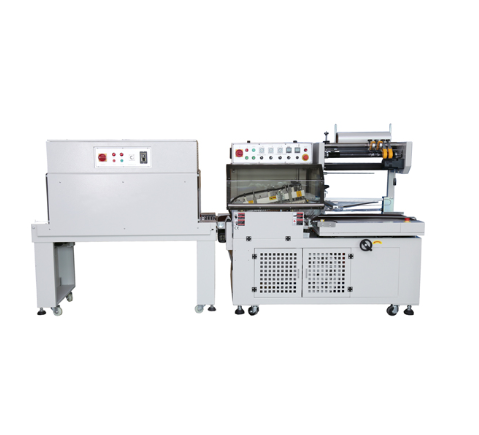
Within this category context, the most visible examples are hooded heat shrinkwrap machines and shrink packing machines. These systems wrap products in film and apply heat so the material contracts around the pack, creating a tight and stable finished result. This method is widely used for boxed goods, multipacks, printed materials, food trays, household products, and industrial components.
Some machines are more compact and suited to smaller pack sizes, while others support larger sealing dimensions and taller packages. Buyers usually compare the maximum package size, film width, electrical supply, and expected production rhythm before deciding which format is more suitable for their line.
Representative equipment from EXTEND and Mikyo
The current range highlights equipment from EXTEND and Mikyo, two manufacturers associated here with shrink packaging solutions for different production needs. EXTEND models such as the EKH-134, EKH-145, EKH-346, EKH-455, EKH-168, and EKH-680 are hooded heat shrinkwrap machines aimed at users who need integrated sealing and shrinking in one compact process.
For operations that require tunnel-based shrink packing, examples such as Mikyo MK-BSD350, MK-BSD400, MK-BSD450, MK-BSD400B, MK-BSD450B, and MK-BSD4525A illustrate another common equipment format. These machines vary in tunnel size, conveyor speed, conveyor loading capacity, and supported product dimensions, which makes them relevant for users comparing compact packaging jobs with larger or heavier packs.
How to choose the right machine for your application
A good starting point is the actual pack size. Sealing dimensions, maximum package height, and film width determine whether a machine can handle the product without compromise. If the packaging range includes multiple SKUs, it is important to account for the largest and tallest package rather than only the standard item.
The next factor is utility compatibility. Some models use 1-phase power, while others require 3-phase power, which can directly affect installation planning in an existing factory. Power consumption also matters from an operating cost perspective, especially in facilities where packaging lines run for long shifts.
Film compatibility and package weight should also be reviewed carefully. In the shrink packing examples shown here, supported films may include PE, POF, PVC, and PP depending on the machine. For tunnel systems, conveyor load and speed are equally important because they influence whether the machine is suitable for light retail packs, moderate industrial loads, or more continuous packaging work.
Compact hooded machines vs. tunnel shrink systems
Hooded machines are often chosen when users want a compact machine footprint and a straightforward sealing-and-shrinking sequence. They are commonly considered for small to medium packaging operations, lower to moderate throughput, or products that benefit from a simple operator workflow. Models such as the EXTEND EKH series illustrate this style of equipment, with different sealing areas and package height capacities available across the range.
Shrink tunnel systems, on the other hand, are frequently selected when a line needs a continuous conveyor-based process. Machines such as the Mikyo MK-BSD series are more relevant where product flow, tunnel dimensions, and conveyor speed need to be matched to a defined production requirement. This format can be useful when pack uniformity and repeatable thermal shrink performance are priorities.
Integration with broader end-of-line packaging equipment
For many manufacturers and distributors, wrapping equipment is only one stage in a complete packaging cell. Before wrapping, products may be grouped or loaded into cartons; after wrapping, they may be closed, labeled, or transferred for palletizing and dispatch. That is why machine selection should consider not only the standalone unit, but also how it interacts with adjacent equipment.
For example, if products are packed into cartons after primary wrapping, a carton sealer may be part of the same line. In more automated case-handling environments, buyers may also compare solutions such as an auto case erector or a case packer to build a more complete end-of-line system.
Typical evaluation points for industrial buyers
Industrial buyers generally review more than basic dimensions. They also look at operator convenience, installation space, production rhythm, maintenance accessibility, and whether the machine suits the packaging material already used on site. For international or multi-site operations, available voltage options can also be an important purchasing criterion.
It is also useful to separate short-term need from long-term line planning. A compact unit may be sufficient for current volume, but a faster or larger-capacity machine may be a better fit if product range expansion is expected. Comparing the machine’s sealing area, maximum packaging height, speed range, and loading limits helps avoid under-specifying or over-specifying the investment.
Finding a suitable solution for consistent package finishing
This category is most useful for buyers who need equipment that helps create cleaner, more secure, and more transport-ready packages within a sorting and packing environment. The available examples from EXTEND and Mikyo show that there are meaningful differences in machine format, electrical requirements, package size capacity, and operating style.
When comparing options, focus on the real packaging task: product dimensions, required throughput, available utilities, and how the machine will connect with the rest of the line. A well-matched wrapping or shrink packaging machine can improve pack consistency, reduce handling issues, and support a more reliable end-of-line process.
-
-
-
-
-
-
-
-
-
-
-
-
-
-
-
-
-
-
-
-
-
-
-
-