

High Voltage Meter Repair Service
When a high-voltage meter starts showing unstable readings, slow response, or questionable accuracy, the issue quickly becomes more than a simple maintenance task. In electrical testing, power distribution, and industrial safety work, measurement reliability affects both troubleshooting quality and operator confidence. A professional High Voltage Meter Repair Service helps restore dependable performance while reducing the risks associated with using damaged or drifting instruments.
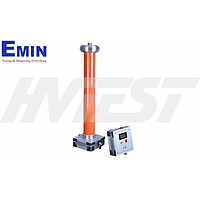
Why timely repair matters for high-voltage measurement equipment
High-voltage meters are often used in environments where accuracy, insulation integrity, and stable measurement behavior are essential. Even small faults can lead to inconsistent test results, unnecessary downtime, or difficulty verifying electrical conditions in the field. Repair is not only about fixing a visible defect; it is also about checking whether the instrument still performs as expected under real operating conditions.
Common service needs may involve display issues, damaged leads or connectors, internal component wear, irregular measurement response, or problems caused by transport, aging, or repeated use in demanding industrial environments. In many cases, addressing these issues early is more practical than continuing to rely on an instrument with uncertain performance.
Typical issues addressed in high-voltage meter repair
A structured repair process usually begins with evaluation of the instrument’s condition, followed by fault isolation and corrective work. For high-voltage meters, the service scope may include electrical diagnosis, inspection of input circuits, condition checks on insulation-related parts, and verification that the meter responds consistently during testing.
Depending on the instrument’s symptoms, repair may also involve restoring proper functionality after overload events, correcting unstable measurement behavior, or resolving mechanical damage that affects safe handling. In technical B2B environments, this kind of work is especially important because instruments are often part of larger maintenance, commissioning, or inspection workflows.
What to look for when choosing a repair service
Not every repair requirement is the same. Some users need help with instruments that no longer power on, while others are dealing with a meter that still works but no longer inspires confidence. A useful service should therefore focus on fault diagnosis, practical restoration of function, and a clear understanding of the meter’s role in electrical testing operations.
It is also helpful to work with a provider familiar with broader test equipment support, especially if your site uses multiple instrument types. For example, teams managing a wider fleet of electrical testers may also need support for related services such as withstand voltage test repair or low resistance meter repair, depending on the equipment used in inspection and maintenance programs.
Service value for industrial maintenance and testing teams
For maintenance departments, utilities, contractors, and testing service companies, repairing a high-voltage meter can help extend equipment life and support more consistent field operations. Replacing every problematic unit is not always the most efficient option, particularly when the instrument remains operationally relevant and the fault is repairable.
A dependable repair service can support asset availability, reduce interruptions to scheduled testing work, and help teams keep important instruments in usable condition. This matters in applications where electrical verification tasks must be completed on time and where instrument readiness directly affects project execution.
How high-voltage meter repair fits into a broader electrical test equipment strategy
High-voltage measurement tools are rarely used in isolation. In many industrial and utility settings, they sit alongside breaker test systems, cable diagnostic tools, insulation-related testers, and other electrical instruments. Looking at repair needs across this wider equipment base can simplify maintenance planning and improve long-term serviceability.
If your operation depends on multiple tester categories, it may be useful to review related support options such as breaker testing equipment repair service or cable fault tester repair service. This kind of broader planning can help maintenance teams manage service needs more systematically instead of reacting to each equipment issue individually.
Signs your instrument may need professional attention
Some problems are obvious, such as physical damage, connection failure, or a meter that will not operate at all. Other issues are more subtle, including drifting readings, inconsistent behavior between tests, delayed response, or measurement results that no longer align with expected field conditions. These symptoms can indicate internal faults or progressive degradation that should not be ignored.
Because high-voltage instruments are associated with electrical safety and measurement confidence, it is generally better to investigate suspicious behavior early. Continued use of a questionable meter can create avoidable uncertainty during testing, maintenance, and fault-finding work.
A practical approach to restoring measurement confidence
Choosing the right high-voltage meter repair support is ultimately about restoring trust in the instrument’s performance. For B2B users, that means focusing on service capability, realistic fault handling, and compatibility with the way electrical test equipment is used in daily operations. A good repair pathway helps preserve equipment value while supporting safer, more efficient work.
Whether the issue involves unstable readings, physical wear, or loss of normal function, a professional high-voltage meter repair service can be a practical step toward returning essential test equipment to reliable use. For organizations that depend on electrical measurement accuracy, timely service is often the most sensible way to maintain continuity and reduce avoidable disruption.
-
-
-
-
-
-
-
-
-
-
-
-
-
-
-
-
-
-
-
-
-
-
-
-