

Low Resistance Meter Repair Service
Accurate low-resistance measurement is essential when checking contacts, busbars, bonding points, winding continuity, and other conductive paths where even small deviations can affect safety, performance, or compliance results. When a meter used for these tasks starts drifting, producing unstable readings, or failing basic functions, timely service helps prevent incorrect decisions in maintenance, testing, and quality control workflows.
Low Resistance Meter Repair Service supports users who rely on dependable micro-ohm and low-ohm measurements in electrical testing environments. This service is relevant for facilities that need to restore measurement stability, address functional faults, and keep critical test equipment operating as expected without replacing instruments prematurely.
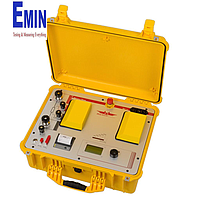
Why repair matters for low resistance measurement equipment
Low-resistance meters are commonly used in applications where contact quality and conductor integrity must be verified with confidence. In these cases, measurement errors are not simply inconvenient; they can affect maintenance judgments, equipment acceptance, and troubleshooting efficiency. A repair process helps bring the instrument back to a usable condition when signs of malfunction begin to appear.
Common service needs may include unstable display behavior, abnormal zeroing, failed power-up, damaged terminals, charging issues, intermittent operation, or readings that no longer appear consistent during repeated tests. Because these instruments are often used in field service and industrial environments, wear from transport, frequent connection cycles, and electrical stress can also contribute to performance problems over time.
Typical situations that indicate a service need
Users often seek repair when a meter shows inconsistent values under the same test setup, takes unusually long to settle, or cannot maintain reliable test current during measurement. Other warning signs include communication errors, keypad or switch failure, display faults, and physical connector damage that affects lead contact.
In many plants and service organizations, these issues are first noticed during preventive maintenance, shutdown inspections, or incoming equipment checks. If your workflow also depends on related electrical test instruments, it may be useful to review support options such as withstand voltage test repair service for high-potential testers used in insulation verification.
What a low resistance meter repair service typically covers
A structured service process usually begins with fault assessment to identify whether the issue is related to the power section, internal measurement circuitry, current source stability, interface components, or external connection points. This diagnostic stage is important because low-resistance instruments depend on stable test current and precise sensing behavior to produce trustworthy results.
Repair work may then involve replacing failed internal parts, correcting connection problems, restoring controls or display functions, and verifying overall operation after service. Depending on the condition of the instrument, attention may also be given to lead interfaces, battery or charging performance, and general functional recovery so that the meter can return to routine testing duties with improved reliability.
Applications where dependable readings are especially important
Low-resistance meters are widely used in electrical maintenance, panel manufacturing, transformer and motor service, grounding verification, and quality inspection of conductive joints. In these environments, the goal is often to confirm that resistance remains within expected limits and that unwanted heating or voltage drop risks are minimized during operation.
This makes measurement repeatability especially important. A repaired instrument can help maintenance teams compare results over time with more confidence, support acceptance checks after assembly or repair work, and reduce uncertainty when investigating suspected contact degradation or conductor faults.
How repair supports broader electrical test workflows
Low-resistance measurement is only one part of a broader electrical testing process. Many organizations use it alongside insulation, dielectric, breaker, and cable diagnostic tools depending on the asset under evaluation. Keeping each instrument in proper working condition helps avoid delays, retesting, and inconsistent reporting across the maintenance chain.
For teams managing multiple tester types, related services such as breaker testing equipment repair service or cable fault tester repair service may also be relevant when building a more complete equipment support plan.
What to prepare before sending a unit for repair
To speed up evaluation, it helps to document the observed fault as clearly as possible. Useful details include when the problem occurs, whether it is constant or intermittent, what accessories are used during testing, and whether the unit has experienced impact, abnormal voltage exposure, or storage-related issues. Even a short note about the test scenario can improve the efficiency of diagnosis.
If available, include information about recent performance changes, charging behavior, startup status, or any error messages shown on the screen. For organizations with a wider inventory of electrical testers, service planning can also be coordinated with needs such as insulating materials tester repair service when multiple instruments are due for maintenance attention.
Choosing a service approach that fits industrial use
Repair is often the practical option when the instrument remains important to established procedures, existing documentation, and operator familiarity. Instead of replacing equipment immediately, many users prefer a service path that focuses on restoring core functions, reducing downtime, and extending the useful life of assets already integrated into their testing activities.
When evaluating service suitability, consider the instrument’s role in your process, the importance of reading stability, and the operational impact of equipment downtime. A well-managed repair process can help maintain continuity in inspection and maintenance programs while supporting more reliable electrical test results.
Support for maintaining usable and reliable test equipment
When low-resistance measurements are part of routine electrical inspection or fault analysis, equipment condition directly affects the quality of the work. Addressing faults early can help prevent wasted troubleshooting time, questionable readings, and unnecessary disruption to maintenance schedules.
This category is intended for users looking for a practical service path for restoring low-resistance meters used in industrial and electrical testing environments. If your instrument is showing functional issues or inconsistent behavior, repair service can be a sensible step toward returning it to dependable day-to-day operation.
-
-
-
-
-
-
-
-
-
-
-
-
-
-
-
-
-
-
-
-
-
-
-
-