

Ultrasonic Cleaners Calibration Service
Reliable cleaning performance in the lab depends on more than filling a tank and switching on the unit. When an ultrasonic cleaner is used for sample preparation, glassware cleaning, instrument maintenance, or contamination control, stable operating conditions matter. A professional Ultrasonic Cleaners Calibration Service helps verify that the equipment is operating consistently and supports better control of cleaning processes in laboratory and technical environments.
This service category is relevant for organizations that rely on ultrasonic cleaning as part of routine workflows, validation procedures, or internal quality systems. Whether the equipment is used in research, testing, education, healthcare, or industrial laboratories, calibration helps create a more dependable basis for maintenance planning, performance checks, and documentation.
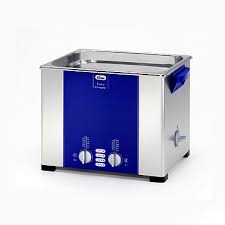
Why calibration matters for ultrasonic cleaners
Ultrasonic cleaners work by generating high-frequency sound waves in a liquid medium, producing cavitation that helps remove contaminants from surfaces and hard-to-reach areas. In practical use, cleaning results can be affected by operating conditions, equipment aging, tank condition, and how consistently the unit performs over time. Calibration provides a structured way to assess that performance instead of relying only on visual cleaning results.
For many laboratories, this is especially important where cleaning quality can influence downstream work. If cleaned tools, containers, or components are used in sensitive processes, confirming the condition of the cleaner supports process repeatability. It also helps users identify when preventive maintenance or further inspection may be appropriate.
Typical environments that use this service
This category is relevant across a wide range of laboratory settings. Ultrasonic cleaners are commonly used for cleaning glassware, metal parts, small instruments, probes, fixtures, and reusable accessories that require more effective cleaning than manual washing alone. In quality-driven environments, regular calibration can support internal SOPs and equipment management programs.
It is also a useful service for facilities managing multiple lab devices under a common calibration schedule. Teams that already plan routine checks for equipment such as water bath calibration service or pharmacy refrigerators calibration often include ultrasonic cleaners in the same broader quality framework.
What an ultrasonic cleaner calibration service helps verify
Although the exact calibration scope can vary depending on the unit and service procedure, the main purpose is to evaluate whether the cleaner is operating within an expected and controlled range. This may relate to how the unit performs during normal operation, whether key functions respond correctly, and whether the equipment remains suitable for laboratory use.
From an operational perspective, performance verification is often more valuable than informal checks. It gives maintenance teams and laboratory managers a clearer picture of equipment status and creates documented evidence that can be used for audits, internal reviews, or scheduled service records.
Calibration can also help distinguish between cleaning issues caused by the process itself and issues related to the equipment. If cleaning outcomes become inconsistent, a formal check is a practical first step before replacing baskets, changing solutions, or adjusting workflow conditions.
Choosing service coverage for your equipment fleet
Not every lab has the same service priorities. Some sites need calibration for a single benchtop unit, while others manage multiple ultrasonic cleaners from different manufacturers across departments. In these cases, it is useful to review service planning based on equipment quantity, usage frequency, criticality of cleaned items, and documentation requirements.
This category includes calibration services associated with brands such as JEIOtech, PCE, Yamato, WITEG, and STURDY. Examples listed in this category include the PCE Ultrasonic Cleaners Calibration Service, STURDY Ultrasonic Cleaners Calibration Service, WITEG Ultrasonic Cleaners Calibration Service, Yamato Ultrasonic Cleaners Calibration Service, and JEIOTECH Ultrasonic Cleaners Calibration Service. These references help users identify brand-aligned service options without turning the page into a simple product list.
How this service fits into broader laboratory equipment control
Ultrasonic cleaners are often part of a larger laboratory support system rather than a standalone tool. Their condition can affect the readiness of other devices, accessories, and reusable components. Because of that, calibration planning is often most effective when viewed as part of an overall equipment control strategy.
For example, laboratories that maintain controlled preparation and handling environments may also review related service categories such as biosafety cabinet calibration service or rotary evaporator calibration service. Looking at equipment in context helps ensure that cleaning, preparation, processing, and storage steps are all supported by appropriate verification routines.
When to consider recalibration
A scheduled interval is often the simplest starting point, but recalibration may also be appropriate after relocation, repair, unusual operating behavior, or changes in how the unit is used. If a cleaner is heavily used or supports critical cleaning tasks, shorter review intervals may be easier to justify from a risk and quality standpoint.
Teams should also pay attention to signs such as inconsistent cleaning outcomes, unusual noise, visible wear, or uncertainty about service history. In these situations, documented calibration is more useful than assumptions, because it provides a clearer basis for deciding whether the unit can remain in service or should undergo maintenance.
Support for documentation, audits, and maintenance planning
In many organizations, calibration is not only about technical assurance but also about traceability. A documented service record helps demonstrate that the equipment has been checked within a defined maintenance system. This is valuable for laboratories that follow internal quality procedures, customer requirements, or regulated workflows.
Clear service documentation can also simplify asset management. It becomes easier to track service intervals, compare equipment condition across departments, and coordinate calibration alongside other laboratory devices. Over time, that supports more predictable maintenance planning and reduces the chance of overlooked equipment.
Finding the right ultrasonic cleaner calibration option
Selecting the right service starts with understanding how the cleaner is used in your facility and how important cleaning consistency is to the surrounding process. A lab that uses ultrasonic cleaning for occasional support tasks may approach calibration differently from a site where the cleaner is tied closely to validated preparation or contamination-control workflows.
This category brings together relevant calibration service options for ultrasonic cleaners from established laboratory equipment brands, making it easier to compare suitable choices in one place. If you are reviewing your broader service plan, this page can also serve as a starting point for aligning laboratory equipment calibration activities across multiple devices and departments.
-
-
-
-
-
-
-
-
-
-
-
-
-
-
-
-
-
-
-
-
-
-
-
-