

Rotary Evaporator Calibration Service
Consistent evaporation performance depends on more than heating and vacuum alone. In busy laboratories, small deviations in temperature control, rotation speed, or system response can affect concentration results, solvent recovery, repeatability, and overall process confidence. That is why Rotary Evaporator Calibration Service is an important part of laboratory equipment control, especially where reproducibility and documented performance matter.
This service category is intended for laboratories that need reliable verification of rotary evaporator operation for routine use, quality systems, internal audits, or preventive maintenance planning. Whether the equipment is used in research, chemical processing, pharmaceutical preparation, or analytical sample handling, calibration helps confirm that the unit is operating within expected conditions and supports more dependable day-to-day work.
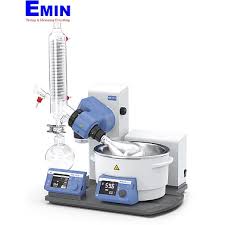
Why calibration matters for rotary evaporators
A rotary evaporator combines several controlled functions in one system: flask rotation, bath heating, and vacuum-assisted evaporation. Because these variables interact with each other, even a modest shift in one operating parameter can influence evaporation rate, sample handling, and the consistency of results between runs.
Calibration helps verify that the instrument performs as expected under practical laboratory conditions. It is especially relevant in environments where standard procedures, repeatable concentration steps, or traceable equipment records are required. For organizations already managing broader water bath calibration service needs, rotary evaporator checks are a natural part of the same equipment quality framework.
What a rotary evaporator calibration service typically supports
In most laboratories, a rotary evaporator is expected to deliver stable thermal conditions and predictable mechanical operation. A calibration service therefore supports verification of the key operating functions that influence practical use, such as temperature-related behavior and rotational performance, along with general operational confidence for the system.
The goal is not only to identify drift, but also to support repeatability, improve equipment oversight, and reduce uncertainty during routine evaporation tasks. This can be useful for laboratories maintaining internal SOPs, preparing for audits, or trying to standardize results across multiple instruments or teams.
Common use environments and application needs
Rotary evaporators are widely used in chemical laboratories, university research environments, pharmaceutical workflows, and sample preparation areas where solvents need to be removed efficiently. In these settings, equipment performance directly affects workflow speed and the consistency of concentrated samples.
Calibration becomes more valuable when the instrument is used frequently, shared by multiple operators, or assigned to controlled processes. It is also a practical step after relocation, repair, long operating periods, or whenever users notice differences in heating behavior or rotation response. Laboratories that manage multiple controlled instruments may also review related services such as biosafety cabinet calibration as part of a wider compliance and equipment assurance program.
Brand coverage for common laboratory setups
This category includes calibration service options for rotary evaporators from established laboratory equipment manufacturers. Common examples in this range include systems from IKA, Yamato, and WITEG, which are frequently used in research and industrial laboratory environments.
Representative service listings in this category include the IKA Rotary Evaporator Calibration Service, YAMATO Rotary Evaporator Calibration Service, and WITEG Rotary Evaporator Calibration Service. These references help users quickly locate service options aligned with the equipment they already operate, without needing to search across unrelated product groups.
How to choose the right service option
When selecting a calibration service, it is useful to start with the actual installed equipment base in your lab. Matching the service to the manufacturer and intended usage helps simplify planning, especially when documentation, maintenance cycles, or equipment-specific handling procedures are already in place.
You should also consider how the instrument is used in practice: routine solvent removal, regulated laboratory workflows, educational use, or higher-throughput sample processing. If your site manages several temperature-dependent instruments, it can be helpful to align service intervals across categories such as pharmacy refrigerator calibration to improve scheduling and reduce service disruption.
What to look for in a well-managed calibration program
A strong calibration program is built around consistency, documentation, and periodic review. For rotary evaporators, that means treating the equipment as part of a broader laboratory control system rather than as a standalone device used only when problems appear. Scheduled verification can help identify performance drift earlier and support more stable operation over time.
Documented equipment control is especially important in laboratories where records matter for quality management or internal traceability. Even when the rotary evaporator is not the most complex instrument in the lab, it often plays a critical role in sample preparation and concentration workflows, making calibration a sensible preventive step rather than a reactive one.
Related service categories for laboratory equipment control
Rotary evaporator calibration is often managed alongside other laboratory service needs. Facilities responsible for multiple instruments may coordinate this category with other verification tasks depending on their workflow, equipment criticality, and audit requirements.
For example, organizations with broader laboratory infrastructure may also evaluate services for storage, thermal equipment, or containment systems. In that context, related categories such as fire safety storage cabinet calibration can be part of a more complete equipment assurance strategy across the lab environment.
Supporting reliable laboratory performance
Choosing the right rotary evaporator calibration service helps laboratories maintain confidence in routine evaporation work, support repeatable processing conditions, and keep equipment oversight aligned with internal quality expectations. It is a practical service category for teams that want clearer equipment status and more dependable laboratory operation.
If your laboratory relies on rotary evaporation as part of sample preparation or solvent handling, reviewing service options by manufacturer and application need is a sensible place to start. A well-planned calibration schedule can support both daily productivity and long-term control of critical laboratory equipment.
-
-
-
-
-
-
-
-
-
-
-
-
-
-
-
-
-
-
-
-
-
-
-
-