

General-Purpose Oil Bath Calibration Service
Stable and uniform heating is critical in many laboratory workflows, especially when oil baths are used for temperature-sensitive preparation, testing, and material conditioning. Over time, normal use can affect temperature accuracy, stability, and consistency across the bath volume, which is why General-Purpose Oil Bath Calibration Service plays an important role in maintaining reliable laboratory performance.
This category is intended for laboratories, quality teams, and maintenance planners who need calibration support for general-purpose and high-temperature oil bath equipment. Whether the unit is used in research, sample preparation, materials testing, or routine thermal processes, calibration helps verify that the indicated temperature matches actual operating conditions and supports more dependable process control.
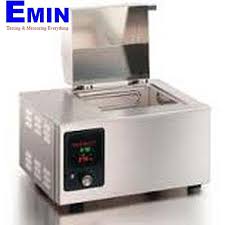
Why oil bath calibration matters in laboratory work
An oil bath is often selected when a process requires stable thermal transfer over a wide temperature range. In practical use, even small deviations between displayed and actual temperature can influence test repeatability, heating time, viscosity-related observations, or sample conditioning results.
Calibration helps identify those deviations under controlled conditions. It is especially useful in environments where traceable temperature verification is part of internal quality procedures, preventive maintenance, or routine inspection planning. For laboratories that also operate related temperature equipment, services such as water bath calibration service may be relevant for broader thermal equipment management.
What is typically covered in a general-purpose oil bath calibration service
For this type of equipment, calibration generally focuses on the core thermal performance of the bath rather than cosmetic or non-measurement aspects. The objective is to confirm how the unit behaves during operation and whether its temperature indication remains suitable for the intended application.
Common evaluation points may include temperature indication accuracy, temperature stability over time, and consistency within the working zone. Depending on laboratory requirements, calibration results may support equipment records, quality documentation, or periodic review of instrument performance.
Suitable equipment and service examples in this category
This category covers calibration service options associated with commonly used oil bath platforms from recognized laboratory equipment brands. Examples include the Cometech Thermostatic Oil Bath Calibration Service, the SH Scientific General-Purpose Oil Bath Calibration Service, and the DaiHan Digital High Temperature Oil Bath Calibration Service.
Where higher operating temperatures or specialized thermal applications are involved, users may also consider service options such as the WITEG High Temperature Oil Bath Calibration Service. In labs that manage multiple equipment groups, calibration planning is often coordinated alongside other service categories such as rotary evaporator calibration to keep maintenance schedules aligned.
How to choose the right calibration service
The right service choice usually depends on how the oil bath is used in practice. A routine laboratory heating bath used for general sample conditioning may require a different calibration scope than a unit used in elevated-temperature procedures or validation-related workflows. Understanding the operating range, critical setpoints, and how the bath supports test results will help define the right service approach.
It is also helpful to consider the equipment brand and model family when planning service. This category includes calibration examples tied to manufacturers such as DaiHan, SH Scientific, WITEG, MStech, and Cometech, allowing users to identify services that align more closely with their installed equipment base without overcomplicating the selection process.
When recalibration should be considered
Calibration intervals vary by laboratory policy, usage frequency, and process criticality. In general, recalibration should be considered after extended operation, relocation, repair, unusual heating behavior, or whenever process results suggest a possible temperature mismatch.
Typical warning signs include slower-than-expected heating response, inconsistent temperature readings, unstable control behavior, or differences between the displayed value and an external reference. If your facility also manages controlled-temperature storage, related support such as pharmacy refrigerators calibration may be useful as part of a wider temperature assurance program.
Benefits for quality control and equipment management
A well-planned calibration program helps laboratories improve confidence in daily thermal processes. It supports better comparability between runs, reduces uncertainty in temperature-dependent work, and gives maintenance teams a clearer view of equipment condition over time.
From an operational standpoint, calibrated laboratory equipment is easier to manage within inspection cycles, audit preparation, and internal quality systems. For organizations handling multiple instruments across testing and preparation areas, calibration services can also simplify recordkeeping and reduce the risk of unnoticed performance drift.
Frequently asked questions
Is calibration only necessary for high-temperature oil baths?
No. General-purpose oil baths used at moderate temperatures can also drift over time, so calibration is still important when process consistency matters.
Can this service be relevant for different brands?
Yes. This category includes examples connected to several manufacturers, including Cometech, DaiHan, SH Scientific, WITEG, and MStech.
How often should an oil bath be calibrated?
The interval depends on laboratory procedures, frequency of use, and the criticality of the application. Many facilities review calibration on a periodic schedule or after maintenance and repair events.
Supporting reliable thermal processes
Choosing the right oil bath calibration service is not just about meeting a maintenance requirement; it is about protecting the reliability of temperature-dependent laboratory work. When the bath performs as expected, teams can make better decisions, document results more confidently, and maintain smoother day-to-day operation.
If your lab uses general-purpose or high-temperature oil baths from brands such as Cometech, DaiHan, SH Scientific, WITEG, or MStech, this category provides a practical starting point for selecting a service that fits your equipment and quality workflow.
-
-
-
-
-
-
-
-
-
-
-
-
-
-
-
-
-
-
-
-
-
-
-
-