

Flocculator Calibration Service
Reliable mixing performance is essential when jar tests are used to evaluate coagulation and flocculation conditions in water and wastewater laboratories. Small deviations in stirring speed, timer accuracy, or paddle consistency can affect test repeatability and make it harder to compare treatment results with confidence. A well-planned Flocculator Calibration Service helps verify that the equipment is operating within expected parameters and supports more dependable laboratory workflows.
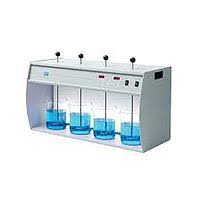
Why flocculator calibration matters in laboratory testing
A flocculator is commonly used in jar testing to simulate the mixing stages involved in chemical dosing and particle aggregation. Because this process depends heavily on controlled agitation, the instrument must deliver stable and repeatable performance across all test positions. If actual operation differs from the set values, the resulting test data may not reflect real treatment conditions.
Calibration helps confirm whether key operating functions such as stirring speed accuracy, timing behavior, and position-to-position consistency remain suitable for laboratory use. This is especially important in water treatment studies, quality control work, and process optimization where small differences in mixing can influence settling behavior and floc formation.
What is typically checked during a flocculator calibration service
The scope of service can vary depending on the equipment design and the laboratory’s requirements, but the main objective is to assess how closely the instrument performs against its indicated settings. In practical terms, this often includes verification of rotational speed, timer function, and the uniformity of operation across multiple stirring positions.
Visual condition, operational stability, and basic functional checks may also be part of the service process to identify issues that can influence measurement reliability. For laboratories managing broader equipment quality programs, calibration of supporting devices such as water bath systems can also be relevant where temperature-controlled sample preparation is part of the workflow.
Common situations that indicate calibration is needed
Routine calibration is typically scheduled at defined intervals, but there are also practical signs that a flocculator should be checked sooner. These may include inconsistent jar test outcomes, visible differences in paddle movement between stations, drift between set speed and observed performance, or uncertainty after transportation, maintenance, or extended use.
Calibration is also advisable when equipment is being added to a controlled laboratory environment, requalified after service, or reviewed as part of internal quality assurance. In regulated or audited settings, documented calibration records support traceability and help demonstrate that test equipment is being managed in a systematic way.
How calibration supports data quality and process decisions
Jar testing is often used to compare coagulant dosage, evaluate treatment efficiency, and refine operating conditions before full-scale application. When the flocculator performs consistently, the laboratory can interpret differences in test results with greater confidence. That makes calibration valuable not only as a maintenance activity, but also as part of a broader measurement reliability strategy.
For facilities that depend on multiple pieces of laboratory equipment, calibration planning is often most effective when considered across the entire testing environment. For example, teams that also use containment equipment may review related services such as biosafety cabinet calibration where applicable to their lab operations.
Points to consider when arranging flocculator calibration
Before scheduling service, it is useful to review the equipment’s application, usage frequency, and internal quality requirements. Laboratories with high sample throughput or critical comparative testing may require more regular verification than those using the instrument occasionally. The calibration interval should be aligned with actual operational risk rather than chosen as a fixed generic schedule.
It is also helpful to confirm the parameters to be checked, the condition of the equipment before service, and the type of documentation needed for your records. Clear calibration reporting supports audits, trend review, and decisions about adjustment, repair, or replacement when performance no longer meets laboratory expectations.
Calibration in the context of laboratory equipment management
Flocculator performance should be considered as one part of a wider equipment control program. In many laboratories, result quality depends on the combined stability of mixing, timing, storage, heating, and environmental control equipment. A structured service approach reduces the chance that hidden instrument drift will affect day-to-day testing.
Depending on the application, it may be practical to coordinate this service with other equipment categories in the same lab. For example, facilities handling temperature-sensitive materials may also benefit from reviewing pharmacy refrigerator calibration, while specialized sample preparation workflows may involve rotary evaporator calibration services.
Choosing a suitable service approach
The right calibration approach depends on how the flocculator is used, how critical the resulting data is, and what level of traceability the laboratory requires. Some users primarily need periodic verification for routine quality control, while others need more formal documentation to support validation programs, audits, or customer requirements.
In either case, the goal is the same: to ensure the equipment remains fit for purpose and that mixing-related variables are not introducing avoidable uncertainty into test results. A consistent service plan can help extend usable equipment life, improve confidence in laboratory decisions, and support smoother quality management over time.
Final considerations
When jar testing is part of an important treatment, research, or quality workflow, equipment accuracy should not be treated as an assumption. Flocculator calibration provides a practical way to verify performance, maintain consistency between test runs, and support better interpretation of laboratory data. Reviewing calibration needs at the right interval can help laboratories keep critical mixing equipment dependable and aligned with their operational requirements.
-
-
-
-
-
-
-
-
-
-
-
-
-
-
-
-
-
-
-
-
-
-
-
-