

Technical Equipment
Precision work depends on more than the instrument itself. In laboratories, training environments, and applied science settings, the surrounding workspace can directly affect measurement stability, operator comfort, and the reliability of sensitive procedures. That is why Technical Equipment plays an important role in supporting research, testing, and practical education workflows.
This category focuses on essential equipment used around core instruments rather than replacing them. It includes work-support solutions for controlled handling, stable placement, and better operating conditions for delicate devices used in science and technical practice. For organizations building or upgrading a lab, workshop, or teaching space, these products help create a more dependable environment for accurate results.
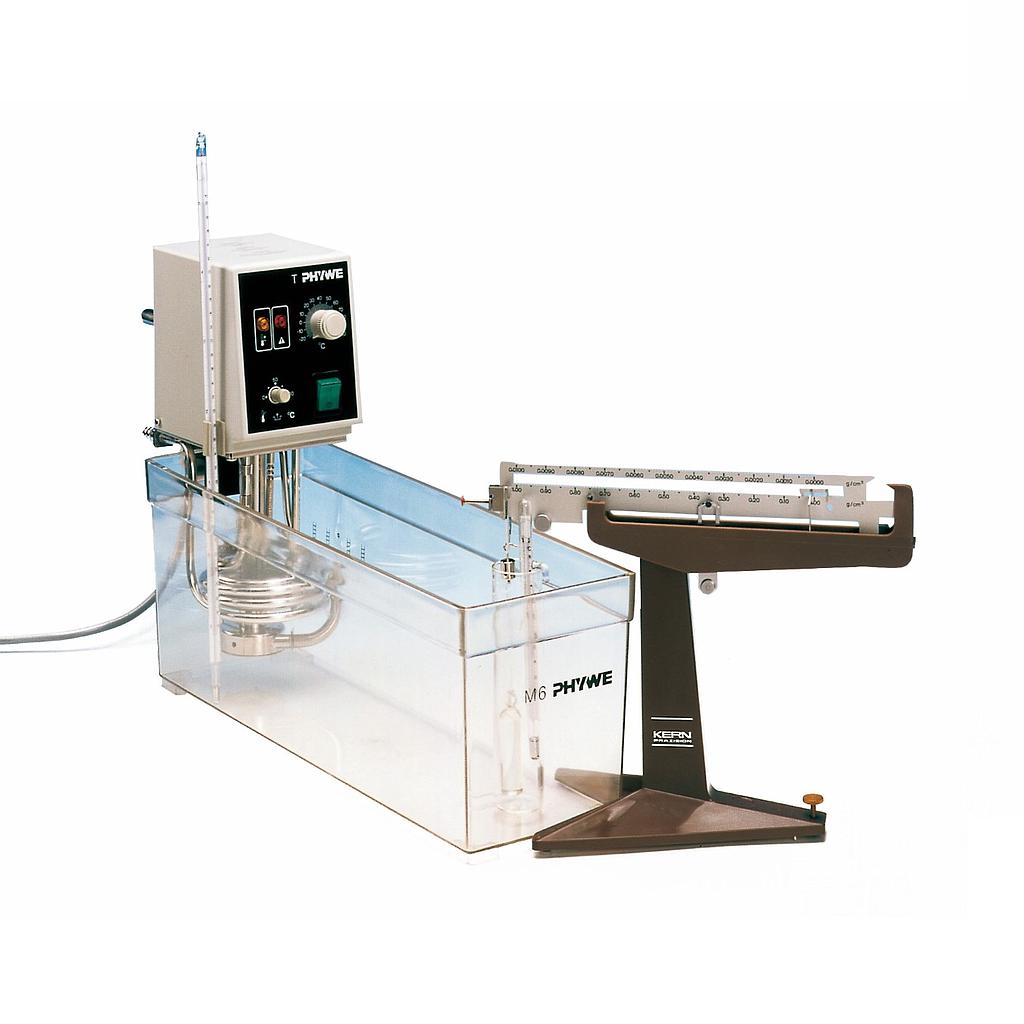
Why support equipment matters in technical environments
In many applications, performance is influenced not only by the quality of the measuring device but also by the platform on which it operates. Vibrations, unstable surfaces, and poor workstation design can affect repeatability, especially when dealing with sensitive balances, microscopes, or analytical tools. A well-chosen support system helps reduce external interference and improves day-to-day usability.
This is particularly relevant in educational laboratories, research facilities, and inspection areas where equipment may be used by different operators throughout the day. A stable, purpose-built setup supports measurement consistency, protects instruments from unnecessary stress, and makes technical procedures easier to standardize.
Typical applications of technical equipment
Products in this category are commonly used wherever sensitive instruments need a controlled physical setup. Typical examples include precision weighing, sample observation, small-scale testing, and laboratory preparation work. In these scenarios, even minor vibration or movement can introduce unwanted variation.
Technical support equipment is also useful in training centers and academic labs where practical learning requires reliable workstations. For broader infrastructure planning, buyers may also review related medical equipment categories when building mixed-use instructional or laboratory environments.
Anti-vibration tables as a key example
One representative solution in this category is the ESCO anti-vibration table range, designed for use with highly sensitive laboratory devices. An anti-vibration table provides a dedicated work surface intended to reduce disturbances from floor vibration, nearby movement, and environmental mechanical noise. This type of support is especially relevant when instrument readings depend on a quiet and stable platform.
A featured example is the ESCO MIRI® AVT Anti-Vibration Table (1200 × 800 × 800 mm). Based on the available product data, it is built as a specialized workstation for laboratory balances, microscopes, and other precision equipment. With a defined float size, controlled damping behavior, and low vibration amplitude characteristics, it is suited to applications where vibration isolation contributes to more stable operation and clearer measurement conditions.
What to consider when selecting technical equipment
Selection should begin with the actual instrument and working process. Load capacity, surface dimensions, and installation space are practical starting points, especially when the equipment must support a specific device footprint or operating routine. Material choice may also matter depending on the environment, cleaning requirements, and expected long-term durability.
For equipment intended to reduce motion or disturbance, buyers should also consider operating sensitivity. The more precise the application, the more important factors such as resonance behavior, damping, and overall structural stability become. Rather than focusing only on size, it is better to evaluate how the support equipment contributes to the instrument’s real operating conditions.
Fit within the wider applied science setup
Technical equipment is often part of a larger ecosystem that includes analytical tools, training systems, and specialized lab devices. In practice, these support products help connect the instrument to the workspace by improving usability and reducing avoidable errors caused by the environment. That makes them relevant not only for advanced research spaces but also for educational and routine technical operations.
Where a facility includes both instructional and applied testing functions, it can be helpful to review adjacent solutions alongside this category. You can explore more workspace-related options in technical equipment selections as part of a broader lab planning approach.
Benefits for laboratories, schools, and research facilities
Well-matched support equipment helps create a more controlled and professional working environment. In schools and training labs, it supports safer and more structured practical exercises. In research and testing spaces, it contributes to more reliable placement of precision instruments and can reduce disruptions that affect delicate procedures.
It also supports operational efficiency. When instruments are installed on suitable work surfaces, users spend less time compensating for instability and more time focusing on the task itself. Over time, this can help improve workflow quality, especially in applications where repeatability and careful observation are important.
Choosing with application in mind
The best choice depends on how the equipment will be used, what instrument it will support, and how demanding the working environment is. For highly sensitive balances, microscopes, or similar devices, a purpose-built anti-vibration table may be far more appropriate than a general workstation. For less sensitive tasks, standard support equipment may still be enough if the structure and size are matched correctly.
As you compare options in this category, focus on function first: stability, compatibility, footprint, and the role the product plays in the complete workspace. Taking that approach makes it easier to choose equipment that fits both current needs and future expansion of the laboratory or technical training area.
Technical equipment is often overlooked until stability or workflow becomes a problem. By selecting the right support solutions from the start, organizations can build a more dependable environment for teaching, testing, and precision laboratory work.
-
-
-
-
-
-
-
-
-
-
-
-
-
-
-
-
-
-
-
-
-
-
-
-