

Rock Testing Equipment
Reliable evaluation of rock behavior is essential in geotechnical investigation, civil engineering, mining, tunneling, and materials research. When engineers need to understand how rock or granular mineral materials respond to water, slope conditions, or laboratory handling, choosing the right rock testing equipment helps improve both test consistency and decision-making in the field and in the lab.
This category brings together instruments used to support practical rock and related material testing workflows. It is relevant for laboratories, universities, contractors, consultants, and quality control teams that need dependable tools for specimen assessment, physical behavior observation, and supporting measurements within broader soil and construction-material test programs.
Where rock testing equipment is used
Rock-related testing is commonly part of a larger investigation process rather than a standalone activity. In many projects, teams need to assess material characteristics for slope stability studies, excavation planning, aggregate behavior, groundwater influence, and construction material suitability. Equipment in this category supports those tasks by helping users observe measurable physical responses under controlled conditions.
Depending on the application, testing may be carried out in a research laboratory, site laboratory, educational setting, or quality control environment. In practice, rock testing often works alongside other material evaluation methods such as permeability test equipment when water interaction is important, or concrete verification tools where mixed structures and foundations are involved.
Focus on material behavior under water and slope conditions
One important area within this category is the observation of how non-cohesive or granular materials behave when exposed to water. Even when a project is broadly classified under rock or geotechnical testing, engineers often need to evaluate related material behavior such as natural gradient, angle of repose, and movement under submerged conditions. These results can contribute to a better understanding of drainage performance, embankment behavior, and material selection.
The natural gradient concept is especially useful when assessing the maximum slope angle formed by a material under defined conditions. This type of test can support comparison between samples, help standardize laboratory observations, and provide input for applications where flow, settlement, or stability is influenced by material shape and moisture interaction.
Representative equipment in this category
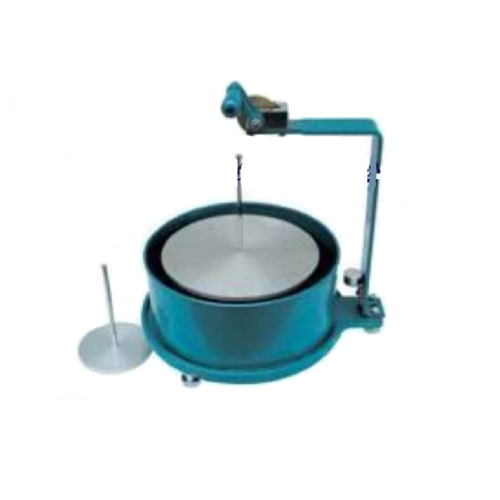
A notable example is the Samyon QR-1 Natural Gradient Apparatus, which is used to measure the maximum slope angle between the natural gradient of fully air-dried non-cohesive soil and the horizontal plane in water state. Although simple in concept, this type of apparatus plays a useful role in controlled laboratory evaluation where repeatable setup and observation are important.
The QR-1 uses circular plates and a water basin arrangement to support the test procedure in a compact benchtop format. For laboratories already working with Samyon instruments, it may also be helpful to review the broader Samyon product range for related material testing solutions and compatible procurement planning.
How to choose the right equipment
Selection should begin with the actual test objective. Some users are validating material behavior for research, while others need straightforward equipment for routine quality checks. Before choosing an instrument, it is useful to confirm the sample type, the test method being followed, the required reporting output, and whether the equipment will be used occasionally or as part of a frequent laboratory workflow.
Buyers should also consider specimen size, ease of cleaning, workspace requirements, and how easily the device can be integrated into existing testing procedures. For teams handling several categories of construction material assessment, it is often practical to align rock-related instruments with adjacent testing capabilities such as concrete test hammer systems or rebar inspection tools used in the same project environment.
Why consistency matters in laboratory testing
In technical B2B environments, the value of a test instrument is not only in whether it can perform a measurement, but whether it can support repeatable testing across operators, batches, and reporting cycles. Stable fixtures, practical dimensions, and clear test setup all contribute to more reliable comparisons between samples.
This is particularly important in project documentation, academic research, and quality assurance processes where results may be reviewed by multiple stakeholders. Equipment that is straightforward to operate and maintain can reduce handling variability and improve confidence in the observed material response.
Rock testing within a broader material evaluation workflow
Many customers searching for this category are not purchasing in isolation. Rock and geotechnical investigations often sit inside a wider test ecosystem covering concrete, rebar, durability, and non-destructive evaluation. For that reason, category planning should consider both the immediate instrument need and the surrounding workflow, including sample preparation, documentation, and complementary measurements.
Where structural assessment and material verification overlap, users may also look at solutions such as ultrasonic pulse velocity instruments for non-destructive evaluation or cover meters and rebar detectors for reinforced concrete inspection. This broader view helps procurement teams build a more complete and efficient testing capability.
What buyers typically look for
For laboratories and industrial buyers, purchasing decisions usually depend on practical factors rather than marketing language. Common priorities include equipment suitability for the intended test, manageable form factor, ease of operation, and compatibility with established procedures. Clear product identification and manufacturer support are also important in regulated or multi-site environments.
When reviewing available options in this category, it is useful to compare how each product fits the actual material type and testing routine. A focused instrument such as a gradient apparatus may be the right choice when the goal is to obtain a specific physical behavior measurement without adding unnecessary complexity.
Final thoughts
Choosing appropriate rock testing equipment starts with understanding the material behavior you need to evaluate and the level of control required in the test process. Whether the application involves laboratory studies of non-cohesive materials in water, geotechnical comparison work, or support for broader civil engineering investigations, the right equipment helps make results more consistent and more useful.
This category is designed to support those workflows with relevant testing instruments and manufacturer options. If you are building or expanding a materials testing setup, reviewing the intended method, sample characteristics, and related test categories is the most practical way to identify the right solution.
-
-
-
-
-
-
-
-
-
-
-
-
-
-
-
-
-
-
-
-
-
-
-
-