

Thermal imaging binoculars
When visibility drops, standard optics quickly reach their limit. In field inspection, wildlife observation, perimeter monitoring, and night operations, the ability to detect heat signatures rather than reflected light can make observation faster, safer, and more reliable.
Thermal imaging binoculars are designed for this kind of task. Instead of depending on daylight or artificial illumination, they convert infrared radiation from people, animals, vehicles, and other objects into a visible image, helping users identify targets in darkness, through light fog, or in visually cluttered environments.
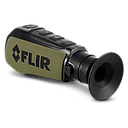
How thermal imaging binoculars work in practical observation
Every object with a temperature above absolute zero emits infrared energy. A thermal binocular captures that energy through an infrared lens, processes it with a thermal sensor, and displays a thermal image inside the eyepiece. This means the user is not looking at visible colors in the usual sense, but at a representation of temperature differences across the scene.
That operating principle makes thermal devices especially useful in complete darkness, where conventional binoculars would provide little or no detail. It also helps when the target blends into the background visually, such as an animal resting in brush or a person standing near poorly lit structures. For applications that focus more specifically on movement detection or tracking, related technologies such as Doppler Radar may also be relevant depending on the wider measurement setup.
Where this category is commonly used
Thermal binoculars are often selected for outdoor work where low-light performance matters more than conventional image clarity. Common use cases include patrol routes, site security, search tasks, forest and wildlife monitoring, utility inspection support, and general surveillance in large open areas. In these environments, thermal contrast can reveal what standard optics miss.
They are also helpful when the user needs both situational awareness and comfortable long-duration viewing. Compared with single-eye devices, binocular-style viewing can reduce operator fatigue and improve scanning efficiency over extended observation periods. In broader field systems, they may be used alongside tools such as speed sensors when teams need both visual detection and motion-related measurement data.
Key features to evaluate before choosing a model
The right selection depends on how and where the device will be used. For long-range observation in open terrain, users typically prioritize detection capability, image detail, and stable performance over distance. In wooded or confined environments, handling, startup speed, and ease of target reacquisition may be just as important as raw range.
Other practical factors include display clarity, battery endurance, housing durability, and resistance to moisture or rough outdoor use. If the binocular will be carried for long periods, ergonomics and weight should not be overlooked. A technically capable unit that is uncomfortable to use in the field may reduce productivity during real operations.
It is also worth considering how the device fits into the wider equipment ecosystem. Some users need a standalone observation tool, while others are looking for something that complements navigation, communication, or survey workflows. In field teams that coordinate over distance, products from categories like walkie-talkie equipment are often part of the same operating context.
Benefits over conventional night viewing tools
The main advantage of thermal observation is that it does not require visible light. This allows the user to detect people, animals, or warm mechanical components even when the scene appears completely dark to the naked eye. It can also reduce reliance on flashlights or spotlights, which may reveal the observer’s location or disturb the environment.
Another benefit is improved target detection against natural camouflage. A person wearing dark clothing or an animal partially hidden in vegetation may still stand out thermally if there is enough temperature difference from the background. This makes thermal binoculars valuable not only for night use, but also for daytime scanning in visually complex terrain.
Brand context within this category
Within this category, Teronic is one of the featured manufacturers. For B2B buyers and technical users, brand relevance often comes down to product consistency, intended application range, and how well the device aligns with operational requirements rather than brand name alone.
That is why category-level comparison should focus on use conditions first: observation distance, environment, expected runtime, and the level of image interpretation needed by the operator. A thermal binocular used for routine patrol work may be selected differently from one intended for irregular wildlife surveys or field response tasks.
How to align selection with real working conditions
A useful way to narrow down options is to start with the actual observation scenario. If the task involves scanning large outdoor zones, users generally benefit from a model that supports stable long-duration viewing and clear thermal separation at distance. If the equipment will be used on the move, portability and fast deployment become more important.
Environmental factors also matter. Humid areas, changing temperatures, and long shifts can affect how practical a device feels in everyday use. For technical teams, it is better to choose a model based on workflow fit than to focus only on headline specifications. A balanced choice usually delivers better field results than simply aiming for the most advanced configuration on paper.
Thermal binoculars in a wider survey and detection workflow
Although this category is primarily associated with visual detection, thermal binoculars often support broader survey, monitoring, and field-awareness tasks. They can be part of a layered setup where operators first detect a target thermally, then confirm location, movement, or environmental context with other instruments.
In specialized sectors, this may overlap with marine and coastal work, site surveillance, or mobile inspection activity. Users building a broader solution stack may also want to explore adjacent categories such as hydrography and oceanography survey equipment when their operations extend beyond land-based observation.
Final considerations
Choosing the right thermal binocular is less about chasing a generic specification list and more about matching the device to actual field conditions. Detection environment, observation duration, user comfort, and workflow compatibility all play a role in long-term usefulness.
For buyers comparing options in this category, the best approach is to evaluate application fit, not just feature count. A well-matched thermal imaging binocular can improve detection efficiency, support safer nighttime observation, and give operators a clearer view of what conventional optics may fail to reveal.
-
-
-
-
-
-
-
-
-
-
-
-
-
-
-
-
-
-
-
-
-
-
-
-