

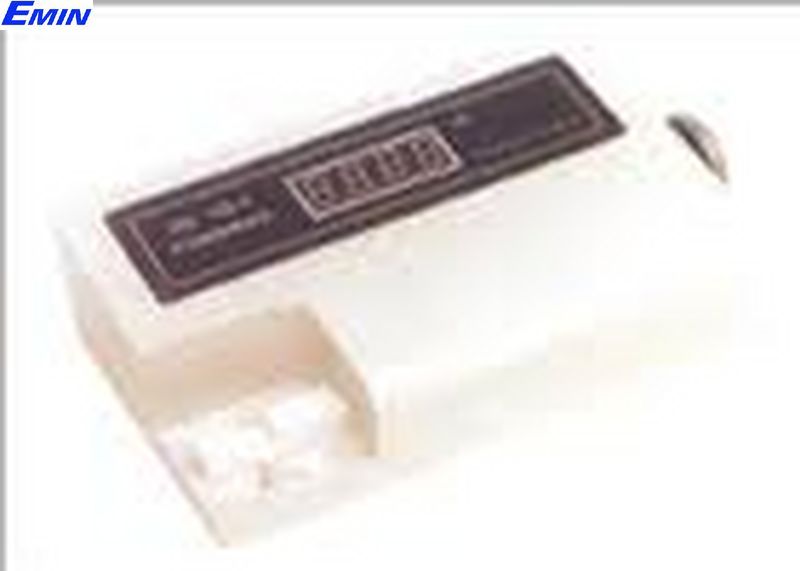
Medicine hardness tester
In tablet development and routine quality control, measuring mechanical strength is just as important as checking appearance or weight variation. A reliable medicine hardness tester helps manufacturers evaluate whether tablets can withstand compression, coating, packaging, transport, and storage without becoming too hard to disintegrate properly.
For pharmaceutical labs and production environments, hardness testing supports more consistent process control and provides practical insight into formulation behavior. It is especially relevant when teams need to balance tablet durability with downstream performance such as disintegration and dissolution.
Why hardness testing matters in pharmaceutical production
Tablet hardness is a direct indicator of mechanical strength. If a tablet is too soft, it may chip, crack, or break during handling. If it is too hard, disintegration can slow down, which may affect dissolution behavior and product performance.
That is why hardness testing is commonly used across formulation development, process optimization, and batch release. It gives operators and QA teams a practical way to verify compression consistency and identify whether material changes, tooling conditions, or process settings are shifting product quality.
What a medicine hardness tester is used for
A medicine hardness tester measures the force required to break a tablet under controlled conditions. In pharmaceutical applications, results are typically used to compare batches, validate compression settings, and confirm whether the finished tablet falls within the expected strength range.
These instruments are especially useful when developing new products, scaling up from pilot to production, or troubleshooting issues such as capping, lamination, excessive breakage, or inconsistent disintegration. In many workflows, hardness data is reviewed together with results from friability testing and visual inspection to build a more complete picture of tablet quality.
Key factors that influence tablet hardness
Several variables can affect hardness, and understanding them helps users choose the right tester and interpret results correctly. Compression force is one of the most obvious factors: increasing force usually raises hardness, but too much compression may create tablets that are difficult to break down in use.
Formulation also plays a major role. Binder type and concentration influence particle cohesion, while moisture content can either improve bonding or create instability if it is not controlled properly. Particle size distribution matters as well, because more uniform granules often lead to more consistent compression and less hardness variation between tablets.
Because hardness does not act alone, it is often evaluated alongside tablet disintegration testing and, where relevant, dissolution testing equipment. This combined approach is useful when the goal is not just strong tablets, but tablets that also perform as intended after administration.
Common equipment options in this category
This category is centered on hardness testing, but the broader pharmaceutical QC environment often includes inspection and supporting measurement tools. The available product context shows examples from NFA, such as the SELMA100 T tablet inspection machine and capsule inspection systems including the SELMA100 C, SELMA150 H, and SELMA150 C.
These examples are not hardness testers in the strict sense, but they illustrate the wider inspection ecosystem used in pharmaceutical production. High-throughput camera-based inspection systems support defect detection and visual quality control, while hardness testers focus on the force required to break a tablet. In practice, both types of equipment contribute to more stable and more traceable manufacturing workflows.
The product list also includes HANNA HI719-25 Magnesium Hardness Checker HC Reagents (25 Tests). This item relates to water hardness analysis rather than tablet compressive hardness, showing that the term “hardness” can apply to different testing needs across laboratory operations. For buyers, that makes application matching especially important when selecting equipment.
How to choose the right tester for your application
The first step is to define the dosage form and testing objective. If the focus is compressed tablets, the instrument should be suited to tablet geometry, expected force range, and required repeatability. For R&D and small-batch quality checks, a simpler setup may be enough, while higher-throughput environments often benefit from automated handling and result logging.
It is also helpful to consider how hardness testing fits into the rest of the QC process. Teams working under regulated conditions may need easier documentation, repeatable operation, and compatibility with standard lab procedures. If products vary widely in size or coating condition, the tester should support that operating range without introducing unnecessary complexity.
Beyond the instrument itself, buyers should think about workflow: sample volume per batch, operator skill level, cleaning requirements, and whether the tester will be used mainly for incoming development work or for routine production release. Choosing on application fit rather than feature overload usually leads to better long-term value.
Hardness testing in relation to other pharmaceutical quality checks
Tablet hardness is only one part of a complete quality assessment. A tablet may be mechanically strong yet still fail in friability, disintegration, or dissolution performance. For that reason, pharmaceutical laboratories typically treat hardness as one checkpoint within a broader control strategy.
For example, friability helps assess resistance to abrasion, while disintegration measures how quickly a tablet breaks apart under specified conditions. Depending on the product type, a medicine melting meter may also be relevant elsewhere in the analytical workflow. Looking at these results together gives a more useful understanding than relying on a single value alone.
Typical users and working environments
Medicine hardness testers are commonly used in pharmaceutical manufacturing plants, formulation laboratories, research centers, and quality control departments. They are relevant in both early-stage development and established production, especially when process consistency must be documented over time.
They can also support training and method standardization by giving teams a measurable way to compare tablet strength across operators, equipment settings, and raw material lots. In regulated industries, this kind of repeatable measurement supports better decision-making and easier root-cause analysis when quality deviations occur.
Choosing with the full process in mind
Selecting a medicine hardness tester is ultimately about more than checking whether a tablet can resist force. The right system should fit the product, the testing routine, and the quality objectives of the facility. When hardness data is reviewed together with friability, disintegration, and inspection results, it becomes far more useful for controlling real production outcomes.
If you are comparing options in this category, focus on application suitability, consistency of measurement, and how well the instrument supports your pharmaceutical QC workflow. A well-matched tester helps teams improve batch reliability, investigate process changes more effectively, and maintain more stable tablet quality from development through release.
-
-
-
-
-
-
-
-
-
-
-
-
-
-
-
-
-
-
-
-
-
-
-
-