

Air Cooler
Stable temperature control matters in more places than people expect. In laboratories, control cabinets, instrument enclosures, and nearby technical work areas, excessive heat can shorten component life, affect measurement stability, and reduce operating reliability. This is why choosing the right Air Cooler is often a practical part of building a dependable working environment rather than just adding comfort equipment.
Within this category, the focus is on compact and industrial-style cooling solutions suited to technical and B2B applications. The range includes models for different cooling capacities, installation constraints, and power supply conditions, helping buyers match equipment more closely to the thermal load of their application.
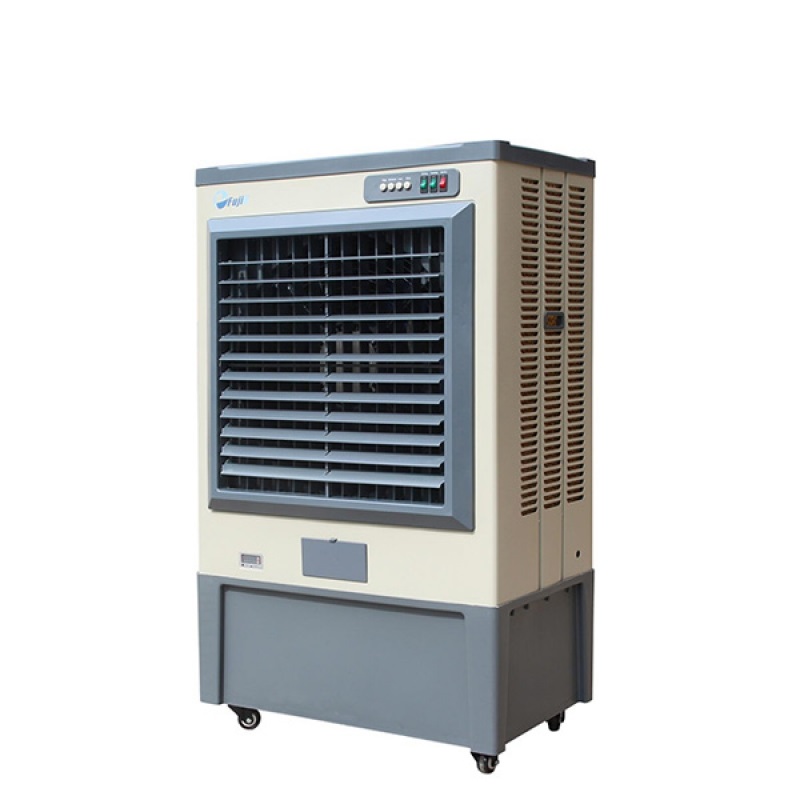
Where air coolers are used in technical environments
Air coolers in industrial and laboratory settings are commonly selected to remove heat from enclosed or semi-enclosed spaces where electronics, control components, or sensitive devices operate. Compared with general room cooling, these applications often require more targeted thermal management, especially where local hotspots form around panels, drives, or compact equipment assemblies.
Typical use cases include laboratory support spaces, equipment stations, control cabinets, automation panels, and process areas where ambient temperature can rise during continuous operation. In these environments, cooling supports not only operator comfort but also equipment protection and more stable day-to-day performance.
Product range and capacity options
This category includes several Habor models covering a broad capacity range. At the compact end, models such as the Habor HA-35A and Habor HA-50A are suited to smaller thermal loads and space-limited installations. Mid-range options such as Habor HA-120A, HA-160A, HA-200A, and HA-260A provide additional cooling for more demanding enclosures or equipment areas.
For higher-capacity requirements, models such as Habor HA-400A, HA-600A, HA-750A, and the Habor HA-900A extend the range considerably. Based on the listed products, available cooling capacities run from small-format units up to larger systems delivering several thousand watts of cooling performance, giving buyers flexibility across light-duty and heavier-duty applications.
How to choose the right air cooler
The first step is to estimate the real heat load. Buyers typically review the heat generated by internal electronics, drives, power supplies, lighting, and any external environmental influence. If the application operates in a warm production area or near other heat sources, the required cooling margin may be higher than the nominal internal load suggests.
Power supply is another important selection factor. Some units in this category support 1-phase 200-230 V, while others also accommodate 3-phase options such as 220 V or 380 V, depending on model. It is also useful to check the maximum ambient condition the unit is designed for, especially when the installation may face elevated temperatures up to tropical operating environments.
Physical dimensions and installation footprint should be reviewed early in the buying process. Compact models can be easier to integrate into small machine layouts, while larger-capacity units naturally require more space. Weight, service access, and airflow path all influence whether a given model is suitable for retrofit projects or new equipment builds.
Key specifications that matter in purchasing
Cooling capacity is the most visible specification, but it should be read together with operating frequency, supply voltage, and installation context. Several products in this category list values at both 50 Hz and 60 Hz, which is useful for buyers managing equipment across different sites or export-oriented projects.
Another practical point is noise level. Many of the listed Habor units indicate operation below 70 dB(A), which can be relevant in laboratories, test rooms, and technical areas where continuous background noise should be kept within a manageable range. For many buyers, this balances thermal performance with workplace usability.
Ambient temperature rating is equally important. Standard and tropical variants appear across the range, with tropical versions intended for harsher heat conditions. For facilities in hot climates or for installations near process heat, this can be a more meaningful criterion than nominal capacity alone.
Representative products in this category
Habor is the main manufacturer represented in this category and offers a clear progression from compact to higher-capacity models. Smaller units such as HA-100A and HA-120A may fit applications where the thermal load is modest and installation space is limited. Models such as HA-400A and HA-600A are better aligned with mid-sized cooling demands, while HA-750A and HA-900A are relevant when larger heat loads must be addressed.
There is also a relevant example of an air-cooled product from Allen-Bradley: the PowerFlex 755 air cooled AC drive. While this is not an air cooler in the same sense as the Habor units, it reflects how air-cooled design is used in industrial systems to manage thermal performance in automation environments. For buyers working around drives and control systems, that broader context can help when evaluating cooling needs across an entire installation.
Integration with laboratory and industrial workflows
Although this category sits under laboratory equipment, the products are also relevant to broader technical operations. Air cooling can support equipment uptime in testing spaces, sample preparation areas, utility corners, and instrument support environments where heat accumulation is a recurring issue.
In facilities with mixed requirements, supporting equipment such as carts and trolleys may also play a role in moving heavy units during installation or maintenance. In application areas involving heating tasks, related categories such as burners and torches can create nearby thermal loads, making localized cooling and airflow planning even more important.
Practical buying considerations for B2B users
For project buyers, maintenance teams, and OEM customers, the best selection process usually starts with application details rather than model name alone. Useful inputs include enclosure size, internal heat sources, local ambient temperature, available electrical supply, and whether the installation is continuous-duty or intermittent.
It is also worth considering future expansion. If additional electronics or higher-duty operation may be added later, selecting a unit with a reasonable performance margin can reduce the need for redesign. At the same time, oversizing without a clear reason may increase space demands and energy use, so the goal is a balanced selection based on the actual thermal profile.
Finding the right solution in the Air Cooler category
This category brings together air cooler options suited to laboratories, technical rooms, and industrial support applications where heat management is essential to reliable operation. From compact Habor models for lighter cooling tasks to larger-capacity units for more demanding environments, the range supports a variety of installation needs.
When comparing options, focus on cooling capacity, power requirements, ambient rating, physical size, and the specific conditions of the equipment being protected. A well-matched air cooler helps create a more stable operating environment and supports longer service life for the systems around it.
-
-
-
-
-
-
-
-
-
-
-
-
-
-
-
-
-
-
-
-
-
-
-
-