

Level sensor
Accurate level measurement is fundamental anywhere liquids, slurries, or bulk materials must be monitored continuously and safely. From storage tanks and process vessels to compact OEM equipment, choosing the right sensing method helps reduce overflow risk, prevent dry running, and improve control across industrial automation systems.
Level sensor products in this category support a wide range of monitoring tasks, whether the priority is simple point detection or more stable measurement in demanding process environments. The right device depends on media characteristics, tank geometry, installation constraints, and the level of integration required with the surrounding control system.
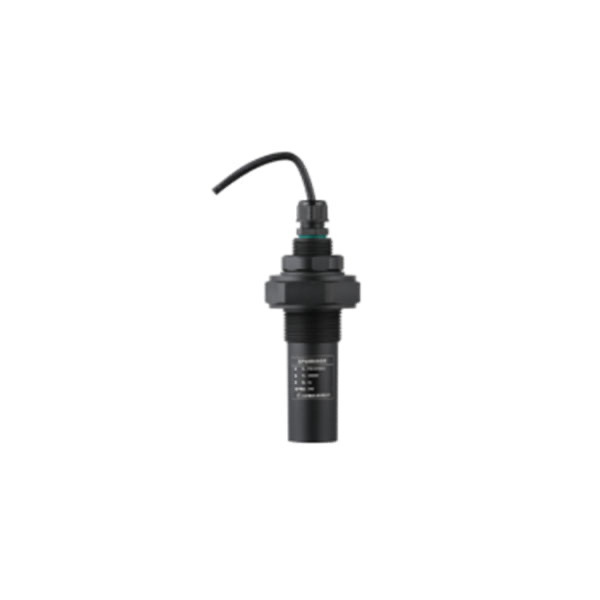
Where level sensing is used in industrial systems
Level monitoring appears in many sectors because material height is directly tied to safety, quality, and uptime. Common use cases include chemical tanks, water and wastewater systems, food and beverage processes, packaging machinery, utility skids, and general factory automation.
In some applications, the sensor is used to trigger a simple high or low alarm. In others, it becomes part of a broader control loop that manages filling, dosing, pumping, or inventory tracking. When the process also depends on related measurements, it can be useful to review technologies such as flow sensors and pitot tubes or air quality sensors for a more complete system design.
Common level sensing principles
Not every installation requires the same measurement approach. A point level sensor is typically used to detect whether material has reached a specific threshold, while continuous sensing is preferred when operators need a live level value for indication or control.
Selection usually depends on the medium and the environment. Clean liquids, viscous media, foaming surfaces, conductive fluids, powders, and solids can all behave differently in a tank. Mounting position, pressure, temperature, agitation, and buildup on the probe or sensing surface can also affect performance, so the sensing principle should match the real process conditions rather than only the vessel size.
How to choose the right level sensor
A practical selection process starts with the material itself. Key questions include whether the target is liquid or solid, whether it is corrosive or hygienic, and whether it may create foam, condensation, turbulence, or residue. These factors influence sensor suitability far more than a simple “tank level” label suggests.
Next, consider the installation and control requirements. Important points include available mounting space, required output type, response time, switching accuracy, and whether the sensor will connect to a PLC, relay logic, or a local indicator. In compact automation setups, manufacturers such as Banner Engineering, Honeywell, and Omron Automation and Safety are often relevant when evaluating industrial sensing options within broader machine control architectures.
Important environmental and process considerations
Real-world conditions often determine long-term reliability more than the nominal sensing range. Tanks exposed to vibration, washdown, dust, steam, temperature cycling, or electrical noise may need more careful sensor selection and installation practices. This is especially true in process industries where maintenance access is limited and unexpected downtime is costly.
Media behavior is another major consideration. A calm, clean liquid is easier to measure than a sticky, aerated, or fast-moving product. If the application includes changing material properties, splashing, or irregular surfaces, it is worth choosing a sensing technology that can tolerate those variations instead of relying on ideal laboratory conditions.
Level sensors in process automation and OEM equipment
In process plants, level sensing is often connected to alarms, pump protection, batching, and stock management. In OEM machinery, the same category can support coolant monitoring, reservoir management, condensate collection, or fluid confirmation inside compact modules. The expected duty cycle, serviceability, and available panel I/O all shape the final device choice.
Some projects also require coordination with nearby sensors to improve overall machine awareness. For example, systems handling transparent containers, part detection, or position verification may also involve devices from adjacent categories such as ambient light sensors. Looking at the sensing ecosystem as a whole often leads to a more stable automation design than choosing each sensor in isolation.
Manufacturer landscape and application fit
This category includes solutions associated with well-known industrial and instrumentation brands such as Adafruit, Banner Engineering, Endress+Hauser, Festo, Honeywell, Littelfuse, OMEGA, Omron Automation and Safety, Panasonic Industrial Automation, and Pepperl+Fuchs. Each brand may be more relevant in different contexts, from compact embedded and educational projects to factory automation and process-oriented installations.
Application fit matters more than brand recognition alone. For some buyers, the main priority is integration into an established automation platform. For others, it may be environmental robustness, process compatibility, or straightforward replacement within an existing design. Comparing sensor type, installation method, and control interface is usually the most efficient way to narrow the shortlist.
What buyers should review before ordering
Before selecting a device, it is worth confirming the basic application data: medium type, vessel dimensions, mounting orientation, operating conditions, required switching or measurement behavior, and available electrical interface. Even small details such as cable routing, access for maintenance, or the presence of foam can influence the best choice.
It also helps to define whether the goal is overflow prevention, low-level protection, continuous inventory visibility, or process control. A clear requirement makes it easier to identify the right level measurement approach and avoid over-specifying or under-specifying the sensor for the task.
Finding a suitable sensor for your installation
Level sensing is rarely a one-size-fits-all decision. The most effective choice comes from matching the sensing principle to the process media, installation environment, and control objective rather than focusing only on category names or general specifications.
By reviewing the application carefully, buyers can select level sensors that support reliable monitoring, safer operation, and better process visibility across industrial systems. If you are comparing options for tanks, vessels, or machine-integrated fluid monitoring, this category is a practical starting point for identifying devices aligned with your operating conditions.
-
-
-
-
-
-
-
-
-
-
-
-
-
-
-
-
-
-
-
-
-
-
-
-