

Industrial Controllers
Reliable control is at the center of modern production lines, utility systems, thermal processes, and machine automation. Whether the task is regulating power to a heating load, managing process variables, or coordinating signals across equipment, the right controller helps improve stability, repeatability, and system safety. This category brings together Industrial Controllers used in demanding B2B environments where uptime, integration, and predictable performance matter.
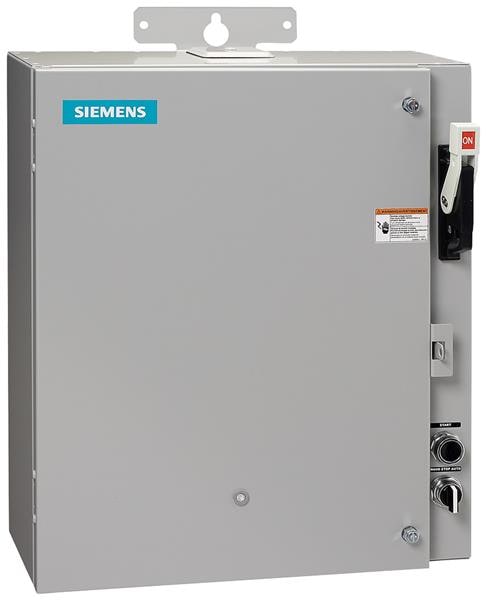
Where industrial controllers fit in an automation system
In practical terms, controllers act as the decision-making layer between inputs, operating logic, and final outputs. They receive signals from sensors or external systems, apply a control method, and then adjust relays, switches, or power stages to keep a process within target conditions. This can apply to temperature regulation, load switching, level management, timing, motion-related functions, and many other control tasks in industrial environments.
Because requirements vary so widely, this category covers a broad ecosystem rather than a single device type. Some applications need compact digital units for straightforward switching, while others require more specialized control platforms for process optimization, automation logic, or high-power load management. If you are building a wider automation architecture, it is often helpful to view related options such as process controllers or PLCs for programmable machine logic.
Common controller types used in industry
Industrial control requirements usually fall into a few familiar categories. Some controllers are designed to maintain a process variable such as temperature, humidity, or level. Others are intended for switching, sequencing, power regulation, or machine-level command tasks. The main difference is not only what they control, but also how precisely they react, what kind of input and output interfaces they use, and how they are integrated into the panel or machine.
Within this category, users may be comparing digital switching solutions, thyristor-based power control, programmable control hardware, or dedicated control devices for a single process function. In systems where electrical loads must be managed carefully, the controller may also be selected together with supporting components from circuit protection or contactor ranges to create a more complete power-control panel.
Power control and thyristor-based solutions
One important segment within industrial controllers is power control, especially in applications involving electric heaters, furnaces, ovens, dryers, and other thermal processes. In these environments, the controller must do more than switch a load on and off. It often needs to regulate delivered power in a stable and responsive way, helping reduce process fluctuation and supporting more controlled heating behavior.
The products listed here include examples from Advanced Energy, particularly the Thyro family. Models such as the Advanced Energy Thyro-A 1A 230-60 H3 and Advanced Energy Thyro-A 3A 400-170 HRL3 illustrate the role of dedicated power controllers in single-phase or three-phase load regulation. For applications focused on fast and controlled thyristor switching, models such as the Advanced Energy Thyro-S 1S 500-280 HF3, Thyro-S 2S 400-30 H3, and Thyro-S 3S 500-30 H3 represent digital thyristor switch options suited to industrial power management.
What to consider when choosing an industrial controller
The first step is matching the controller to the actual control objective. A simple switching task, a closed-loop process, and a high-power thermal load all require different control approaches. Buyers should consider the type of load, the number of phases involved, the available supply range, mounting method, interface needs, and whether the device will operate as a standalone controller or as part of a larger control network.
It is also important to look at environmental and installation conditions. Panel space, temperature range, wiring method, and service access can affect long-term usability. For example, some listed products show chassis or panel-mount formats, relay outputs, and USB or micro USB interfaces, which may be relevant for commissioning, diagnostics, or setup in maintenance-oriented environments. When timing and pulse feedback are part of the application, related categories such as counters and tachometers may also support the broader control scheme.
Examples from the current product range
For buyers evaluating available options, the current assortment includes several representative controller types rather than only one narrow family. The Advanced Energy Thyro-A+ 1A 230-30 H RLP 4 and Thyro-A+ 2A 500-350 HF RLP 4 are examples of SCR power controllers intended for regulated electrical load control. The Advanced Energy Thyro-A+ 3A 500-30 H RL 4 and Thyro-A+ 3A 500-650 HF RLP 4 further show how the range extends across different power and configuration needs.
On the switching side, the Advanced Energy Thyro-S 1S 400-350 HFRLP3 demonstrates a digital thyristor switch format for controlled load operation. These examples are useful for understanding the breadth of the category: some products are built for precise power delivery, while others are better aligned with switching behavior, response requirements, or specific installation constraints. The right selection depends less on model popularity and more on the process characteristics of the application.
Integration, maintenance, and long-term system value
A suitable controller should not only meet the immediate control requirement but also fit the lifecycle of the machine or process. In industrial settings, this means considering commissioning access, replacement planning, panel compatibility, and how easily technicians can troubleshoot inputs, outputs, and load behavior over time. Digital interfaces and structured installation formats can be helpful where maintenance speed and service visibility are priorities.
Controller selection also affects the wider automation strategy. In some systems, a dedicated controller performs one critical function locally while higher-level platforms handle supervision and coordination. In others, a compact specialized controller is the most efficient solution because it reduces complexity compared with a larger automation platform. This is why the category remains relevant across OEM design, retrofit projects, utilities, and process manufacturing.
Choosing the right category path for your application
If your project centers on electrical load regulation, thermal process equipment, or thyristor-based switching, this category is a practical starting point for comparing industrial controller options. If your requirement is more logic-driven or machine-centric, it may make sense to narrow the search toward PLCs, process-focused units, or other controller families shown within the broader industrial control portfolio.
By focusing on control method, power architecture, installation needs, and integration expectations, buyers can shortlist devices that align more closely with real operating conditions. From general-purpose control tasks to specialized thyristor and power-control applications, industrial controllers remain essential for building automation systems that are easier to manage, more stable in operation, and better suited to industrial-scale performance.
Types of Industrial Controllers (129,821.000)
- Charge Controllers (17.000)
- Cobot Controllers (3.000)
- Controller Accessories (945.000)
- Humidity controller (11.000)
- I/O Controllers (183.000)
- In-line Controllers (2.000)
- Level controller (207.000)
- Logic Controllers (78.000)
- Motion Controllers (22.000)
- Motor Controllers (219.000)
- Phase Angle Controllers (14.000)
- PID Controllers (2,545.000)
- Power controller (517.000)
- Power factor regulator (23.000)
- Process Controllers (14.000)
- Programmable Controllers (1.000)
- Programmable Logic Controllers - PLCs (2,165.000)
- Safety Controllers (184.000)
- Specialty Controllers (2,532.000)
- Temperature Controller (119,064.000)
- Thyro Power Controllers (1,075.000)
-
-
-
-
-
-
-
-
-
-
-
-
-
-
-
-
-
-
-
-
-
-
-
-