

RF Signal Generator Calibration Service
Accurate RF output is essential whenever a signal source is used to verify receivers, validate wireless designs, support EMC work, or maintain production test reliability. Even a small drift in frequency accuracy, output level, or modulation performance can affect measurement confidence across an entire workflow. This is where RF Signal Generator Calibration Service becomes an important part of preventive maintenance for laboratories, service centers, and manufacturing environments.
On this page, buyers and engineers can review calibration service options for common RF signal generator brands and understand how calibration helps keep instruments aligned with expected test performance. Whether the unit is used occasionally on the bench or continuously in a demanding test setup, regular calibration supports traceability, repeatability, and more consistent decision-making.
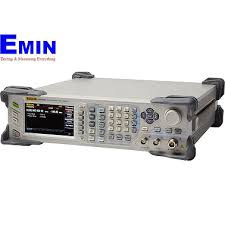
Why RF signal generator calibration matters
An RF signal generator is often treated as a reference source inside a larger test chain. If its output is no longer within expected limits, the impact does not stay isolated to one instrument. It can influence receiver sensitivity checks, gain measurements, filter characterization, and troubleshooting results, especially when the source is used as a baseline during repeated testing.
A structured calibration service helps verify key operating parameters and identify drift before it leads to unnecessary downtime or questionable data. For many organizations, calibration is also tied to internal quality systems, periodic maintenance schedules, and customer or audit requirements.
What is typically evaluated during calibration
Although the exact scope depends on the instrument and service procedure, RF signal generator calibration commonly focuses on the parameters that most directly affect test integrity. These may include output frequency behavior, signal level accuracy, and other generator characteristics that support dependable RF measurements.
The goal is not simply to “check the unit,” but to confirm that the generator continues to perform in a way that is suitable for its intended use. In practical terms, this helps engineers trust the source when comparing results over time, transferring methods between stations, or maintaining a validated test process.
Users who also work with other signal source types may want to review related services such as function and arbitrary waveform generator calibration when managing a broader instrument fleet.
Suitable for multiple brands and lab environments
This category includes service options for widely used manufacturers in electronic test and measurement. Examples include calibration support for instruments from KEYSIGHT, TEKTRONIX, BKPRECISION, TTI, and TRANSCOM. These brands are commonly found in RF development labs, service departments, educational labs, and industrial test environments.
Because each organization uses generators differently, calibration intervals and acceptance criteria are often linked to actual workload, application criticality, and internal quality practice. A bench instrument used for occasional troubleshooting may be managed differently from a source integrated into a recurring production or verification process.
Representative calibration service options
Several service listings in this category provide a practical starting point when matching support to the installed instrument base. Examples include the KEYSIGHT RF Signal Generator Calibration Service and the TEKTRONIX RF Signal Generator Calibration Service, both relevant for teams that rely on established RF platforms in day-to-day measurement work.
Other listed options include TTI RF Signal Generator Calibration Service, TRANSCOM RF Signal Generator Calibration Service, and BKPRECISION RF Signal Generator Calibration Service. These entries help procurement teams and maintenance planners identify service availability by brand without turning the category into a long product list. The emphasis remains on choosing the right calibration support for the instruments already used in the field.
How to choose the right service for your equipment
When selecting a service, start with the instrument brand and the operational role of the generator. A unit used for routine RF verification may require a calibration schedule that differs from one used in low-frequency troubleshooting or occasional classroom demonstrations. The more critical the signal source is to product acceptance or formal reporting, the more important measurement confidence becomes.
It is also useful to consider how the instrument fits into the wider maintenance plan for the lab. If signal sources are only one part of the workflow, coordinating calibration across related equipment categories can reduce administrative overhead and make scheduling easier. For buyers comparing similar support paths, the main RF signal generator calibration service category can serve as a central reference point.
Benefits for quality systems and long-term equipment management
Regular calibration supports more than immediate technical performance. It also helps organizations maintain cleaner asset histories, improve service planning, and reduce uncertainty when test results are reviewed months later. In regulated or quality-driven environments, that record of periodic verification can be just as important as the instrument itself.
From a lifecycle perspective, calibration can also help identify trends in instrument condition over time. Instead of reacting only when a measurement problem becomes visible, teams gain a more proactive way to manage their RF sources and keep test systems operating with fewer surprises.
When this service is especially relevant
This category is especially relevant for companies working in wireless electronics, RF servicing, communications testing, education, and industrial electronics support. Any environment that depends on a stable source for alignment, verification, comparison testing, or ongoing maintenance can benefit from scheduled calibration.
It is also a practical fit for organizations standardizing service coverage across multiple brands. If your bench inventory includes instruments from KEYSIGHT, TEKTRONIX, BKPRECISION, TTI, or TRANSCOM, using a structured calibration category makes it easier to review options and align service decisions with actual equipment ownership.
Supporting reliable RF test results
Choosing an appropriate RF calibration service helps protect the value of the measurements that depend on your signal source. Instead of treating the generator as a fixed constant, calibration acknowledges that real instruments change over time and need verification to remain dependable within a professional test process.
For teams responsible for uptime, traceability, or repeatable RF verification, this category provides a focused starting point for managing service by brand and application. A well-planned calibration routine can make day-to-day testing more consistent and help maintain confidence in every result built on the generator output.
-
-
-
-
-
-
-
-
-
-
-
-
-
-
-
-
-
-
-
-
-
-
-
-