

Function/Arbitrary Waveform Generators Calibration Service
Accurate waveform generation is essential when function and arbitrary waveform generators are used to verify circuits, simulate sensor signals, evaluate control behavior, or support R&D testing. Over time, output level, frequency accuracy, timing, and waveform integrity can drift, which is why Function/Arbitrary Waveform Generators Calibration Service plays an important role in maintaining confidence in measurement and test results.
This service category is intended for organizations that rely on stable and repeatable signal generation in laboratories, production environments, maintenance teams, and quality departments. Whether the instrument is used for basic sine and square wave output or for more complex custom waveform generation, proper calibration helps confirm that the generator still performs within the expected operating range.
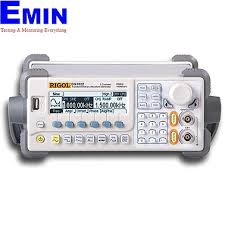
Why calibration matters for waveform generators
A function or arbitrary waveform generator is often a reference source within a test setup. If its amplitude, frequency, offset, duty cycle, or waveform shape is inaccurate, the resulting test data may also be misleading. In practical terms, calibration supports measurement reliability, process consistency, and better traceability across engineering and service workflows.
For many B2B users, calibration is not only about technical performance but also about documentation and quality systems. Regular service can support internal maintenance schedules, audit preparation, and controlled equipment management where test instruments must be checked at defined intervals.
Typical instruments covered in this category
This category focuses on calibration for function generators and arbitrary waveform generators used in electronics testing, education, troubleshooting, design validation, and automated test benches. These instruments may generate standard waveforms such as sine, square, pulse, ramp, and noise, or programmable waveforms for application-specific simulation.
The available service scope can include equipment from widely used manufacturers such as KEYSIGHT, PICO, Rohde & Schwarz, TEKTRONIX, GW INSTEK, KIKUSUI, and others listed in this category. Representative service entries include KEYSIGHT Impulse Generator Calibration Service, PICO Impulse Generator Calibration Service, TEKTRONIX Impulse Generator Calibration Service, and GW INSTEK Impulse Generator Calibration Service, which help illustrate brand coverage across different laboratory environments.
What is usually checked during calibration
While the exact procedure depends on the instrument type and its capabilities, calibration commonly evaluates the generator’s key output parameters. This may include output frequency behavior, amplitude accuracy, DC offset, waveform symmetry, pulse characteristics, and signal stability under defined conditions. For arbitrary waveform models, attention may also be given to how reliably the instrument reproduces programmed waveforms.
The main goal is to compare actual output performance against expected values using appropriate reference standards. This helps identify drift, confirm usable condition, and provide a clearer basis for deciding whether the instrument should remain in service, be adjusted, or be scheduled for further maintenance.
Choosing the right service for your application
Not every generator is used the same way, so the right calibration approach depends on application context. A unit used for basic bench testing may be assessed differently from one integrated into a production line, validation lab, or compliance workflow. The most useful starting point is to consider which output functions are critical to your process and which uncertainties would have the greatest effect on your results.
If your setup includes multiple source instruments, it can be helpful to review related service categories as well. For example, users working with mixed low-frequency and programmable sources may also need RF signal generator calibration service for broader signal-chain coverage. Where waveform synthesis and programmable signal output are central to the application, this category is a natural complement to arbitrary waveform generator calibration services.
Supported brands and service examples
Many engineering teams standardize around instrument platforms from established test and measurement brands, and calibration planning often follows that installed base. This category is aligned with commonly used manufacturers including KEYSIGHT, PICO, Rohde & Schwarz, TEKTRONIX, BKPRECISION, GW INSTEK, KIKUSUI, METRIX, Promax, and TEXIO.
Examples of service listings in this category include Rohde & Schwarz Impulse Generator Calibration Service, BKPRECISION Impulse Generator Calibration Service, KIKUSUI Impulse Generator Calibration Service, and TEXIO Impulse Generator Calibration Service. These examples are useful for buyers who need brand-specific service matching rather than a generic request path, especially when managing multiple assets across different sites or departments.
When to schedule calibration
Calibration intervals are usually determined by internal quality procedures, usage intensity, environmental conditions, and the criticality of the test process. Instruments used frequently, transported between sites, or exposed to demanding lab and production conditions may require closer review than equipment used only occasionally.
Common signs that calibration should be considered include inconsistent readings in downstream tests, unexplained failures during verification, visible drift compared with reference instruments, or simply reaching the next due date in the asset management schedule. A proactive calibration plan helps reduce avoidable troubleshooting time and keeps important test resources available when needed.
How this service fits into a wider calibration workflow
Function and arbitrary waveform generators are rarely used alone. They are typically part of a larger ecosystem that may include oscilloscopes, counters, analyzers, and other signal-generation equipment. Bringing these instruments into a structured service cycle supports traceability and creates a more dependable foundation for both routine testing and advanced development work.
For organizations using a broader mix of source instruments, it may also make sense to compare this category with function and arbitrary waveform generator calibration options and adjacent signal generator services. Looking at calibration needs by instrument role rather than by department alone often makes service planning more efficient.
FAQ
Which instruments are relevant for this category?
This category is relevant for function generators and arbitrary waveform generators used to produce standard or custom electrical signals for testing, simulation, and validation work.
Why is calibration important if the generator still powers on normally?
An instrument can appear to work while still drifting in amplitude, frequency, offset, or waveform quality. Calibration helps verify whether its actual output remains suitable for accurate testing.
Can brand-specific service requests be matched here?
Yes. This category includes service examples associated with manufacturers such as KEYSIGHT, PICO, Rohde & Schwarz, TEKTRONIX, GW INSTEK, and others shown on the page.
For teams that depend on stable signal sources, regular calibration is a practical way to protect test quality and reduce uncertainty in daily work. Reviewing the available brand-specific services in this category can help you choose a service path that fits your installed equipment, application requirements, and maintenance schedule.
-
-
-
-
-
-
-
-
-
-
-
-
-
-
-
-
-
-
-
-
-
-
-
-