

Optical Measurement
Accurate visual and light-based inspection is essential in modern production, quality control, and laboratory work. When dimensional checks, surface evaluation, alignment, or image-based verification cannot be handled by basic contact tools alone, optical measurement becomes a practical and often highly efficient approach for non-contact analysis.
This category focuses on solutions used to observe, measure, and verify parts or process conditions through optical principles. In industrial and technical environments, these systems support repeatable measurement, improved traceability, and faster inspection workflows, especially where delicate surfaces, small features, or high-throughput checks are involved.
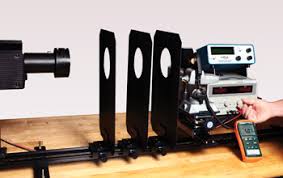
Where optical measurement fits in industrial inspection
Optical methods are commonly used when direct physical contact is undesirable, impractical, or too slow for the task. This may include measuring small components, inspecting transparent or polished surfaces, checking visual features, or documenting results with image-based evidence. In many cases, optical systems help reduce the risk of part deformation or operator-dependent variation.
Compared with some traditional contact-based methods, optical inspection can also support better visibility of edges, contours, markings, and surface conditions. For businesses that manage incoming inspection, in-process verification, or final quality control, this makes the category relevant across manufacturing, maintenance, electronics, tooling, medical devices, and precision engineering.
Typical applications of optical measurement
The scope of optical measurement is broad because it is tied not only to dimensional checks, but also to observation quality and process reliability. It can be applied to component verification, assembly inspection, defect detection, profile comparison, and documentation of production results. In laboratory and service environments, it is also useful for evaluation tasks that require clear visual evidence.
Applications often involve fine detail that is difficult to assess with the naked eye or with standard gauges. This includes edge position, spacing, pattern integrity, surface appearance, and general conformity to expected geometry. Where production teams need more than a simple pass/fail check, image-assisted measurement and optical inspection workflows can provide more actionable information.
Why non-contact measurement matters
One of the main advantages of optical systems is their ability to perform non-contact measurement. This is especially important for soft materials, fragile parts, finished surfaces, miniature features, or components that could be affected by probe force. In these cases, avoiding contact helps preserve part integrity while still supporting consistent evaluation.
Non-contact methods can also improve workflow speed when many parts must be checked in sequence. Instead of repeatedly repositioning contact tools, operators may be able to inspect features visually and capture measurement data in a more streamlined way. This is particularly valuable in quality departments that balance accuracy requirements with production deadlines.
Key factors when selecting an optical measurement solution
Choosing the right system starts with the measurement task itself. Buyers should consider the size of the part, the type of feature being evaluated, the required accuracy, lighting conditions, material reflectivity, and whether the goal is dimensional measurement, visual inspection, or both. The working environment also matters, especially in production lines where vibration, dust, or operator turnover may influence long-term usability.
It is also important to think about how results will be used. Some users need quick shop-floor checks, while others require traceable inspection records or support for more formal quality procedures. In these cases, the right setup is not defined only by optics, but also by repeatability, ease of operation, and how well the system fits into the broader inspection process.
Relation to other measurement categories
Optical inspection rarely works in isolation. In many facilities, it complements other measurement disciplines rather than replacing them completely. A visual or image-based check may be used for rapid screening, while more specific tools are then applied for confirmation of critical dimensions, force-related properties, or environmental conditions.
For example, projects that combine visual verification with dimensional control may also involve length measurement tools for direct size validation. Likewise, applications involving sealed systems or process equipment may be supported by pressure measurement methods alongside optical checks.
Optical measurement in quality assurance and maintenance workflows
In quality assurance, optical systems support faster decision-making by helping teams identify deviations early. This can reduce scrap, improve process feedback, and make inspection results easier to communicate between production, quality, and engineering departments. When defects are visible but difficult to quantify manually, optical methods provide a more structured way to evaluate them.
Maintenance and service teams also benefit from optical inspection when checking wear, alignment, surface condition, or component integrity during troubleshooting. In these workflows, a clear visual record can be just as important as the measurement itself, particularly when documenting findings for service reports or comparing equipment condition over time.
How to build a more complete measurement setup
A strong inspection strategy usually combines multiple methods based on part function and risk level. Optical systems are often chosen for speed, accessibility, and visibility, while other categories fill gaps where direct physical verification is still necessary. Depending on the application, teams may also review related solutions such as mass measurement for weight control or force, hardness, roughness, and gloss measurement for deeper surface and material evaluation.
Looking at the measurement task as a complete process often leads to better equipment decisions. Instead of selecting a tool based only on one specification, it is more effective to match the method to the part, the production environment, and the level of documentation required by the business.
Supporting better inspection decisions
This category is intended for buyers and technical users who need dependable ways to evaluate parts and surfaces through optical principles. Whether the goal is non-contact dimensional checking, visual verification, or a more efficient inspection workflow, optical measurement plays an important role in modern industrial control.
By selecting solutions that fit the application, operating conditions, and quality requirements, businesses can improve both inspection consistency and process visibility. For teams building or refining a broader measurement system, optical methods are often a valuable step toward faster, clearer, and more reliable evaluation.
-
-
-
-
-
-
-
-
-
-
-
-
-
-
-
-
-
-
-
-
-
-
-
-