

Inverter
Controlling motor speed accurately is a core requirement in many industrial systems, from pumps and fans to conveyors and compact machine modules. A well-matched inverter, also known as a variable frequency drive, helps improve process control, reduce mechanical stress during startup, and support more flexible operation across changing load conditions.
On this category page, buyers can explore inverter solutions used in electrical and automation environments with different power ranges, input classes, and control features. The selection is relevant for panel builders, maintenance teams, OEMs, and factories looking for practical motor control options rather than a one-size-fits-all approach.
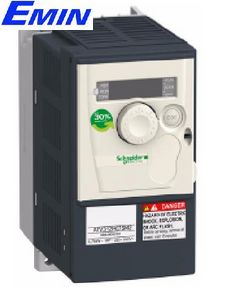
Where inverters are commonly used
Inverters are widely applied wherever AC motor speed needs to be adjusted instead of running at a fixed frequency. Typical use cases include water pumping, ventilation, conveyors, mixers, and general-purpose machine automation. In these applications, the drive changes output frequency and voltage to match the motor and the process requirement more closely.
This matters in real operating conditions. Soft starting helps reduce inrush current and mechanical shock, while adjustable speed control can support better throughput, smoother operation, and more stable process response. In systems that also rely on monitoring and supervisory control, related devices such as SCADA components may be part of the wider automation architecture.
What to look for when selecting an inverter
The first step is matching the drive to the motor and power supply. On this page, available examples include single-phase input and three-phase input models, with output ranges suited to both compact equipment and heavier industrial loads. Choosing the correct voltage class and power rating is essential for safe operation and reliable performance.
It is also important to consider the required control method and integration level. Many industrial users look for analog input support, digital I/O, communication interfaces such as RS485, and built-in functions like PID control. These features become especially useful in pump or fan applications where maintaining pressure, flow, or another process variable is part of normal operation.
Representative models in this category
Several products in this category illustrate the range of applications covered. For lighter-duty or compact machines, the LS M100 series includes models such as the LS LSLV0004M100-1EOFNA Inverter and LS LSLV0015M100-1EOFNS Inverter, both intended for variable speed control with practical I/O and frequency adjustment capability.
For higher-power three-phase systems, Panasonic AVF100 models are available in multiple ratings, including AVF100-0154, AVF100-0224, AVF100-0374, AVF100-0554, AVF100-0754, AVF100-1104, and AVF100-1504. These examples reflect a broad 400V-class drive range suited to common industrial motor applications. Another example, the LS SV110IP5A-4NE inverter, represents a drive option for 380 ~ 480VAC systems with communication support and application-oriented control functions.
Users comparing product families may also want to browse the wider Panasonic automation range when evaluating compatibility across other electrical and control devices.
Key functional features that matter in practice
Beyond basic speed variation, a modern drive is often selected for how well it handles real plant conditions. Features such as overload tolerance, protective functions for overvoltage, undervoltage, overheating, and phase loss, as well as adjustable acceleration and deceleration behavior, all affect long-term reliability. These are not just specification line items; they directly influence uptime and maintenance requirements.
Communication capability is another major consideration. In many industrial panels, the inverter must exchange data with controllers, HMIs, or supervisory systems. Models in this category include examples with RS485 and Modbus-oriented connectivity, while some support optional field communication expansion. If the project requires tighter coordination with higher-level automation, it may also be useful to review related data logger solutions for automation systems.
Single-phase and three-phase drive options
Not every application uses the same incoming power source. Compact machinery, retrofit installations, and smaller workstations may require a single-phase input inverter that still delivers three-phase output to the motor. This can be a practical choice where facility power is limited but variable speed control is still needed.
For larger motors and heavier-duty industrial operation, three-phase inverters are more common. The Panasonic AVF100 examples shown in this category cover several power levels in the 400V class, while selected LS models address both compact and more demanding use cases. The right selection depends on actual motor load, starting conditions, and the control philosophy of the machine or process.
Brands and ecosystem considerations
This category is positioned within a broader industrial automation environment, so buyers often compare drive options alongside the rest of their control hardware. In addition to products from LS and PANASONIC highlighted here, many procurement teams also consider established automation brands such as SIEMENS, ABB, Delta, Fuji, OMRON, SCHNEIDER, Allen-Bradley, and MITSUBISHI when building standardized systems.
Brand choice is not only about preference. It can affect parameter setup familiarity, spare part strategy, communication compatibility, and how easily the drive fits into an existing control cabinet. For projects built around mixed-vendor systems, choosing an inverter with suitable interface options is often more important than selecting by brand name alone.
How to narrow down the right model
A practical shortlist usually starts with five checks: motor power, input voltage, output voltage class, required frequency range, and available control signals. From there, buyers can refine the choice based on panel space, environmental conditions, protection features, and whether the application needs closed-loop style regulation using PID control.
It is also wise to consider future maintenance. A drive with clear keypad access, removable control elements, or standard communication support may simplify commissioning and troubleshooting later. For industrial users managing multiple automation assets, selecting an inverter that aligns with the broader control system can reduce engineering effort over the full equipment lifecycle.
Final thoughts
An inverter is more than a motor accessory; it is a control component that directly affects efficiency, process stability, and machine behavior. Whether the requirement is a compact LS M100 unit for a smaller machine or a higher-power Panasonic AVF100 model for a 3-phase 400V application, the best choice comes from matching electrical characteristics, control needs, and integration requirements carefully.
Use this category to compare suitable drive options for your application, then narrow the selection based on power class, interface needs, and the operating environment. A well-chosen inverter helps create a more stable and maintainable automation system from the start.
-
-
-
-
-
-
-
-
-
-
-
-
-
-
-
-
-
-
-
-
-
-
-
-