

Melting Point Tester
When material identification, purity control, or thermal behavior checks are part of the workflow, a reliable melting point tester becomes an important laboratory instrument. It is widely used to observe the temperature range at which a sample transitions from solid to liquid, helping technical teams compare substances, verify consistency, and support routine quality control in research, production, and testing environments.
On this category page, buyers can explore instruments suited to melting point determination within the broader temperature calibration and laboratory testing context. The selection is relevant for organizations that need repeatable thermal observation, practical operation, and equipment that fits into structured lab processes rather than one-off measurement tasks.
Where melting point testing fits in the lab
A melting point measurement is often used as a fast and practical indicator of sample identity and purity. In many technical workflows, the observed melting behavior helps teams compare incoming materials, check batch-to-batch consistency, or verify whether a compound behaves within an expected thermal range. This is especially useful when the test needs to be straightforward, repeatable, and easy to interpret.
Although it belongs to a wider thermal instrumentation landscape, this product group serves a different purpose from devices designed primarily for sensor or temperature source calibration. If your application is centered on reference temperature generation for probes and instruments, related options such as dry block calibrators may be more appropriate. For sample-focused thermal observation, however, melting point testers remain the relevant category.
Typical use cases for melting point testers
These instruments are commonly selected for laboratory environments where operators need a clear way to assess how a solid sample responds to heat. The result can support raw material checks, educational lab work, method development, and routine analytical screening. In practical terms, melting point data is often used alongside other observations rather than as a standalone decision factor.
For B2B buyers, the key value is not only the temperature reading itself, but also the ability to standardize a simple test across multiple samples and operators. A well-matched instrument can help improve consistency in routine checks, reduce ambiguity in visual observation, and fit more smoothly into day-to-day lab procedures.
What to consider when choosing a model
Selection usually starts with the expected temperature range, the type of samples being tested, and the level of visual control required by the user. Some organizations prioritize compact benchtop setups for occasional checks, while others look for equipment that can be integrated into a more regular quality workflow. Ease of operation, readability, and practical maintenance are also important factors for labs with multiple users.
It is also worth considering how the instrument fits with the rest of your thermal testing environment. If your facility handles a wider mix of calibration and verification tasks, you may also review adjacent categories such as blackbody calibrators for non-contact temperature reference applications or ice point calibrators for reference-point work. This helps ensure the chosen device matches the actual test objective rather than a broad temperature requirement alone.
Representative equipment in this category
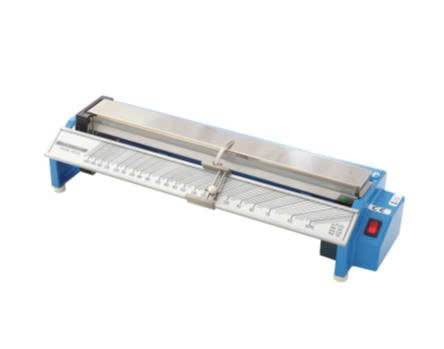
One example shown in this range is the Karg Kofler Heating Bench Melting Point (+50 ~ +260°C), a benchtop solution intended for visual melting point observation across a practical working range. This type of instrument is relevant when users need direct sample monitoring and a straightforward heating setup for routine laboratory tasks.
The model highlights a compact format and a thermal span suited to many common melting point checks. For buyers already standardizing around a specific manufacturer ecosystem, the Karg brand page can be a useful reference point for related products and availability. As always, the final choice should be based on sample characteristics, workflow frequency, and the degree of control needed during observation.
Brands commonly considered for this product group
This category may be relevant to buyers comparing laboratory and technical brands such as Buchi, Cole parmer, KRUSS, PCE, Stanford Research Systems, Cometech, DaiHan, Falc, Karg, and Samyon. Each name may appeal to different purchasing priorities, whether the focus is educational use, general laboratory operation, or integration into a broader testing environment.
Rather than choosing by brand name alone, it is usually more effective to compare instruments by application fit, operating method, and expected usage level. That approach helps procurement teams and engineers narrow the field more efficiently, especially when the requirement is for dependable routine testing rather than highly specialized analysis.
How melting point testers differ from other temperature equipment
A common sourcing challenge is that thermal instruments can look similar at the category level while serving very different jobs in practice. A melting point tester is intended for observing the behavior of a sample under heat, whereas many other temperature devices are designed to create reference conditions for calibrating sensors, thermometers, or infrared instruments.
This distinction matters during specification and purchasing. If the goal is to evaluate substance behavior, this category is the right starting point. If the real need is process instrument verification or reference-temperature generation, a broader review of temperature calibrator types may be necessary before ordering.
Choosing for long-term lab use
For long-term value, buyers should think beyond the initial measurement task. Consider who will operate the instrument, how often it will be used, what level of result repeatability is expected, and whether the device needs to support a formalized test routine. In many labs, the most suitable choice is not the most complex one, but the one that supports stable day-to-day use with minimal confusion.
A well-chosen melting point tester can improve consistency in thermal checks and make routine material evaluation easier to manage. By aligning the instrument with actual sample types, working temperature needs, and laboratory workflow, procurement teams can build a more practical and reliable testing setup over time.
-
-
-
-
-
-
-
-
-
-
-
-
-
-
-
-
-
-
-
-
-
-
-
-