

Synthesizer
Stable frequency generation is a core requirement in RF development, telecom testing, and microwave system integration. When engineers need a controllable signal source for reference, conversion, or validation tasks, Synthesizer products help provide the precision and tuning flexibility required across a wide frequency range.
Within telecommunication components, this category is relevant for laboratories, system builders, and OEM environments that work with PLL-based signal generation, microwave modules, and frequency-controlled test setups. The available selection is especially suited to applications where compact integration, external reference options, and predictable output behavior matter.
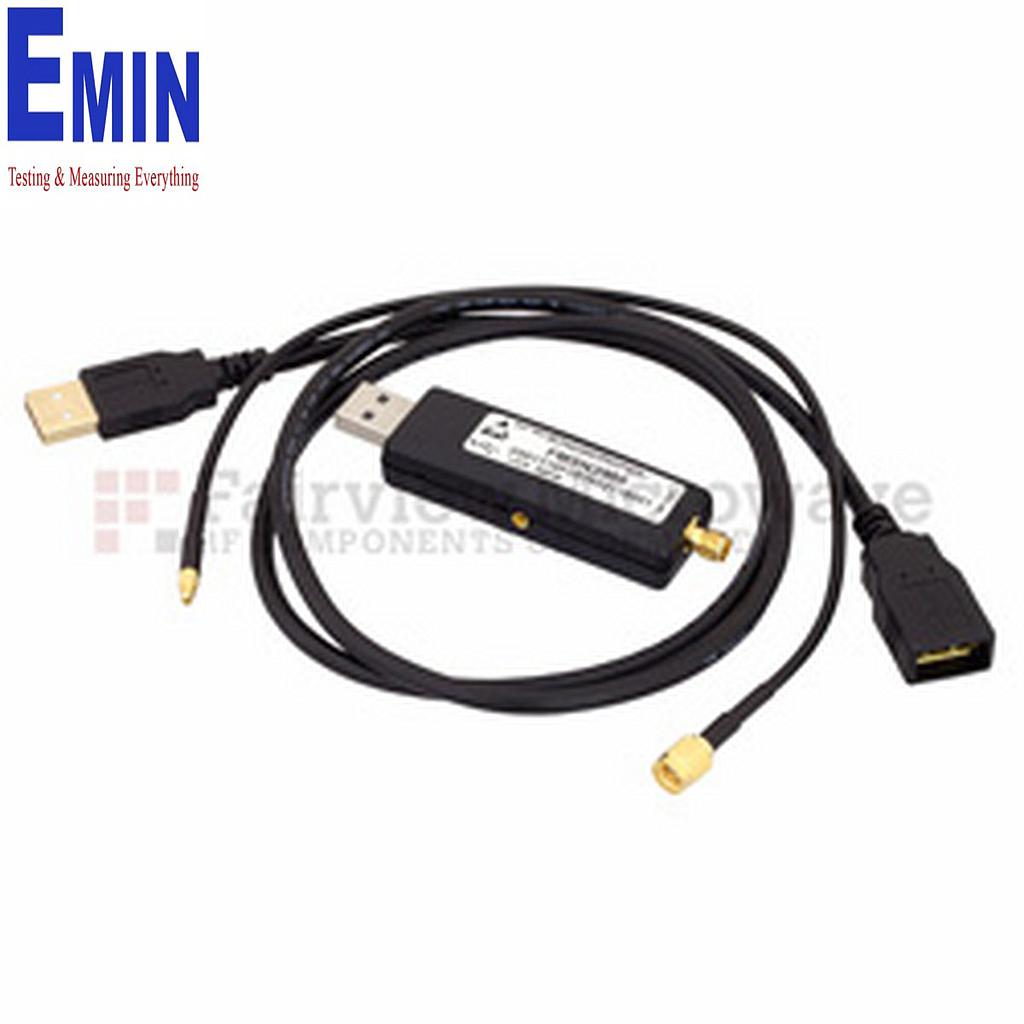
Where frequency synthesizers are used in telecom and RF work
A frequency synthesizer is commonly used to generate a stable output signal derived from a reference source. In practical telecom and microwave environments, that makes it useful for local oscillator generation, signal chain development, frequency conversion stages, and verification of RF subsystems.
These devices are also relevant in test benches where repeatable frequency selection is essential. Depending on the setup, a synthesizer may work alongside components such as power dividers for signal routing or with switching hardware for controlled distribution across multiple measurement paths.
Typical selection criteria for this category
Choosing the right unit usually starts with the frequency range. Some projects require coverage from tens of MHz into the low GHz region, while others focus on microwave bands above 10 GHz. Matching the synthesizer range to the operating band of the DUT and the rest of the RF chain is the first practical filter.
After range, buyers often review output power, lock speed, and phase noise. In many telecom and lab environments, phase noise has a direct impact on signal purity and downstream measurement quality, while lock time can matter in automated or fast-switching test systems. Reference input compatibility is also important when the synthesizer must align to an external timing source already used in the lab or production setup.
Representative products in this range
This category includes USB-controlled PLL frequency synthesizers from Fairviewmicrowave, giving users several operating bands for different RF and microwave needs. For lower-frequency and broadband work, the FairviewMicrowave FMSN3900 covers 35 MHz to 4.4 GHz, while the FMSN3901 extends from 25 MHz to 6 GHz, making them relevant for general RF development, broadband testing, and integration tasks.
For higher-frequency applications, the FairviewMicrowave FMSN3902 operates from 5 GHz to 10 GHz, and the FMSN3903 reaches 10 GHz to 20 GHz. This spread allows engineers to align device choice with the intended band rather than forcing a single source to serve every stage of a telecom or microwave workflow. Across these examples, USB control and PLL architecture support practical use in compact bench setups and embedded test environments.
Why PLL-based synthesizers matter in measurement systems
A PLL architecture helps lock the generated signal to a reference frequency, improving frequency accuracy and stability for many real-world applications. This is especially valuable when a system must remain synchronized with other instruments or with a master reference already present in the facility.
In telecom measurement chains, predictable locking behavior can simplify automated sequences and reduce setup variability between runs. When a synthesizer is part of a broader RF path, complementary components such as an isolator may be considered to help manage reflections and protect signal integrity, depending on the design.
Integration considerations for lab and OEM environments
In a development lab, engineers often need more than just output frequency coverage. They may also need convenient reference handling, manageable power levels, and a form factor that fits portable, benchtop, or semi-integrated systems. USB-controlled synthesizers are often attractive in these situations because they support straightforward connection to software-driven workflows.
For OEM integration or subsystem development, attention usually shifts to how the source behaves within a larger assembly. Signal distribution, conversion stages, and interface transitions may require supporting RF parts such as RF adapters or switching elements. The right synthesizer choice is therefore not only about headline frequency coverage, but also about how well it fits the surrounding architecture.
How to compare models without overfocusing on one specification
It is tempting to choose purely on maximum frequency, but that approach can overlook other performance needs. A system operating in a narrower band may benefit more from suitable phase noise behavior, faster lock characteristics, or better alignment with the available reference source than from extra range that will never be used.
For example, lower-band models such as the FMSN3900 or FMSN3901 may suit broadband RF development, while the FMSN3902 and FMSN3903 are more relevant for microwave-focused applications. Reviewing the intended use case, frequency plan, and integration method usually leads to a more reliable selection than comparing only one number on the datasheet.
Finding the right synthesizer for your application
This category is designed for buyers who need practical RF signal generation options for telecom, microwave, and electronic measurement work. Whether the requirement is a lower-frequency PLL source for general lab use or a higher-band unit for microwave testing, the available range helps narrow the search based on operating band, signal quality expectations, and system compatibility.
If your setup also involves distribution, switching, or interconnection of RF signals, it may be useful to review related components such as telecommunication switches. A well-matched synthesizer is rarely selected in isolation; it performs best when considered as part of the complete RF signal chain.
-
-
-
-
-
-
-
-
-
-
-
-
-
-
-
-
-
-
-
-
-
-
-
-