

Wi-Fi, Bluetooth Analyzer
Wireless troubleshooting is rarely about a single symptom. Slow roaming, unstable links, unexpected interference, failed Bluetooth pairing, or inconsistent Wi-Fi coverage often require deeper visibility into the RF environment and network behavior. That is where a Wi-Fi, Bluetooth Analyzer becomes valuable, helping engineers, installers, and maintenance teams verify wireless performance with more confidence.
On this category page, you can explore handheld and bench-oriented instruments used for wireless diagnostics, validation, and production test. The selection is relevant for field service, WLAN assessment, Bluetooth testing, and telecom measurement workflows where repeatable data matters more than guesswork.
Where these analyzers fit in wireless test work
Wireless analyzers support different stages of the lifecycle, from installation and commissioning to troubleshooting and manufacturing. In the field, a portable tester can help identify access points, confirm channel usage, check connectivity steps, and reveal whether interference is coming from 802.11 traffic or other RF sources. In a lab or production setup, a dedicated Bluetooth test set can focus on transmitter and receiver behavior under controlled conditions.
Because Wi-Fi and Bluetooth operate in crowded spectrum, meaningful testing often requires more than a simple signal reading. Teams may need to examine channel occupancy, validate frequency behavior, confirm network availability, or compare results against adjacent RF tools such as a signal analyzer when a broader spectrum view is required.
Common product types in this category
This category typically includes handheld wireless analyzers for field use and more specialized benchtop instruments for device validation. Handheld units are designed for mobility and quick decision-making on site, while bench instruments are better suited to repeatable test procedures, engineering verification, or production environments.
For example, the Netally AirCheck G3 Pro Wi-Fi 6 Wireless Analyzer is positioned for modern WLAN environments that may span 2.4 GHz, 5 GHz, and 6 GHz bands. By contrast, the ANRITSU MT8852B Bluetooth Test Set is more aligned with dedicated Bluetooth measurement tasks, where controlled generation and measurement of signals are important for development and test workflows.
What to look for when selecting a Wi-Fi or Bluetooth analyzer
The right choice depends first on test objective. If the main task is troubleshooting enterprise or industrial WLANs in the field, portability, battery operation, screen usability, and fast workflow matter. If the goal is Bluetooth RF validation or production test, you may prioritize frequency control, measurement range, modulation-related testing, and stable bench integration.
Wireless standard support is another key factor. In Wi-Fi applications, support for legacy and current generations can make a major difference in mixed networks. A device such as the Netally AirCheck G3 Pro is relevant where 802.11ax and tri-band environments need to be assessed, while older handheld tools may still be practical for routine 2.4 GHz and 5 GHz verification.
Engineers should also consider antenna options, data storage, reporting, and how the analyzer fits alongside related tools. In some cases, troubleshooting does not stop at the wireless interface, and users may also work with a cable and antenna analyzer to check feed lines, connectors, or antenna conditions that influence RF performance.
Examples from leading manufacturers
Netally is widely associated with portable tools for network and wireless diagnostics. In this category, the AirCheck G3 Pro stands out as a modern handheld option for Wi-Fi analysis, especially where technicians need on-site visibility into SSIDs, channels, bands, connectivity behavior, and general WLAN conditions.
ANRITSU is a strong reference point for more dedicated RF and communications measurement. The MT8852B Bluetooth Test Set is a good example of equipment suited to focused Bluetooth test requirements rather than general-purpose site surveys. It is the kind of instrument that fits well in validation benches and structured test procedures.
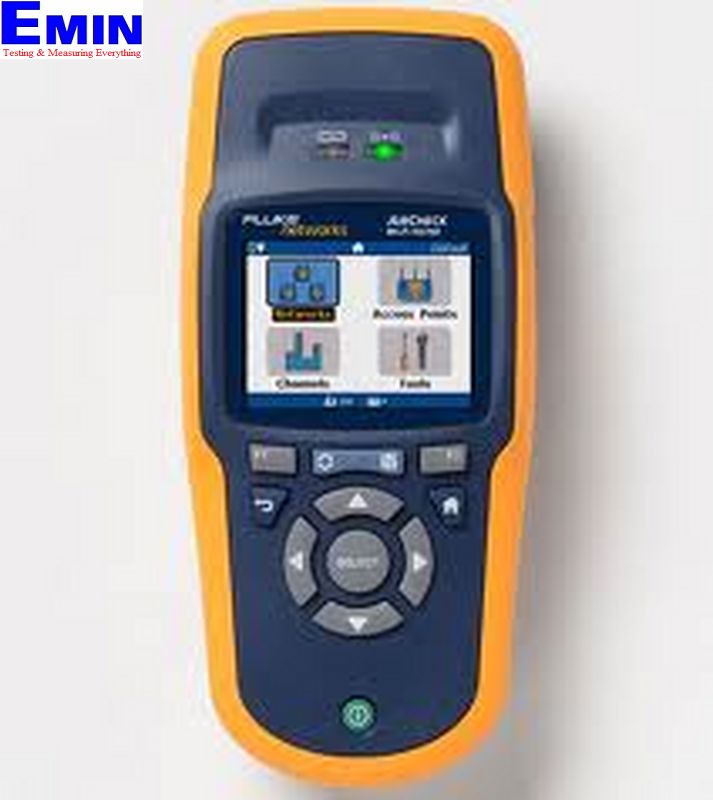
Fluke Network AirCheck Wi-Fi Tester remains relevant as a practical handheld tester for 802.11 a/b/g/n environments, especially when users need quick discovery, connection checks, and wireless security visibility. AEP Transducers appears in the broader product feed with a wireless transmitter product, but in this category it is better understood as peripheral RF context rather than a primary example of a Wi-Fi or Bluetooth analyzer.
Typical applications across B2B environments
In enterprise IT and managed service work, these instruments help isolate the root cause of weak coverage, connection failures, roaming issues, or overloaded channels. Instead of relying only on user complaints or controller dashboards, technicians can validate conditions directly at the point of use and compare network behavior across locations.
In industrial and production settings, Bluetooth test equipment may be used during product verification, RF evaluation, or manufacturing support. For telecom and electronic test teams, wireless analyzers also complement broader RF benches that may include a signal generator for controlled stimulus and other measurement tools for cross-checking results.
These devices are also useful during acceptance testing after wireless infrastructure changes. When access points are upgraded, channels are reassigned, or new client devices are introduced, an analyzer helps confirm whether the real-world RF environment matches the intended design.
Field troubleshooting versus lab validation
Field troubleshooting emphasizes speed, mobility, and clear interpretation. A handheld tester should help the user move quickly from detection to diagnosis: identifying nearby networks, checking channel distribution, verifying authentication or DHCP steps, and spotting suspicious or rogue access points where applicable.
Lab validation, on the other hand, is more controlled and measurement-driven. Bluetooth test sets such as the ANRITSU MT8852B are better suited where repeatability, signal generation, receiver measurement, and parameter-focused verification are part of the process. The distinction is important because a tool optimized for site surveys may not replace an instrument intended for engineering test, and vice versa.
How to evaluate the category efficiently
When browsing this category, start by defining whether your main focus is Wi-Fi diagnostics, Bluetooth RF test, or mixed wireless troubleshooting. Then narrow the shortlist by form factor, supported standards, intended environment, and whether you need fast field use or deeper controlled measurement. This avoids overbuying features that are not relevant to your workflow.
It also helps to consider the surrounding toolchain. Wireless issues are not always isolated from the physical RF path or adjacent network layers, so some projects may benefit from related telecom measurement categories rather than a standalone analyzer alone. Choosing with the full test process in mind usually leads to better long-term value than selecting only by headline specifications.
Final thoughts
A suitable wireless analyzer gives teams clearer insight into how Wi-Fi and Bluetooth systems behave in real conditions, whether the goal is site troubleshooting, network verification, or structured RF testing. The products in this category cover both portable and dedicated use cases, making it easier to align the instrument with the actual job rather than forcing one tool into every scenario.
If you are comparing options, focus on application fit, wireless standard coverage, workflow requirements, and how the instrument will be used alongside other RF test equipment. That approach will help you choose a wireless measurement solution that supports reliable diagnostics and more efficient decision-making.
-
-
-
-
-
-
-
-
-
-
-
-
-
-
-
-
-
-
-
-
-
-
-
-