

Rebar corrosion detection
When reinforced concrete begins to deteriorate, corrosion in embedded steel is often one of the main causes. Early detection helps engineers, inspectors, and maintenance teams assess structural condition before cracking, spalling, or loss of load-bearing performance becomes more serious. This is why rebar corrosion detection equipment plays an important role in building inspection, infrastructure maintenance, and condition-based asset management.
On this page, you can explore instruments used to evaluate corrosion risk in reinforced concrete as well as related thickness measurement solutions for metal loss assessment. These tools are commonly used in civil engineering, industrial inspection, marine structures, parking decks, bridges, tunnels, and concrete rehabilitation projects.
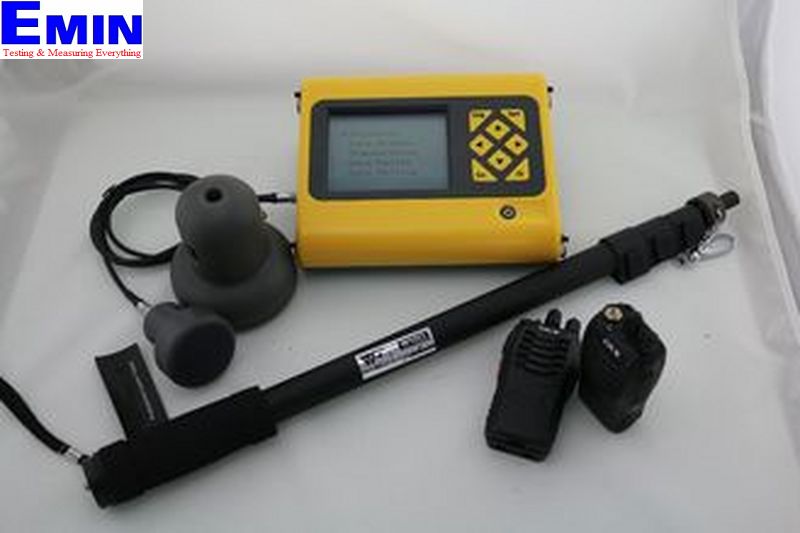
Why corrosion detection matters in reinforced concrete inspection
Steel reinforcement is protected by the alkaline environment of concrete, but that protection can weaken over time due to chloride ingress, carbonation, moisture, and other environmental factors. Once corrosion starts, expansion of the steel can lead to internal stress, surface cracking, delamination, and eventually concrete break-off.
Using dedicated test instruments allows inspection teams to identify areas with higher corrosion probability, prioritize maintenance, and plan repairs with better confidence. In many projects, corrosion assessment is not performed in isolation; it is combined with cover depth checks, concrete quality evaluation, and other non-destructive testing methods to build a clearer picture of structural health.
Common methods used for rebar corrosion detection
A widely used approach is half-cell potential measurement, which helps estimate the probability of active corrosion in embedded reinforcement. This method is especially useful for mapping large concrete areas and comparing potential differences across slabs, columns, decks, or walls. It does not directly measure corrosion rate, but it can indicate where further investigation is needed.
Another practical workflow is to combine corrosion mapping with reinforcement location and cover verification. In those cases, inspection teams may also use tools from the cover meter and rebar detector range to locate bars before testing and improve the reliability of measurements taken on site.
For deeper structural evaluation, corrosion findings are often reviewed together with concrete integrity data. Where material uniformity or internal defects are also under review, ultrasonic pulse velocity instruments can provide complementary information on concrete condition.
Representative instruments in this category
One notable example is the ELCOMETER W331HM--4, a half-cell meter designed to measure the condition and potential corrosion of rebars and steel structures within concrete. Its large display, batch memory, statistics functions, and portable waterproof design make it suitable for field inspection where repeatable data collection is important.
For broader corrosion assessment work outside concrete, ultrasonic corrosion thickness gauges are also relevant in maintenance programs that involve steel tanks, pipes, marine assets, or coated structures. Examples from Dakota include the UX2 Underwater Corrosion Thickness Gauge, CMX series models such as CMX3-DL and CMX2-DL, and compact ZX-series instruments like the ZX6-DL and ZX5-DL. These devices are typically selected when inspectors need to evaluate remaining wall thickness, scan for thinning, or log readings for trending and reporting.
Although concrete rebar corrosion testing and ultrasonic thickness measurement are different tasks, they often appear in the same maintenance ecosystem. Projects involving bridges, ports, treatment plants, or industrial facilities may require both reinforced concrete assessment and metal thickness verification in adjacent assets.
How to choose the right rebar corrosion detection solution
The right instrument depends on the inspection target, access conditions, and the level of detail required. If the priority is assessing embedded steel inside concrete, a dedicated half-cell meter is generally the more appropriate choice. If the task is to measure thickness loss in accessible steel components, an ultrasonic corrosion thickness gauge is usually more suitable.
It is also important to consider the workflow. For large survey areas, memory capacity and organized batch handling can save time during inspection and reporting. In outdoor or exposed environments, portability, battery operation, and enclosure protection are practical selection factors. Where documentation is essential, data logging and transfer functions can help simplify traceability.
Buyers should also think about whether the job requires basic screening, routine maintenance, or more advanced condition monitoring. In some cases, a simple field unit is enough for periodic checks. In others, teams need a device that supports larger datasets, higher measurement flexibility, or operation in demanding environments such as underwater inspection.
Typical applications across industries
Rebar corrosion detection is commonly used in structural audits, repair planning, and preventive maintenance. Typical inspection targets include bridge decks, retaining walls, parking structures, marine piers, tunnels, water-related infrastructure, and precast or cast-in-place concrete elements exposed to harsh conditions.
In industrial environments, corrosion-related inspection often extends beyond concrete. Thickness gauges such as the Dakota CMX, MX, and ZX series are relevant for pipelines, storage tanks, pressure vessels, ship structures, and coated components where remaining material thickness must be checked without destructive sectioning.
For complete evaluation of concrete structures, engineers may also combine corrosion testing with surface hardness checks using a concrete test hammer or with additional durability assessments depending on project requirements. This multi-method approach helps reduce uncertainty when planning maintenance or repair scope.
What to look for in field performance
In practical use, the value of a test instrument goes beyond its measurement principle. A clear display, stable readings, ergonomic handling, and rugged construction all affect productivity on site. Field teams often work across uneven surfaces, exposed weather, and large inspection grids, so ease of operation matters just as much as measurement capability.
Data handling is another key consideration. Instruments with internal memory, batch organization, and export options can make post-inspection analysis more efficient, especially when teams need to compare multiple zones or create traceable reports for clients and asset owners.
For projects involving aggressive environments, it is also worth paying attention to operating temperature range, enclosure durability, and accessory support such as cables, probes, and carrying cases. These practical details can influence uptime and consistency during long inspection campaigns.
Supporting a more complete corrosion assessment workflow
No single reading should be treated as the whole story. Corrosion risk in reinforced concrete is best understood by combining measurement results with visual inspection, structural context, environmental exposure, and repair history. Instruments help identify patterns and priority areas, but interpretation still depends on sound engineering judgment.
That is why this category is most useful when viewed as part of a broader inspection toolkit. Alongside rebar corrosion detection equipment, related solutions for locating reinforcement, checking concrete quality, and assessing steel section loss can help inspection teams move from isolated measurements to better-informed maintenance decisions.
If you are selecting equipment for reinforced concrete diagnosis or corrosion-related maintenance work, this category provides a focused starting point. From half-cell testing for embedded steel to ultrasonic gauges for thickness monitoring, the right choice depends on the structure, the access conditions, and the level of reporting your inspection process requires.
-
-
-
-
-
-
-
-
-
-
-
-
-
-
-
-
-
-
-
-
-
-
-
-