

UV Transmittance Monitor
Reliable UV transmission data is important anywhere ultraviolet disinfection performance needs to be checked in real time. In water treatment, pharmaceutical utilities, and industrial process lines, a drop in UV transmittance can indicate changing water quality, higher absorbance, or conditions that may reduce the effectiveness of downstream UV systems. A UV Transmittance Monitor helps operators track that condition continuously instead of relying only on periodic lab checks.
This category brings together process instruments designed to measure UV transmittance directly in the line or at the point of use. For engineering teams, maintenance personnel, and system integrators, these devices support better process visibility, faster troubleshooting, and more informed control decisions when UV-based treatment performance matters.
Why UV transmittance monitoring matters in industrial applications
UV transmittance is a practical indicator of how well ultraviolet light can pass through a liquid sample, commonly assessed at 254 nm for water treatment applications. When transmittance changes, it often reflects a change in dissolved or suspended substances that absorb UV energy. That makes it a useful measurement for monitoring source water variation, treatment consistency, and general process quality.
In many systems, continuous monitoring is more valuable than occasional spot testing. Online measurement allows operators to detect trends earlier, respond to process upsets, and verify whether treatment conditions remain within the expected operating window. For plants that already rely on other process feedback instruments, UV monitoring fits naturally alongside devices such as multi-function controllers when broader control and signal integration are needed.
What to expect from this product category
Products in this range are intended for continuous UV absorption-based measurement without the need for chemical reagents. That approach is especially attractive in industrial environments because it reduces consumables, simplifies routine operation, and supports stable long-term monitoring. Depending on the installation style, a monitor may be used for fixed process measurement or for more flexible field verification.
The examples featured in this category include solutions from SENSOREX, a manufacturer known here for UV transmittance instruments aimed at process use. These instruments are relevant for users who need a compact form factor, standard analog output, and practical field-ready construction for water and liquid monitoring tasks.
Representative instruments in this range
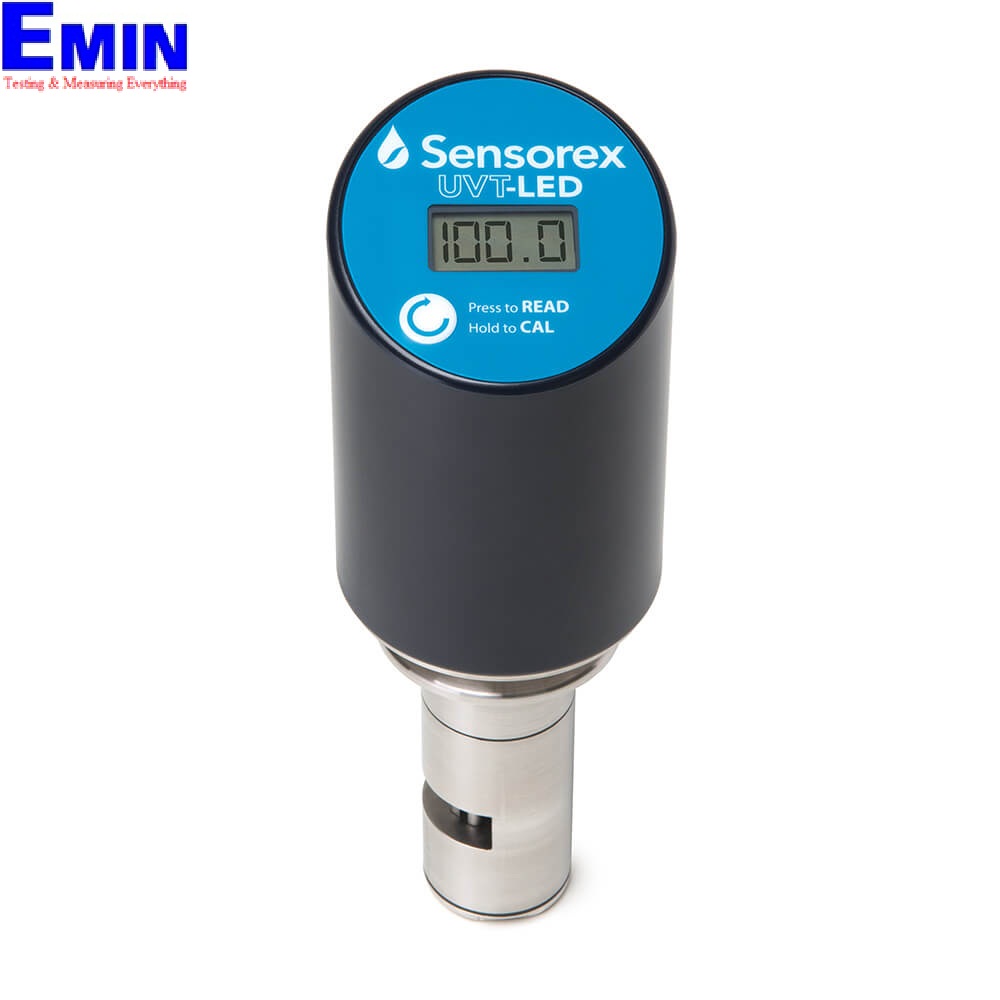
One example is the Sensorex UVT-LED-PW Online Process UV Transmittance Monitor, designed for ongoing process measurement across a transmittance range of 10% to 100% T. Its UV absorption method at 254 nm and 4-20 mA output make it suitable for integration into plant control architecture where analog signaling remains standard. The design focus is on straightforward process monitoring rather than complex sample conditioning or reagent handling.
Another relevant model is the Sensorex UVT-LED-H Handheld UV Transmittance Monitor. While the naming highlights handheld use, it still reflects the same core measurement principle and is useful as a reference point for teams comparing portable verification with fixed installation. In practice, the choice between online and handheld formats depends on whether the priority is permanent continuous feedback or periodic confirmation during maintenance and commissioning.
Key selection criteria for a UV transmittance monitor
Choosing the right instrument starts with the measurement environment. Buyers should consider whether the monitor will be installed directly on a process line, used at a sampling point, or carried by technicians for inspection work. Mechanical fit, ingress protection, output type, and maintenance access all affect whether a device will remain reliable in everyday plant conditions.
It is also important to review the measurement method and output requirements. For many control systems, a 4-20 mA signal is preferred because it is simple to wire and widely accepted by PLC, SCADA, and distributed control systems. If the UV monitor will operate as part of a larger instrumentation package, users may also compare it with adjacent categories such as load cell online controllers or other process controllers to align signal handling, panel design, and maintenance strategy across the site.
Maintenance expectations should not be overlooked. Optical instruments depend on a clean measurement path, so inspection intervals, cleaning access, and routine operator effort should be considered during selection. Even where the monitoring principle is reagent-free, stable performance still depends on keeping the sensing surfaces and optical path in good condition.
Typical use cases and process context
UV transmittance monitors are commonly associated with water treatment and disinfection processes, where they help indicate whether incoming or treated water remains suitable for effective UV penetration. They can also be useful in industrial utilities and process water systems where liquid clarity or UV absorbance has direct operational consequences. In these settings, a monitor provides a fast indication of change without requiring continuous manual sampling.
Because process conditions rarely exist in isolation, UV monitoring is often interpreted together with other signals such as flow, pressure, or equipment condition. For example, facilities that already track rotating machinery and supporting assets may also use tools from related areas such as vibration monitoring to build a more complete picture of plant health. The value of UV transmittance data increases when it is connected to broader operational awareness rather than viewed as a standalone number.
Installation and operational considerations
Before purchasing, it is worth checking how the monitor will be powered, how often it updates measurements, and how it will connect to the existing automation system. Devices in this category may offer practical features such as LCD indication, standard DC power input, and industrial enclosure protection, which are useful when instruments are installed near wet or demanding process areas.
Users should also think about the sampling point itself. A UV transmittance value is only meaningful when the measurement location reflects actual process conditions. Good installation practice includes selecting a representative point, minimizing fouling risk, and ensuring the instrument remains accessible for cleaning and verification. These simple considerations often have a greater impact on long-term data quality than headline specifications alone.
How this category fits into a broader control strategy
A UV transmittance monitor is most effective when it supports a clear operational decision. In some plants, that may mean alarming on changing water quality; in others, it may support validation, trend analysis, or optimization of UV treatment performance. The instrument’s role can be as simple as local indication or as integrated as a continuous analog signal feeding a supervisory control platform.
For procurement teams and system designers, this category is therefore less about buying a standalone sensor and more about selecting a dependable measurement point in the larger control architecture. When specified correctly, UV monitoring can improve visibility into process quality while keeping implementation relatively straightforward.
Choosing with confidence
If your application depends on understanding how well UV light passes through a process liquid, this category offers a focused starting point. The available Sensorex instruments illustrate the main use cases clearly: fixed online monitoring for continuous process feedback and handheld measurement for flexible field verification.
By comparing installation style, output requirements, maintenance expectations, and process relevance, buyers can narrow the selection to a monitor that fits both the application and the control environment. A well-matched UV transmittance monitor can provide stable, useful data for day-to-day operation without adding unnecessary complexity.
-
-
-
-
-
-
-
-
-
-
-
-
-
-
-
-
-
-
-
-
-
-
-
-