

PH Controllers
Stable pH control is a core requirement in many water treatment, process, and utility applications. When dosing chemicals, protecting downstream equipment, or maintaining product quality, the controller is the point where measurement becomes action. This is why buyers often look beyond simple display functions and focus on signal handling, relay logic, output options, and long-term integration with plant systems.
PH Controllers in this category are intended for continuous monitoring and control of pH, and in many cases also support related parameters such as ORP, temperature, conductivity, or broader process functions. The range includes compact transmitters, panel-mounted controllers, and higher-level process instruments suited to industrial installations where reliability, alarm handling, and communication features matter.
Where pH controllers are commonly used
These instruments are typically selected for applications where pH must be measured continuously and corrective action must happen automatically. Common use cases include water and wastewater treatment, neutralization systems, chemical dosing skids, process water monitoring, and utility systems in manufacturing plants.
In practical operation, a pH controller receives the signal from a pH sensor, applies compensation or calibration logic, compares the value to setpoints, and then drives relays or analog outputs for pumps, valves, alarms, or PLC input. In systems that also need wider liquid analysis coverage, users may also review related categories such as water quality controllers and monitors or dedicated DO controllers.
Typical device formats in this category
The category covers several controller styles rather than one single device type. A compact transmitter/controller is often chosen when panel space is limited and the requirement is straightforward pH or pH/ORP control. A broader process controller is more suitable when users need multiple outputs, configurable relays, event logging, or digital communication for supervisory systems.
For example, the EZDO 4801P pH/ORP/Temp Controller combines pH, ORP, and temperature functions in a compact format, which can be useful for local control points. At a more advanced level, instruments such as the HANNA HI510-0540 Universal Process Controllers and HI520-0320 Dual-Channel Process Controller illustrate the move toward multi-function platforms that support channel expansion, configurable outputs, and integration into larger automation architectures.
Key selection points for B2B buyers
Choosing the right controller depends first on the measurement scope. Some applications need only pH control, while others need pH together with ORP or temperature, or even parallel monitoring of conductivity and dissolved oxygen. If the process requires one instrument to manage several liquid parameters, a universal or simultaneous control monitor can reduce panel complexity.
Signal interface is the next major factor. Buyers should confirm whether the installation needs relay outputs for dosing control, 4-20 mA transmission to a PLC or SCADA system, voltage output, or serial communication such as Modbus. Environmental protection rating, enclosure style, power supply, and panel cutout are also important in retrofit projects, especially where replacement must fit an existing cabinet.
Another practical detail is the expected maintenance workflow. Calibration method, temperature compensation, display readability, and access to service accessories all affect total operating effort. In some installations, protective accessories such as the EZDO NEMA-4X Splashproof gasketed lens cover are relevant when the front panel may be exposed to washdown or splashing conditions.
Examples of products in the range
The products shown in this category reflect different levels of control capability. The EZDO 4801P is a focused option for pH, ORP, and temperature control, with relay-based process management in a compact panel format. For users who need broader process visibility, the HANNA HI510-0320 Simultaneous pH, ORP, EC, DO Control Monitor offers a wider monitoring concept for liquid analysis points that involve multiple variables.
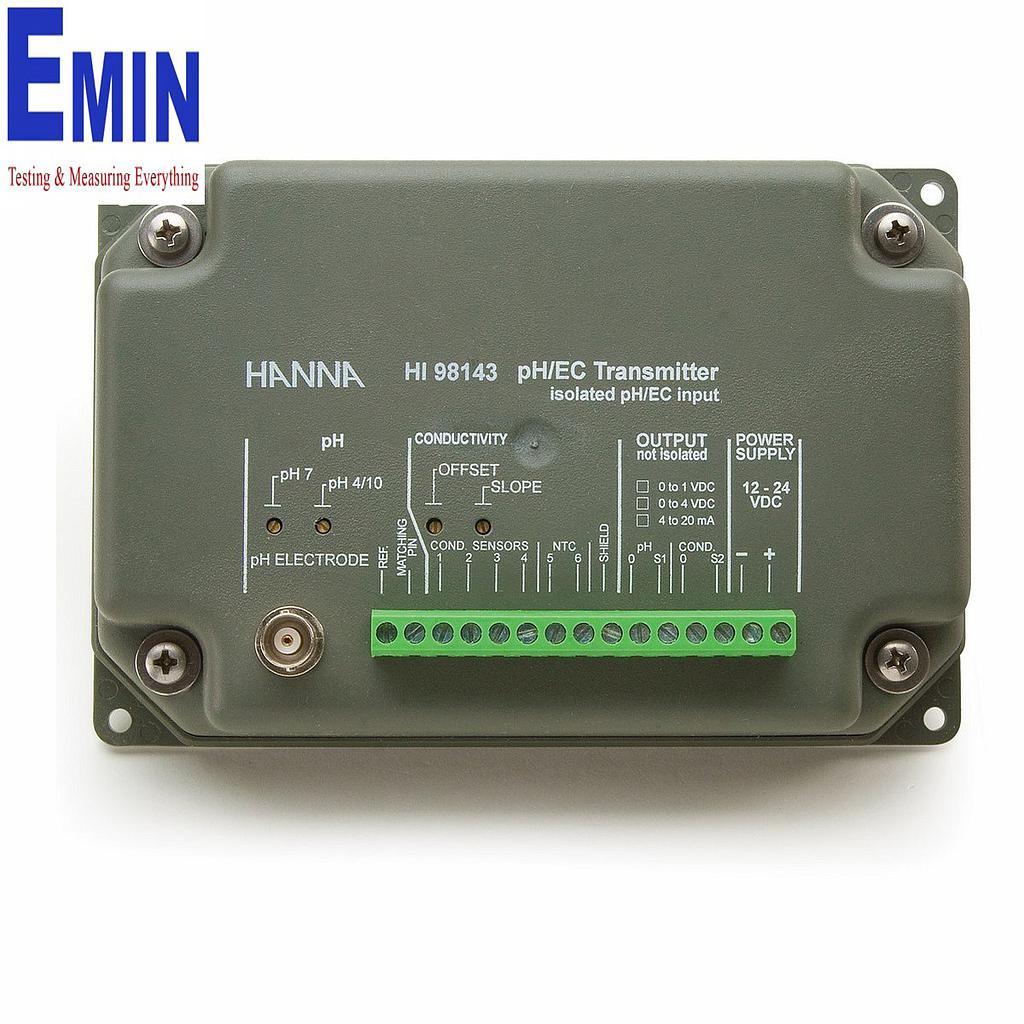
For transmitter-oriented applications, the HANNA HI98143 series is relevant when pH and EC values must be converted into standardized signals for control systems. Variants such as HI98143-22, HI98143-20, HI98143-04, and HI98143-01 show how output type can be matched to the receiving system, whether the requirement is active current, passive current, or voltage output.
The SENSOREX TX3100 pH/ORP Transmitter/Controller is another example for users seeking a dedicated controller with pH, ORP, and temperature functionality in a panel-mounted form. In installations using modular process instruments, accessories can also matter; the HANNA HI510-01 Panel-Mount Kit for HI510 and the Meinsberg Koax3/1 Measuring cable for PH MV5010 show the supporting components that help complete or maintain a measurement loop.
Single-parameter control vs multi-parameter process control
Not every application needs a high-end universal controller. For a simple neutralization skid or a single dosing loop, a dedicated pH/ORP controller may be easier to deploy and maintain. It keeps configuration straightforward and is often appropriate when operators need clear local setpoints, local alarms, and standard analog retransmission.
Multi-parameter systems become more valuable when process decisions depend on several measurements at once, or when a site wants to consolidate instrumentation. In those cases, one process controller may support a more structured control strategy and simplify communication with higher-level systems. Plants handling broader water chemistry may also compare pH control with related functions like water resistivity control or specialized COD and BOD control requirements.
Manufacturer ecosystem and compatibility considerations
This category includes products and manufacturer references commonly associated with industrial liquid analysis, including HACH, HORIBA, Jumo, Mettler Toledo, HANNA, Aqualabo, Chemtrol, EZDO, Meinsberg, and SENSOREX. In practice, buyers often shortlist controllers based on preferred service network, existing sensor ecosystem, plant standardization, and compatibility with installed automation hardware.
Compatibility should always be checked at the application level rather than assumed from brand name alone. The important questions are whether the controller supports the required sensor type, compensation method, output format, mounting arrangement, and environmental protection level. For projects involving expansion or retrofit, accessory availability can also influence selection, especially when replacing only one part of an existing loop instead of rebuilding the full system.
How to narrow down the right pH controller
A practical starting point is to define the control task clearly: measurement only, alarm and retransmission, or closed-loop dosing control. Then confirm the number of channels, the required parameters, and whether the device must communicate with a PLC, recorder, or SCADA platform. This quickly separates simple transmitters from more advanced process controllers.
It is also useful to consider the operating environment and maintenance routine. Front-panel protection, display visibility, logging needs, and calibration workflow can make a major difference over the life of the installation. If your process includes aggressive cleaning, washdown exposure, or frequent operator intervention, those details become just as important as the measurement range itself.
For industrial users, laboratories supporting production, and water treatment operators alike, the right pH controller is the one that fits the actual process logic, not just the measurement parameter. Reviewing the available controller formats, output options, and supporting accessories in this category is a practical way to build a more reliable pH control loop and a better-integrated liquid analysis system.
-
-
-
-
-
-
-
-
-
-
-
-
-
-
-
-
-
-
-
-
-
-
-
-