

Volume & Weight Testing System
When product quality depends on consistent fill quantity, mass control, or handling precision, the test setup behind the process matters just as much as the measurement itself. In production, packaging, and laboratory environments, a Volume & Weight Testing System is often part of a broader workflow that combines vacuum handling, pressure generation, clean working conditions, and operator support for repeatable inspection tasks.
This category brings together equipment used around volume- and weight-related testing applications, especially where stable manipulation, controlled pressure, and clean bench operation are important. Rather than focusing on a single device type, it helps buyers evaluate the supporting ecosystem needed to build reliable manual or semi-manual test stations.
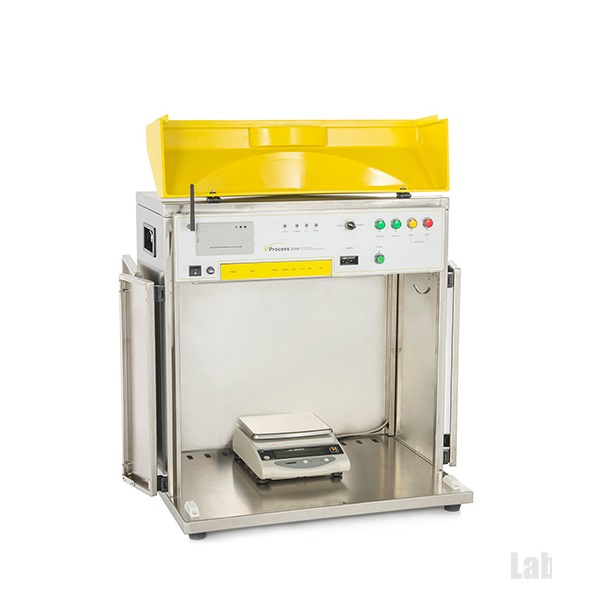
Supporting equipment for controlled testing workflows
In many industrial settings, volume and weight verification is not performed in isolation. Operators may need to position parts, evacuate air, generate pressure, protect sensitive assemblies from dust, or move samples in a stable and repeatable way. That is why this category is relevant not only for direct test needs, but also for the supporting devices that improve consistency across inspection and handling operations.
Within the Roxer product range, several solutions fit naturally into this environment. Vacuum workstations, vacuum pumps, air pressure multipliers, rotary vacuum tools, and clean enclosures can all play a role in preparing or supporting processes where mass, volume, or product condition must be checked under controlled conditions.
Vacuum handling and workstations in precision operations
For small components or delicate products, contact-based handling can introduce variability or contamination. A vacuum-based setup offers a practical way to manipulate parts while reducing mechanical stress and improving operator control. This is useful in testing environments where product integrity must be maintained before or after measurement.
Examples in this category include the Roxer POSTE Z Vacuum Workstation and the Roxer RX 06 Rotary Vacuum Pencil. A workstation with integrated vacuum generation can support bench-level manipulation tasks, while a rotary vacuum pencil is better suited to precise handling of compact items during manual inspection or assembly-related test sequences. These devices are not weighing instruments by themselves, but they can be important in the overall testing chain.
Air pressure multipliers for process preparation and verification
Some volume-related checks require controlled pressurization, leak-sensitive preparation, or pneumatic assistance before a sample reaches the actual measurement stage. In those cases, an air pressure multiplier can be a useful part of the setup, especially when standard plant air pressure is not sufficient for the application.
The Roxer RX 2, Roxer RX 4, and Roxer RX4 ON TANK illustrate different approaches to pressure generation. Depending on the workflow, buyers may look at outlet pressure range, whether adjustment is available, tank integration, and portability. For example, a compact multiplier can fit into a bench test cell, while a tank-based unit may be more suitable where stable pneumatic reserve and continuous operation are needed.
Vacuum pumps for stable and repeatable system performance
Vacuum quality has a direct influence on handling stability and workstation behavior. In a volume and weight testing environment, selecting the right pump is less about choosing the largest unit and more about matching flow, electrical supply, and installation constraints to the intended task. Oversizing may waste energy, while undersizing can reduce process reliability.
Products such as the Roxer VX 4.16, VX 4.25, VX 4.40, and KVX 3.100 show that the category can cover different performance levels. Lower-flow options may be suitable for compact bench applications, while higher-capacity pumps make more sense for larger fixtures or multi-point vacuum demand. When comparing alternatives, engineers typically look at required vacuum level, expected duty cycle, available supply voltage, and noise or footprint considerations.
Clean and protected work areas for sensitive test tasks
Not every volume or weight test is performed in a harsh industrial environment. In sectors handling fine components, precision assemblies, or contamination-sensitive items, the condition of the work area can affect the reliability of the result. Dust, particles, and static can interfere with product handling and may influence downstream inspection quality.
The Roxer FLUX LAMINAIRE enclosure is relevant here as a way to create a cleaner operating zone around a manual workstation. The Roxer IONIROX ionization system can also support environments where electrostatic effects need to be reduced during handling. These kinds of auxiliary systems are especially valuable when the testing process includes lightweight parts or surfaces that are easily affected by contamination.
Interface and manual station integration
Some testing workflows depend on operator-guided sequences rather than fully automated equipment. In those cases, interfaces and control accessories help connect the workstation, machine logic, and manual actions into a more consistent procedure. This can improve repeatability, reduce handling errors, and simplify task execution across shifts.
The Roxer DCF PAD 7B Multi-purpose Interface for MAAI Manual is an example of equipment that supports this kind of integration. For buyers evaluating manual stations, it is useful to think beyond the main machine and consider how programs, operator interaction, and data handling fit into the overall process. A well-structured interface can be just as important as the mechanical hardware around it.
How to choose the right setup for your application
The most suitable configuration depends on what your testing process actually requires. If the task involves sample positioning and delicate manipulation, start with the handling method and vacuum source. If the process includes pneumatic preparation, compare pressure multipliers based on required outlet pressure and control flexibility. If cleanliness is critical, include enclosure and ionization needs early instead of treating them as optional accessories.
It is also helpful to define whether the application is primarily laboratory-based, bench-top production support, or part of a larger industrial line. That decision affects space constraints, power availability, expected throughput, and the level of operator interaction. In adjacent applications, buyers may also compare related categories such as gas cylinder test and maintenance equipment or specialized systems like an oxygen permeation system when the broader testing scope includes container performance or material barrier evaluation.
Why this category matters in a broader test equipment ecosystem
Volume and weight verification often sits within a larger framework of mechanical and physical testing, where sample condition, handling method, environmental stability, and operator workflow all influence the final result. That is why this category is useful for engineers and sourcing teams looking not only for a single product, but for the surrounding equipment that helps create a dependable testing station.
By reviewing vacuum devices, pressure support equipment, clean bench solutions, and interface components together, buyers can build a more coherent system around their inspection process. If you are comparing options for a new station or upgrading an existing one, this category provides a practical starting point for selecting supporting equipment that fits the real demands of industrial testing.
-
-
-
-
-
-
-
-
-
-
-
-
-
-
-
-
-
-
-
-
-
-
-
-