

Torsion Testing
When a component is exposed to twisting force, the failure mode is often very different from simple tension or compression. In production, lab validation, and product development, accurate Torsion Testing helps engineers understand torque resistance, rotational behavior, repeatability, and long-term durability under real operating conditions.
This category brings together instruments used to measure or simulate torsional load in a controlled way. It is especially relevant for manufacturers working with shafts, couplings, fasteners, springs, flexible parts, cable-related products, and assemblies where rotational force directly affects safety or performance.
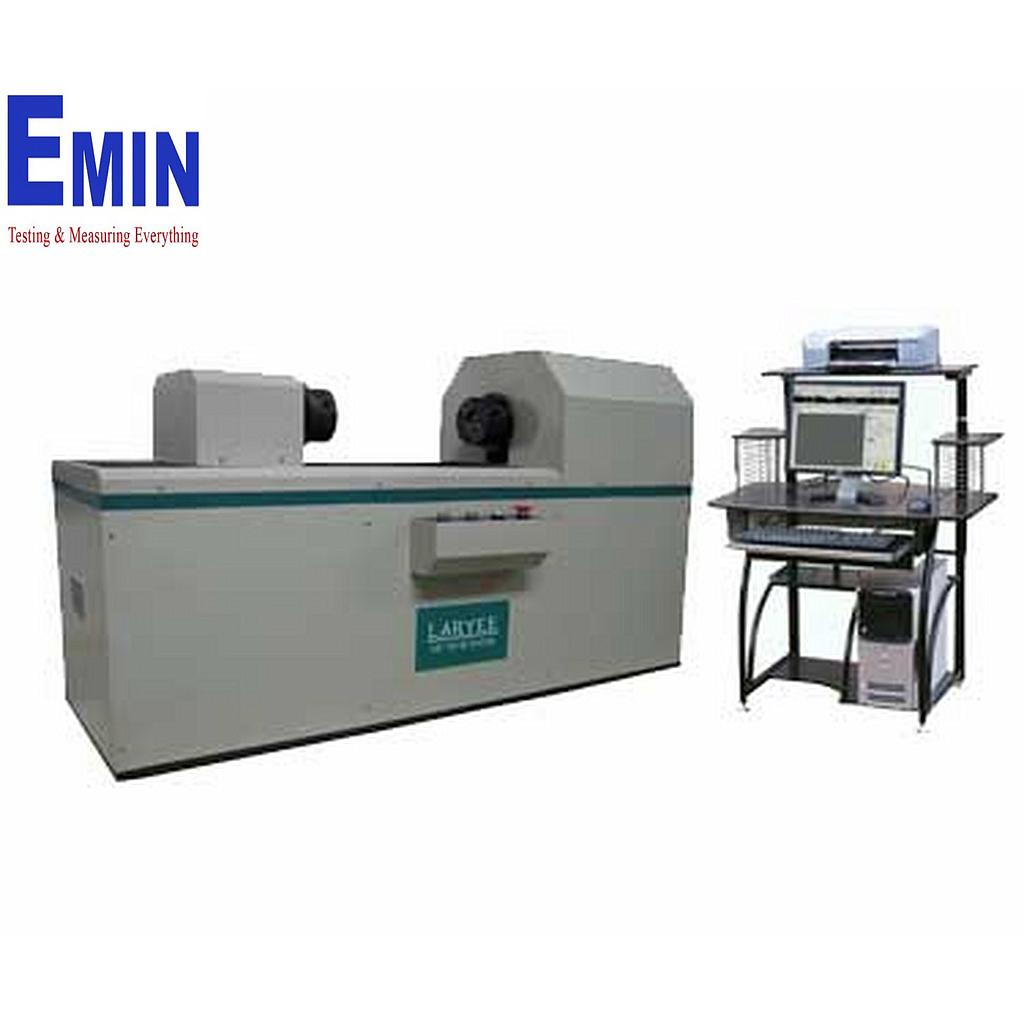
Where torsion testing fits in industrial measurement
Torsion testing is used to evaluate how a material or product responds to applied torque, either while rotating or in a fixed setup. Depending on the test objective, users may need to capture torque values during operation, verify design limits, compare product consistency, or monitor deformation and fatigue under repeated twisting.
In practical terms, this kind of testing is common in quality control, incoming inspection, R&D, and product certification workflows. It can support both static and dynamic evaluation, from simple torque verification to repeated flexing and durability studies that reveal wear, backlash, or structural weakness over time.
Typical equipment found in this category
A large part of this category centers on torque meters designed for torsional measurement. The range includes rotary type torque meters for measuring torque in rotating systems and non-rotary models for applications where the test piece or fixture remains fixed while torque is applied and monitored.
For example, the Aikoh QR series includes rotary type torque meters covering a broad capacity range, such as the QR-1K, QR-10K, QR-20K, QR-50K, QR-100K, and QR-200K. For fixed measurement setups, examples in this category include the Aikoh QF-20K, QF-50K, and QF-100K non-rotary type torque meters. Together, these options support both lower and higher torque applications depending on the required test method.
This category may also include test apparatus used for repeated bending or twisting-related durability checks. The MultiTech MTPCF-4 Flexing Test Apparatus, for instance, is more aligned with repetitive flexing evaluation than direct torque sensing, but it plays an important role when rotational stress is part of broader mechanical endurance testing.
Rotary and non-rotary torque measurement: how to choose
The first selection step is usually deciding whether the application requires measurement during rotation or in a stationary test arrangement. Rotary measurement is typically chosen when torque must be captured from a shaft or rotating mechanism under operating conditions. This is useful when evaluating motor-driven systems, rotating tools, or assemblies where continuous motion affects the torque profile.
Non-rotary torque meters are often preferred for bench testing, calibration-related tasks, fixture-based inspection, or product verification where the force is applied in a controlled static direction. In these setups, simpler fixturing and signal handling may be possible, while still delivering the repeatability needed for industrial inspection.
Capacity range is another key factor. Within the Aikoh lineup shown here, users can select from compact ranges such as 10N・m and 20N・m up to higher capacities like 500N・m, 1KN・m, and 2KN・m. The right choice depends not only on the expected torque, but also on overload margin, required sensitivity, and how close normal operating values are to the sensor’s full-scale range.
Selection criteria beyond torque capacity
Although rated capacity is often the first specification engineers check, it should not be the only one. For many industrial users, repeatability, nonlinearity, hysteresis, and allowable overload are just as important because they directly affect confidence in the measurement result and the consistency of pass/fail decisions.
Environmental conditions also matter. Temperature range, insulation performance, cable arrangement, and mounting style can influence whether a torque meter is suitable for a production line, a test bench, or a research environment. If the sensor output will be integrated into a display or data collection system, it is also worth reviewing compatible signal handling devices such as a load cell transmitter or related instrumentation.
For applications that require more complete strain-based analysis, some users also combine torsion testing with strain meters to observe how the tested part behaves under load. This can be useful when torque values alone do not fully explain deformation, fatigue progression, or structural response.
Representative products in this category
Among the featured products, the Aikoh QR series stands out for rotary torque measurement across several capacities. Models such as the QR-5K, QR-10K, QR-20K, QR-50K, QR-100K, and QR-200K provide options for users who need to evaluate rotating systems with different torque levels and accuracy requirements.
For fixed setups, the Aikoh QF series provides non-rotary alternatives, including the QF-20K, QF-50K, and QF-100K. These are suitable for test rigs where the torque is applied without continuous rotation, helping users perform controlled verification on parts, tools, and mechanical assemblies.
The MultiTech MTPCF-4 Flexing Test Apparatus adds another dimension to the category by supporting repeated motion testing with adjustable flexing angle and speed across four stations. In workflows where torsional stress is linked to long-cycle durability, this type of apparatus can complement torque measurement equipment rather than replace it.
Industries and applications
Torsion testing is used in a wide range of sectors, including automotive components, electrical products, consumer goods, metal parts, plastics, and cable-related manufacturing. It is relevant wherever twisting force can influence assembly quality, mechanical life, or functional reliability.
Typical applications include checking the torque resistance of shafts and couplings, validating the durability of flexible parts, comparing product lots during quality control, and confirming whether an assembly remains stable under repeated rotational stress. In some production environments, torsion-related measurement is also part of a broader force and strain workflow that may involve peripheral devices for signal conditioning, display, or integration into automated test systems.
Working with recognized manufacturers
This category highlights products from manufacturers such as Aikoh and MultiTech, while the broader measurement ecosystem may also involve brands like Cometech, KMT, PinBao, Yasuda, JFM, and Mikrometry depending on the application scope. Rather than choosing by brand name alone, most B2B buyers will benefit from matching the instrument type to the actual test objective, mechanical setup, and measurement range.
That approach is especially important in torsion-related applications, where the difference between a rotating measurement task and a fixed torque verification task can significantly change the most suitable instrument. A well-matched setup usually improves repeatability, simplifies fixturing, and reduces the risk of selecting a sensor that is oversized or too limited for the job.
Choosing the right torsion testing solution
If your process involves twisting force, rotational load, or torque verification, the best starting point is to define the test method clearly: rotating or non-rotating, single measurement or repeated cycle, low range or high range, lab use or production use. From there, it becomes easier to narrow down the right equipment and supporting instrumentation.
With rotary and non-rotary torque meters as well as flexing test apparatus available in this category, users can build a more suitable test workflow for both development and routine inspection. A careful selection based on capacity, accuracy, mounting, and application conditions will generally deliver more useful data than focusing on model numbers alone.
-
-
-
-
-
-
-
-
-
-
-
-
-
-
-
-
-
-
-
-
-
-
-
-