

Flash Tester
Reliable flash point data is essential when evaluating the handling, storage, transport, and quality characteristics of petroleum products, solvents, and lubricants. In routine laboratories as well as refinery and quality-control environments, the right Flash Tester helps teams determine ignition behavior under controlled conditions and work in line with common test methods.
This category brings together instruments designed for flash point and, in some cases, fire point determination across different temperature ranges and test principles. It is particularly relevant for users working with fuels, base oils, finished lubricants, and other flammable liquid samples where repeatable thermal testing is part of product release, incoming inspection, or compliance workflows.
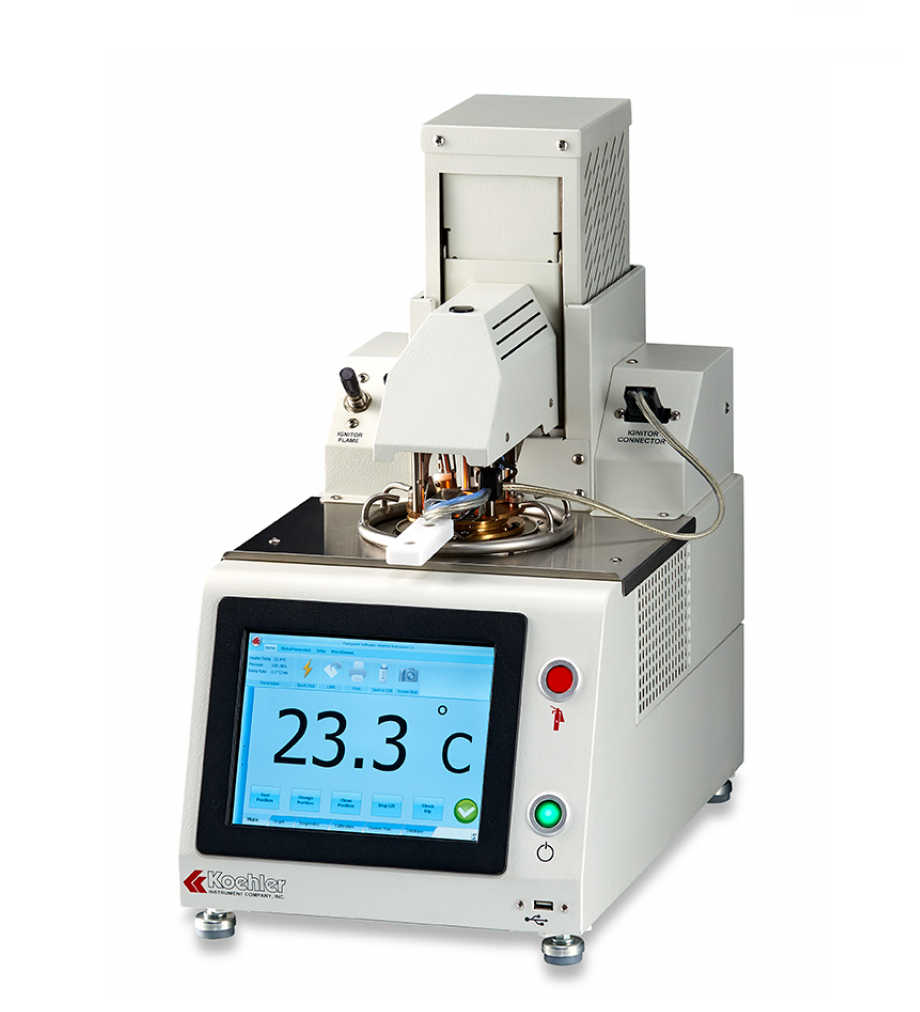
Why flash point testing matters in petroleum laboratories
Flash point testing is used to identify the temperature at which vapors from a sample can ignite under defined test conditions. This value is widely used as a safety and classification parameter, but it also supports process control and product comparison in fuel and lubricant analysis.
In practice, the selected method depends on sample type, expected flash point range, and the applicable standard in the lab. For broader petroleum analysis workflows, users often review related equipment in fuels testing to build a complete test setup around flash point measurement.
Common test methods represented in this category
This category covers several widely used approaches, including Cleveland Open Cup, Pensky-Martens, Abel, and TAG methods. Each method is intended for particular sample behaviors and operating ranges, so selection should be based on the actual standard your laboratory follows rather than on temperature range alone.
Open-cup testing is commonly used for higher flash point materials, while closed-cup methods are often preferred when lower flash point liquids or stricter vapor containment are involved. If you are comparing instruments across this full product group, the broader flash point testing range can help clarify which platform aligns with your internal procedure.
Typical instrument types and example models
Among the featured options, Anton Paar offers automated systems for different methods and operating windows. Examples include the Anton Paar ABA 300 and ABA 500 for Abel testing, the TAG 300 and TAG 500 for TAG procedures, and the PMA 300 and PMA 500 for Pensky-Martens applications. For open-cup workflows, the Anton Paar CLA 5 is positioned for Cleveland flash and fire point testing up to higher temperatures.
Users looking for practical Cleveland Open Cup solutions can also consider Samyon models such as the Samyon 3536, 3536-1, and 3536A, which are intended for petroleum flash point determination with automated or fully automatic operation depending on the model. These examples illustrate the variety within the category: some instruments emphasize compact operation and automated detection, while others are suited to conventional lab routines with gas ignition or electric ignition arrangements.
Key features to consider when selecting a flash tester
The first consideration is the test method compatibility. A lab may specifically require Abel, TAG, Pensky-Martens, or Cleveland Open Cup based on internal SOPs or external standards, so the instrument must match that method without compromise.
The next factor is operating range and thermal control. In this category, some systems cover relatively low flash point applications, while others extend toward 370 °C, 400 °C, or beyond. Automated sample temperature monitoring, barometric pressure correction, programmable heating behavior, and controlled cooling can improve repeatability and reduce operator intervention.
It is also worth reviewing ignition type, interface options, and safety functions. Several featured systems include electric ignition, optional gas ignition, automatic flash detection, Pt100 temperature measurement, network or USB connectivity, and protective functions such as automatic shut-off or integrated extinguishing support. For laboratories managing traceability and throughput, onboard memory and user management can also be useful.
How accessories and laboratory glassware fit into the workflow
Flash point testing rarely happens in isolation. Sample preparation, handling, transfer, and cleaning all influence day-to-day efficiency, which is why supporting items in the surrounding ecosystem still matter. The DURAN 212163605 Erlenmeyer flask 250 mL, for example, is not a flash tester itself, but it reflects the kind of general laboratory vessel used in sample handling and preparation tasks around petroleum analysis.
When method-specific glass components are required, users may also need dedicated glass apparatus for ASTM test methods. Choosing compatible accessories alongside the main instrument helps maintain a smoother workflow from sampling through measurement and documentation.
Automated vs. conventional operation
Many labs now prefer automated flash testers because they reduce manual steps, improve consistency between operators, and simplify routine testing. Features such as automatic ignition application, automatic flash detection, programmable heating profiles, and digital data storage are especially valuable in environments with higher sample volumes or stricter reporting requirements.
At the same time, conventional or simpler instrument designs may still be suitable for smaller labs, educational environments, or applications with lower testing frequency. The right balance depends on sample throughput, operator experience, maintenance expectations, and how tightly the instrument needs to integrate into the broader quality system.
Choosing the right system for your application
A practical selection process starts with the fluid you test most often. Light fuels, solvents, and volatile products may call for closed-cup methods such as Abel or TAG, while heavier oils and lubricants may be evaluated using Pensky-Martens or Cleveland Open Cup depending on the method requirement and expected flash point range.
It is also useful to think beyond the instrument itself. Laboratories often combine flash point analysis with drying or conditioning steps before or after related tests, so adjacent equipment such as oil dryer systems may be relevant in a complete petroleum testing workflow. By matching the method, temperature range, automation level, and lab infrastructure, buyers can narrow the shortlist to instruments that support both compliance and efficient daily use.
Conclusion
This Flash Tester category is intended for laboratories that need dependable equipment for determining flash point and fire point characteristics across different petroleum and chemical testing methods. With options ranging from automated Abel, TAG, Pensky-Martens, and Cleveland systems to supporting laboratory accessories, the selection supports both routine QC work and more method-specific analytical tasks.
When comparing instruments, focus on the required standard method, expected sample range, level of automation, and supporting lab workflow rather than on headline specifications alone. That approach makes it easier to choose a system that fits your testing environment today and remains practical as sample requirements evolve.
-
-
-
-
-
-
-
-
-
-
-
-
-
-
-
-
-
-
-
-
-
-
-
-