

Equipment for oil degassing, vacuum thermal oil drying
Reliable oil conditioning is critical wherever insulating or industrial oils must maintain stable electrical and physical performance. In transformer maintenance, cable oil processing, and lubrication service workflows, excess moisture, dissolved gases, and solid contaminants can reduce dielectric strength, accelerate aging, and affect overall equipment reliability. This is why equipment for oil degassing, vacuum thermal oil drying plays an important role in both maintenance operations and oil recovery processes.
This category brings together systems designed to dry, heat, degas, and filter oil under controlled conditions. Depending on the application, users may need a compact filtration cart for lower flow rates, a portable service unit for field work, or a higher-capacity vacuum degassing system for continuous industrial operation. Many buyers also combine these systems with oil drying equipment and downstream testing methods to verify treatment results.
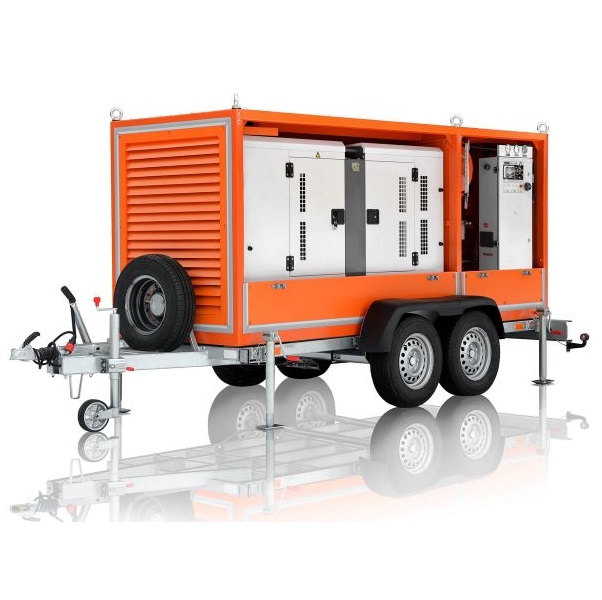
What this equipment is used for
Oil degassing and vacuum thermal drying systems are intended to improve the condition of oils that have absorbed water, entrained air, dissolved gases, or fine particulate contamination during operation, storage, or servicing. In practical terms, these machines help restore oil quality so that it can be reused more safely in electrical and industrial systems rather than being replaced prematurely.
The process typically combines heating, vacuum treatment, and filtration. Heating lowers viscosity and helps release moisture and gases, vacuum improves separation efficiency, and filtration removes suspended solids. For insulating oils, this treatment can support better dielectric performance and cleaner operating conditions in transformers, cable systems, and related equipment.
Common configurations in this category
Not every application requires the same scale of oil treatment. Smaller service tasks may call for mobile or cart-based systems, while utility or plant maintenance teams often need higher-throughput units that can process larger oil volumes over longer duty cycles. The range in this category reflects that difference in operational needs.
Compact examples include the GlobeCore CMM-0.4 Oil Degassing Oil Filtration Cart and CMM-0.6 cart, which are suited to lower-capacity processing where footprint and mobility matter. For broader transformer oil service, units such as the GlobeCore CMM-2D, CMM-4D, or CMM-1H provide a step up in processing capability, while larger systems like the GlobeCore CMM-12A or UVM-15A are more relevant when high flow rate and intensive vacuum treatment are required.
Representative GlobeCore solutions
GlobeCore is the main manufacturer highlighted in this category, with equipment covering portable, stationary, and higher-capacity oil treatment tasks. The portfolio shown here includes dedicated degassing units, transformer oil filtration machines, thermal vacuum systems, and application-specific equipment for cable oil processing.
For example, the GlobeCore CMM-1CO Cable oil degassing unit is positioned for cable oil applications where gas and moisture removal are central requirements. Portable systems such as the CMM-4/7 and CMM-6/7 are relevant when maintenance must be performed on site, while the UVM-4/7, UVM-6/7, and UVM-15A models illustrate the vacuum thermal drying approach for larger processing demands. This variety helps buyers match equipment capacity and treatment intensity to the actual condition of the oil and the logistics of the job.
Key selection criteria
When choosing a system, the first question is usually flow rate. Capacity directly affects how long the treatment cycle will take and whether the unit is suitable for routine maintenance, outage-based service, or continuous processing. A small cart can be practical for localized work, but larger assets or time-sensitive projects often justify higher-capacity degassing equipment.
The second factor is treatment objective. Some users mainly need dehydration and particulate removal, while others require stronger gas removal under vacuum, controlled heating, or improved dielectric performance after processing. It is also important to review outlet pressure, filtration fineness, heating power, and whether the equipment is portable, trailer-mounted, or intended for fixed installation. In environments where oil quality must be confirmed after treatment, many teams also use supporting methods from fuels testing and lubricant analysis workflows.
Typical applications
One of the most common uses for this equipment is transformer oil service. Moisture and gas in insulating oil can affect dielectric performance and long-term asset health, so vacuum drying and degassing are widely used during commissioning, maintenance, and refurbishment. Models such as the GlobeCore CMM-2D, CMM-4D, and CMM-1H fit naturally into this type of work.
Another application is cable oil treatment, where low gas and moisture content are especially important to stable system operation. Industrial users may also apply these systems to reclaim and condition oils that have degraded in storage or service. Depending on maintenance strategy, treated oil may then be checked with laboratory tools such as a flash tester or other oil evaluation methods where appropriate.
Why vacuum thermal drying matters
Conventional filtration alone can remove solid particles, but it does not always address dissolved moisture or gases effectively. That is where vacuum thermal drying becomes more valuable. By combining temperature control with vacuum conditions, the system can promote more efficient removal of volatile contaminants that would otherwise remain in the oil.
This approach is especially relevant for insulating oils, where water and gas content can be as important as visible cleanliness. Systems in the UVM and CMM ranges demonstrate how manufacturers address this need through integrated heating, vacuum chambers, and staged filtration. The result is a more complete oil conditioning process than simple pass-through filtration.
How to compare systems in practice
A practical comparison should start with the oil type, contamination level, and service environment. If the oil is only lightly contaminated and service intervals are local, a smaller mobile unit may be enough. If the oil requires deeper drying and degassing, or if a maintenance contractor must handle multiple sites and larger volumes, a higher-capacity unit with stronger vacuum and heating capability is usually more appropriate.
It is also worth considering transport, power supply, and site access. Some units in this category are clearly better suited to field deployment, while others are intended for heavier-duty stationary use. Looking at capacity ranges across systems such as the CMM-0.4, CMM-6/7, CMM-12A, and UVM-15A can help clarify whether the priority is portability, throughput, or depth of treatment.
Choosing the right oil treatment setup
The right solution depends less on product size alone and more on the maintenance scenario behind it. Buyers usually benefit from evaluating how much oil must be processed, how dry or gas-free the oil needs to become, whether the unit will be used in the field or in a workshop, and how quickly the job must be completed. These factors often matter more than headline power figures by themselves.
Within this category, users can compare compact carts, transformer oil filtration machines, dedicated degassing units, and larger thermal vacuum systems from GlobeCore according to actual service requirements. A well-matched system can help improve oil condition, support equipment reliability, and make oil maintenance more efficient over time.
-
-
-
-
-
-
-
-
-
-
-
-
-
-
-
-
-
-
-
-
-
-
-
-