

Hydraulic spreader/lifting
When heavy parts, flanges, machinery bases, or structural components need a safe initial lift, the challenge is often not overall height but creating enough separation to start the job. That is where hydraulic spreader/lifting tools are especially useful. They are designed for controlled lifting or spreading in tight access points, helping maintenance teams, contractors, and industrial operators handle loads more precisely during installation, alignment, repair, or recovery work.
In industrial environments, these tools are commonly chosen when a conventional jack cannot easily fit under the load or when a narrow gap must be opened before further lifting equipment is introduced. Within the broader lifting and hydraulics workflow, hydraulic spreaders and lifting wedges support safer load handling, better access, and more efficient field operations.
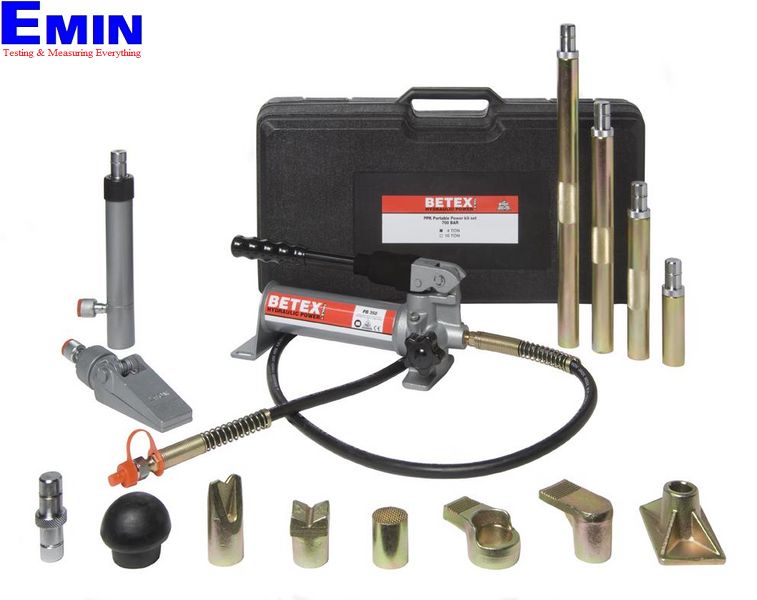
Where hydraulic spreader and lifting tools fit in industrial work
Hydraulic lifting wedges and spreader-type tools are typically used at the beginning of a lifting sequence. Their role is to enter a small clearance point, apply force in a controlled way, and create enough vertical movement or separation for the next step. This can be valuable in equipment maintenance, plant shutdown work, construction support tasks, and mechanical assembly.
Compared with larger lifting systems, this category is more focused on access, precision, and controlled starting lift. Once the initial gap is established, users may continue the operation with other equipment such as a hydraulic cylinder or a more complete lifting setup depending on the load path and required stroke.
Typical applications for hydraulic spreader/lifting equipment
These tools are well suited for situations where the available entry point is limited. In practice, they are often used to lift machinery slightly from a base, separate tightly fitted components, support alignment work, or create room for maintenance intervention. The ability to generate high force from a compact tool body makes them useful in both workshop and site conditions.
They are also relevant when lifting needs to start from a very low insertion height. Instead of relying on bulkier equipment from the outset, operators can use a lifting wedge to gain the first few millimeters of travel and then transition to other hydraulic tools. In broader load-handling workflows, this makes them a practical complement to products such as a hydraulic pump or other lifting devices in the same system.
Key points to consider when selecting a lifting wedge or spreader
The first consideration is the required force. Load weight, contact geometry, friction, and the real lifting point all influence how much capacity is needed. A compact tool may still deliver substantial force, but the correct choice depends on how the load will react during the first stage of movement.
Stroke is another important factor. For many applications, the goal is not a large lift but a small, reliable rise that enables cribbing, shimming, repositioning, or the insertion of another tool. Tip clearance and maximum spread also matter because they determine whether the wedge can enter the available gap and how far it can separate the load once engaged.
Users should also think about operating method and jobsite practicality. Tool weight, portability, hydraulic connection requirements, and the expected working pressure all affect field usability. For some tasks, teams may compare this category with tower jack solutions when a different load profile or lifting arrangement is required.
Representative products in this category
Two examples from Protorque illustrate the type of equipment commonly found in this category. The Protorque LW-18 Integral Vertical Lifting Wedge is intended for jobs that require strong lifting capability in a compact wedge format. With an 18-ton maximum force and a short lifting stroke, it fits applications where the priority is to initiate lift safely and efficiently from a limited access point.
The Protorque LW-16 Hydraulic Vertical Lifting Wedge is another relevant option for controlled vertical lifting. Its design supports high-force operation with a low tip clearance, making it suitable when space is restricted and precise entry under the load is important. In both cases, the value of the tool is not just raw force, but the ability to apply that force in a form factor that suits narrow lifting gaps.
How hydraulic spreader/lifting tools support safer lifting practice
In real lifting work, the first movement is often the most critical. Loads may be seated unevenly, surfaces may be corroded or stuck, and access can be limited. A hydraulic wedge helps reduce the need for improvised methods by providing a more stable and predictable way to begin separation or elevation.
That said, tool selection should always be matched to the application. Operators should confirm load conditions, support surfaces, contact points, and the overall lifting plan before work begins. Hydraulic spreader and lifting tools are most effective when used as part of a complete procedure that includes proper stabilization, load securing, and staged lifting where necessary.
Integration with broader hydraulic lifting systems
This category is rarely used in isolation. In many industrial projects, a lifting wedge starts the operation, after which the load is transferred to cylinders, supports, or other specialized lifting equipment. That makes hydraulic spreader/lifting tools an important part of the broader hydraulics and lifting ecosystem rather than a stand-alone answer for every job.
For buyers and maintenance planners, this also means selection should consider system compatibility. Pressure requirements, available pumps, hose arrangements, and the intended sequence of lifting all influence which tool is most practical. A good choice is one that fits both the immediate gap-lifting task and the rest of the hydraulic workflow around it.
Choosing the right category for your application
If your main challenge is creating an initial lift in a narrow clearance, this category is often the right place to start. It is especially relevant for maintenance teams dealing with machinery relocation, flange separation, structural adjustment, and service work where controlled entry and short-stroke lifting are more important than high overall lift height.
For applications that demand a different motion profile, longer stroke, or a more conventional vertical lifting arrangement, adjacent hydraulic product categories may be a better fit. The best results usually come from evaluating the actual load condition, available space, and how the first lift will transition into the next stage of the operation.
Hydraulic spreader and lifting tools are a practical solution for jobs where access is tight and the first movement matters most. By focusing on force, clearance, stroke, and system compatibility, buyers can narrow down the right equipment more effectively and build a safer, more workable lifting setup for industrial use.
-
-
-
-
-
-
-
-
-
-
-
-
-
-
-
-
-
-
-
-
-
-
-
-