

Welding robot Repair Service
When automated soldering or welding equipment starts drifting out of tolerance, production quality can change quickly. In electronics assembly and SMT environments, even small issues in motion accuracy, heat control, feeding, or repeatability can lead to unstable joints, higher rework rates, and unnecessary downtime. This is why a reliable Welding robot Repair Service is important for manufacturers that depend on consistent robotic soldering processes.
This service category is intended for businesses that need support restoring robot-based soldering or welding systems used in electronic circuit assembly. Rather than replacing an entire unit too early, repair work can help identify the real source of failure, bring the equipment back into stable operation, and extend the usable life of valuable production assets.
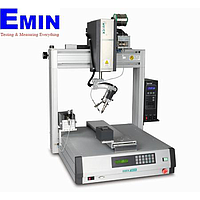
Why repair service matters for robotic soldering systems
Robotic soldering and welding equipment is used where repeatable process control is critical. These systems are expected to follow programmed paths, maintain stable thermal performance, and support uniform output across repeated production cycles. When any part of that chain becomes unstable, the result is often visible on the board, the joint, or the final assembly yield.
A structured repair service helps businesses troubleshoot faults more efficiently than trial-and-error replacement. Depending on the equipment condition, service may focus on restoring mechanical movement, checking control behavior, verifying heat-related performance, or resolving integration issues between the robot and the soldering process. For organizations running multiple electronics assembly tools, related support may also be relevant for soldering station repair when faults are not limited to the robotic platform itself.
Typical issues seen in welding robot repair applications
In practice, failures do not always appear as a complete shutdown. Many problems begin as inconsistent movement, irregular joint appearance, unstable heating behavior, positioning deviation, or reduced cycle stability. These symptoms can point to wear, misalignment, controller-related faults, or process-side issues that affect the robot’s output quality.
Another common challenge is distinguishing between a robot fault and a tooling fault. A production line may show poor soldering results even when the robot arm is still moving, which is why diagnosis should consider the whole working setup rather than a single component in isolation. In some cases, users comparing service options may also need support for nearby equipment types such as desoldering station repair or hand-operated process tools used in maintenance and rework.
What to expect from a professional repair workflow
A good repair process usually starts with fault assessment. This means reviewing the reported symptoms, understanding how the robot is used in production, and identifying whether the issue is related to motion, thermal application, control response, or overall process consistency. For B2B users, this step is important because repair priorities often depend on downtime impact and line-critical requirements.
After diagnosis, the service focus should move toward restoring operational reliability rather than only correcting the most visible symptom. That may include checking assemblies that influence positioning accuracy, verifying process stability after repair, and confirming that the robot can return to production with predictable performance. This is especially important in SMT and electronic assembly environments where repeatability matters as much as functionality.
Thermaltronics service relevance in this category
For companies using equipment from Thermaltronics, brand familiarity can be valuable when evaluating repair compatibility and service context. Thermaltronics is associated in this category through the featured Thermaltronics Soldering Robot Repair Service, which reflects the need for targeted support around robotic soldering applications in electronics manufacturing.
When a specific brand or platform is involved, repair decisions should consider actual production use, fault history, and the condition of the full working system. The goal is not simply to restore power or movement, but to bring the equipment back to a state where soldering quality, throughput, and consistency are acceptable for production demands.
How to evaluate whether repair is the right option
Repair is often the preferred choice when the equipment still fits the process requirement and the problem is concentrated in serviceable sections of the system. For many manufacturers, this approach can reduce disruption compared with replacing or requalifying an entire robotic soldering setup. It is particularly relevant when existing programs, fixtures, and production methods are already optimized around the current equipment.
At the same time, the decision should be based on practical factors: recurring failure frequency, impact on line output, ease of restoring stable operation, and whether related tools in the same workcell are also showing wear. If the production area includes other electronics assembly equipment, businesses may also review adjacent service categories such as lead cutter repair service to maintain the broader assembly workflow.
Applications across electronics assembly and SMT environments
This service category is relevant for manufacturers, EMS providers, maintenance teams, and technical buyers working with automated soldering or welding processes in electronics production. Typical use cases include PCB assembly, repetitive joint formation, controlled point-to-point soldering tasks, and production steps where manual operation is no longer efficient enough for required consistency.
Because robotic systems are part of a larger manufacturing ecosystem, repair planning should look beyond the standalone machine. Supporting equipment condition, operator practices, maintenance intervals, and process settings all influence long-term performance. A more complete service strategy helps reduce repeat failures and supports stable assembly quality after the robot returns to operation.
Choosing a service category that fits the actual equipment problem
One of the most common mistakes in repair sourcing is selecting a category based only on the visible machine type, without checking whether the fault belongs to the robot, the soldering head, the station, or another connected subsystem. A welding robot service is most useful when the issue truly affects the robotic or automated soldering platform and its production behavior.
If the problem is centered elsewhere, another repair path may be more appropriate. For example, faults in integrated bench systems may align better with soldering or assembly station support instead of robot-focused service. Making that distinction early helps technical teams shorten troubleshooting time and route the equipment to the right repair workflow.
Final considerations
For electronics manufacturers, keeping automated soldering equipment in reliable condition is essential for output quality, repeatability, and downtime control. A well-matched Welding robot Repair Service supports that goal by helping identify faults accurately and restore the system in a way that makes sense for real production use.
If your operation depends on robotic soldering or related SMT assembly equipment, this category provides a focused starting point for service evaluation. The right repair approach should align with your equipment type, process demands, and the broader condition of the tools around it, helping your line return to consistent and practical performance.
-
-
-
-
-
-
-
-
-
-
-
-
-
-
-
-
-
-
-
-
-
-
-
-