

Water Resistivity Controller Repair Service
Stable resistivity measurement is critical in water treatment, ultrapure water systems, laboratory utilities, and process lines where water quality directly affects product consistency and equipment performance. When an online controller begins showing unstable readings, slow response, display faults, or communication issues, a focused repair service can help restore reliable monitoring without immediately replacing the full instrument.
Water Resistivity Controller Repair Service is intended for online monitoring devices used to track water resistivity as part of continuous quality control. This category is relevant for maintenance teams, utilities engineers, and service buyers who need support for malfunctioning controllers used in industrial water systems, clean processes, and monitoring loops.
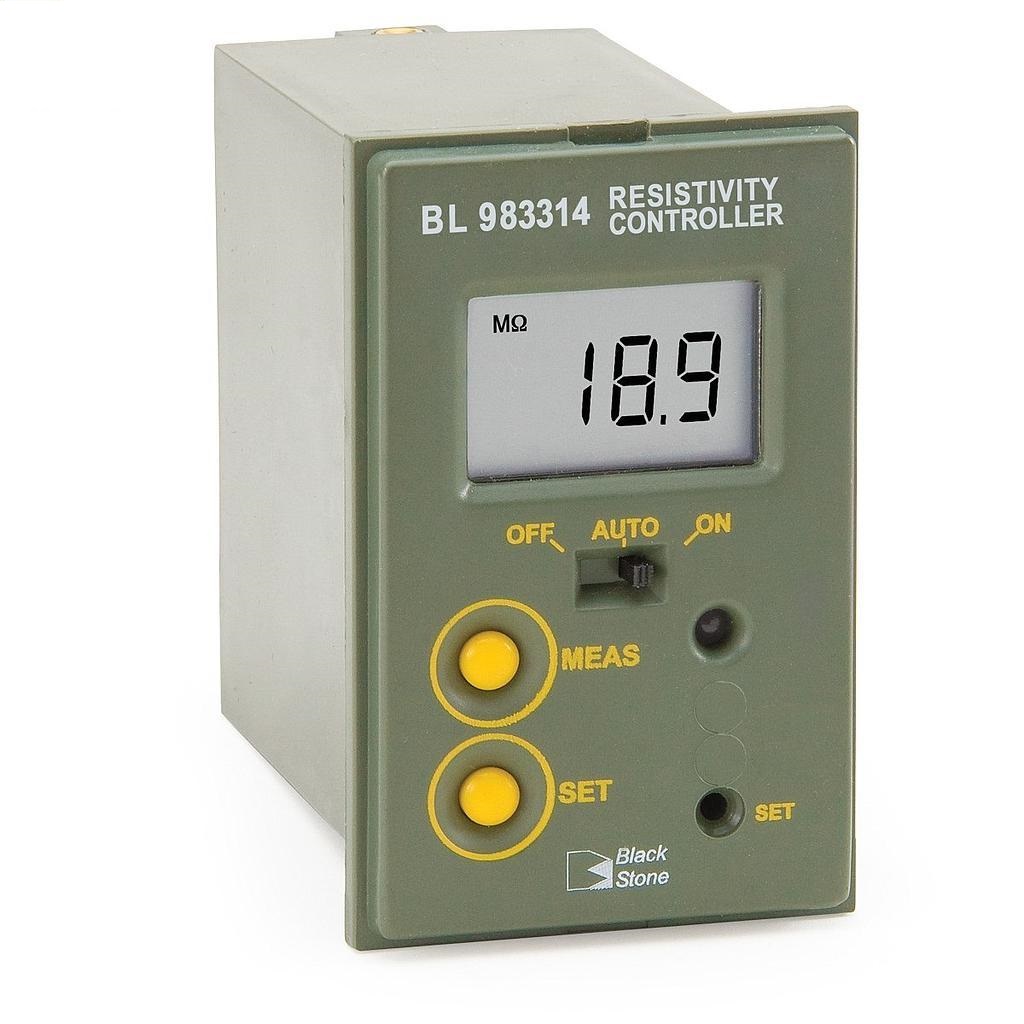
Why water resistivity controller repair matters
Water resistivity is commonly used as an indicator of ionic purity, especially in applications where low conductivity is required. If the controller that receives and processes the sensor signal is not operating correctly, the result may be misleading values, nuisance alarms, or loss of trend data that makes process decisions more difficult.
Repair becomes especially important when the installed device is already integrated into a broader monitoring system. In many facilities, restoring the existing controller is more practical than changing wiring, panel layout, or control logic. For this reason, service support for units such as the HANNA Water Resistivity Controller Repair Service can be a useful option when the goal is to bring a failed or unstable unit back into service with minimal disruption.
Common issues seen in online resistivity controllers
Faults in this type of equipment can appear in several ways. Some controllers power on but show drifting values, others fail to recognize the connected measurement input, and some experience keypad, display, output, or relay problems. In panel-mounted systems, environmental factors such as moisture, electrical noise, aging components, and prolonged continuous operation can also contribute to failure.
In practice, repair requests often arise after abnormal readings are noticed in routine checks or when the measured value no longer matches expected process conditions. A proper service approach should focus on the controller’s role in the measurement chain, including signal handling, stability, response behavior, and basic operational functions rather than only the visible symptom.
What this service category is used for
This category covers repair needs for online water resistivity controllers used in continuous monitoring applications. These devices are typically installed where water quality must be observed in real time rather than by occasional manual sampling. Typical environments may include purified water loops, treatment skids, industrial utility systems, and process lines where monitoring continuity matters.
Because resistivity monitoring is closely related to other liquid analysis parameters, maintenance teams often manage several controller types at the same time. If your site also operates conductivity-based equipment, it may be helpful to review the related conductivity and TDS controller repair service category for similar service scope in adjacent water quality applications.
How to evaluate a controller before sending it for repair
Before arranging service, it is useful to document the fault condition as clearly as possible. Note whether the unit powers up normally, whether the displayed value is fixed or unstable, whether analog or relay outputs are functioning, and whether the issue is constant or intermittent. This basic information helps distinguish controller faults from sensor, cable, installation, or process-related issues.
It is also good practice to check the wider measurement loop. A resistivity controller may appear faulty even when the root cause is contamination, poor connections, grounding issues, or sensor degradation. Repair service is most effective when the device is assessed as part of the full measurement system, especially in applications where uptime and data reliability are important.
Brand context and repair planning
For users working with HANNA instrumentation, repair support can be especially relevant when the controller is already part of an established monitoring setup. Keeping the same platform may simplify reinstallation, operator familiarity, and maintenance planning. This is particularly valuable in facilities that prefer to preserve an existing panel design instead of introducing a different device architecture.
Not every fault requires total replacement, and not every symptom indicates a sensor problem. A structured repair path helps determine whether the controller can be returned to stable service and whether the issue affects local display, signal processing, alarm handling, or general operation. This approach is often more efficient than replacing parts without confirming the source of the failure.
Related repair needs in water and process monitoring
Facilities that use water resistivity measurement frequently operate multiple online analyzers across the same plant. That is why repair requirements often extend beyond a single parameter. In wastewater, disinfection, process water, or chemical dosing systems, teams may also need support for other online instruments depending on the application and installed monitoring points.
Where relevant, you can also explore adjacent categories such as chlorine sensor and controller repair or free ion sensor controller repair. These related service areas are useful when a site maintains several online analytical systems and wants a more consistent service strategy across instruments.
Choosing the right repair service for your application
When selecting a repair option, the key consideration is whether the service aligns with the controller’s actual function in your process. A good fit depends on the type of monitored parameter, the importance of signal stability, the controller’s integration into the plant, and how quickly the unit needs to return to operation. For resistivity applications, service quality should support dependable monitoring rather than simply restoring power to the device.
This category is designed for buyers and technicians looking for a practical route to restore online resistivity monitoring equipment. If your system includes a faulty water resistivity controller, reviewing the available repair service options here can help you identify a suitable path to recover measurement continuity and maintain confidence in your water quality control process.
-
-
-
-
-
-
-
-
-
-
-
-
-
-
-
-
-
-
-
-
-
-
-
-