

Mechanical Measuring Instruments Repair Service
When dimensional accuracy, surface checks, or alignment measurements start drifting, even a small instrument error can affect inspection results, machine setup, and product quality. This is where Mechanical Measuring Instruments Repair Service becomes essential: not simply to restore function, but to bring measuring tools back to reliable working condition for daily production, maintenance, and quality control tasks.
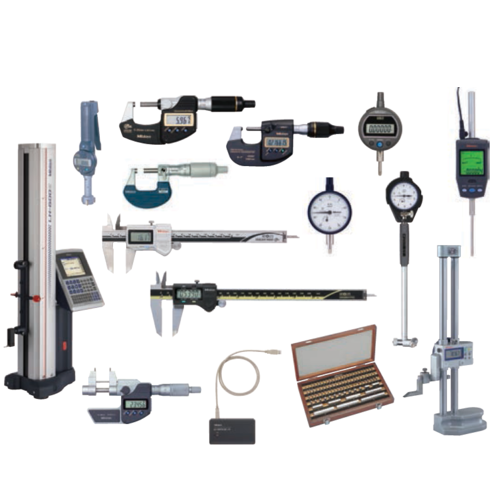
This category covers repair support for a wide range of mechanical measuring devices used in industrial environments. It is relevant for workshops, metrology rooms, maintenance teams, and manufacturers that depend on consistent readings from gauges, indicators, thickness instruments, and alignment systems.
Why repair matters for mechanical measuring instruments
Mechanical measuring tools are often exposed to repeated handling, shock, dust, shop-floor vibration, and long operating cycles. Over time, these conditions can lead to wear, pointer deviation, poor repeatability, mechanical sticking, damaged contact points, or movement issues that reduce confidence in measurement results.
A proper repair service helps extend equipment life and reduces the need for premature replacement. For many businesses, this is especially important when the instrument is part of an established inspection workflow or when the operator relies on a familiar tool for routine verification and setup.
Types of instruments commonly covered in this category
This category is centered on service support for common mechanical measurement and alignment equipment. Typical examples include height gauges, dial indicators, thickness gages, and laser pulley or shaft alignment systems used in maintenance and precision setup work.
Representative services in this range include Mahr Height Gauge Repair Service, MITUTOYO Dial Indicators Repair Service, Mahr Dial Indicators Repair Service, Mahr Thickness Gage Repair Service, and FIXTURLASER or EASYLASER repair services for laser pulley/shaft alignment systems. These examples show the practical scope of the category without limiting it to a single device type or application.
Typical issues that lead to instrument repair
Mechanical measuring instruments can fail gradually or suddenly. In many cases, users first notice inconsistent readings, difficulty zeroing, sluggish spindle or contact movement, pointer instability, excessive backlash, or signs of physical wear after field use.
For devices such as thickness gages and dial indicators, accuracy concerns often become visible during comparison checks or inspection routines. For alignment systems, service may be needed when the unit no longer behaves as expected in shaft or pulley alignment tasks. If your needs also include related service areas beyond this category, you may want to review electrical and electronic meter repair services for broader instrument support.
Brands and service examples in this repair range
Several widely used manufacturers appear across this category, including Mahr, MITUTOYO, DEFELSKO, ELCOMETER, EXTECH, EASYLASER, FIXTURLASER, and KERN. Brand-specific service references are useful for buyers who need support aligned with the make of instrument already installed in their facility.
Examples from the current range include MITUTOYO Height Gauge Repair Service, KERN Height Gauge Repair Service, Mitutoyo Thickness Gage Repair Service, DEFELSKO Thickness Gage Repair Servic, Elcometer Thickness Gage Repair Service, and EXTECH Thickness Gage Repair Service. Rather than focusing only on brand names, the main value is selecting a repair path that matches the instrument type, its measurement role, and the condition it is currently in.
How to choose the right repair service
The most effective way to select a service is to start from the instrument’s job in your process. A height gauge used for dimensional layout has different service priorities than a dial indicator used for comparative checks or a laser alignment system used in rotating equipment maintenance. Identifying the instrument type and the symptoms observed will usually narrow the repair requirement quickly.
It also helps to document whether the issue is mechanical damage, repeatability drift, movement resistance, display or pointer inconsistency, or general wear from heavy use. If your requirement is more specific, related repair paths such as height gauge repair service or thickness gauge repair service can help you reach a more targeted service category.
Applications across manufacturing, maintenance, and quality control
Mechanical measuring instruments are used wherever dimensional consistency and machine condition matter. In manufacturing, they support incoming inspection, in-process checking, final verification, and fixture setup. In maintenance, alignment tools help reduce wear and improve machine performance by supporting accurate pulley and shaft positioning.
Because these instruments are often integrated into routine workflows, downtime can slow inspection and troubleshooting activities. A dependable instrument repair workflow helps organizations keep essential measuring assets available, especially when replacement lead times, budget constraints, or process continuity are important considerations.
When repair is a practical alternative to replacement
Not every faulty instrument needs to be discarded. Repair can be a practical choice when the tool is a standard part of your inspection process, when the device body remains serviceable, or when users need continuity with an existing measuring method. This is common with dial indicators, height gauges, and thickness gages that are already familiar to operators and embedded in procedures.
Repair is also worth considering when multiple similar instruments are in use across one site and consistency matters across the fleet. In these cases, restoring performance through a suitable mechanical measurement service can be more efficient than introducing mixed replacements with different handling characteristics or operating formats.
Supporting more stable measurement performance
A good service approach should ultimately help users return equipment to practical, dependable operation within its intended role. For mechanical instruments, that means smooth movement, stable response, and confidence that the tool can once again support inspection, setup, or alignment work in a real production environment.
If your operation depends on height gauges, dial indicators, thickness gages, or laser alignment systems, this category provides a focused starting point for finding the right repair option. By matching the service to the instrument type, brand, and application, buyers can make a more informed decision and maintain a stronger measurement system over time.
Types of Mechanical Measuring Instruments Repair Service (123.000)
- Bore Gage Repair Service (5.000)
- Callipers Repair Service (10.000)
- Depth Gauge Repair Service (9.000)
- Dial Indicators Repair Service (6.000)
- Gloss Meter, Roughness Meter Repair Service (25.000)
- Hardness Meter Repair Service (25.000)
- Height Gauge Repair Service (6.000)
- Laser Pulley/Shaft Alignment System Repair Service (4.000)
- Micrometers Repair Service (7.000)
- Thickness Gauge Repair Service (26.000)
-
-
-
-
-
-
-
-
-
-
-
-
-
-
-
-
-
-
-
-
-
-
-
-