

Mechanical and Physical Testing Equipment Repair Service
Reliable test results depend not only on instrument accuracy, but also on the condition of the equipment behind the measurement. In production labs, QA departments, R&D centers, and material testing environments, mechanical and environmental test systems are exposed to wear, drift, sensor faults, controller issues, and mechanical stress over time. A professional Mechanical and Physical Testing Equipment Repair Service helps restore equipment performance, reduce downtime, and keep testing workflows stable.
This category covers repair support for a broad range of instruments used in force measurement, materials evaluation, abrasion testing, climate simulation, and related physical test applications. Whether the issue involves unstable readings, actuator problems, heating or cooling faults, chamber control errors, or damaged sensing components, structured repair work is essential to bring the system back into dependable operating condition.
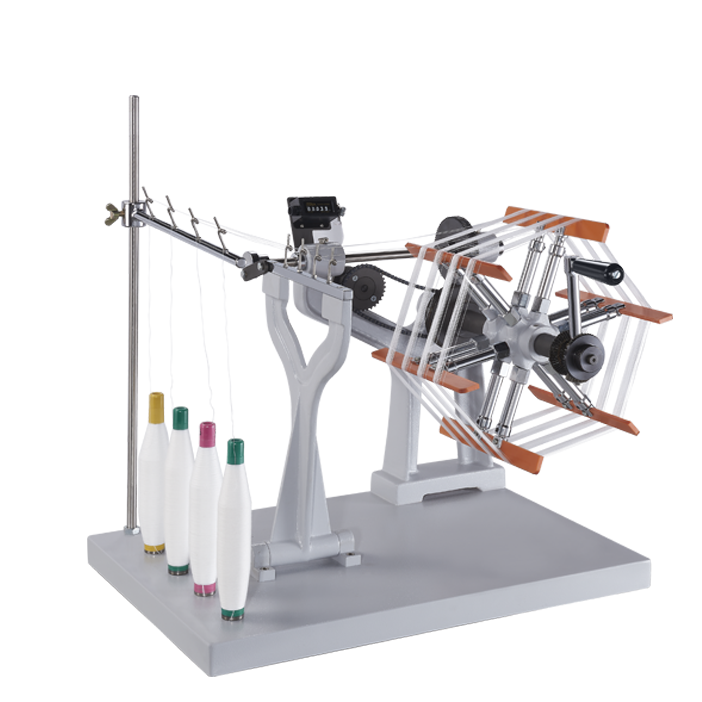
Repair support across different testing environments
Mechanical and physical testing equipment is often used in demanding workflows where repeatability matters. Even small deviations in force indication, temperature stability, humidity control, motion travel, or surface wear can affect product qualification, incoming inspection, or failure analysis. Repair service in this category is therefore not limited to fixing a visible fault; it also supports the broader goal of maintaining trustworthy test conditions.
The scope typically includes bench-top instruments, climate chambers, abrasion systems, force gauges, and specialized materials testing equipment. In many cases, repair work may involve troubleshooting electrical and control faults, replacing worn mechanical parts, restoring sensor response, checking drive systems, and verifying whether the instrument can return to normal operating behavior after service.
Typical equipment covered in this category
This category is relevant for a wide set of test platforms used in industrial and laboratory settings. Examples represented here include climate chambers, thermal shock chambers, force gauges, melt flow index testers, tension monitoring devices, and abrasion testers. These systems are commonly used to evaluate material durability, environmental resistance, mechanical strength, and product consistency.
Representative service entries include the ESPEC Thermal Shock chamber Repair Service, Binder Temperature and Humidity Chamber Repair Service, JEIOtech Temperature and Humidity Chamber Repair Service, MEMMERT Constant climate chamber Repair Service, DILLON Force gauge Repair Service, IMADA Force gauge Repair Service, EXTECH Force gauge Repair Service, ELCOMETER Tension Monitor Repair Service, and Buchi Melt Flow Index Tester Repair Service. Mentioning these examples helps illustrate the service range without limiting support to only one device type or one manufacturer.
Common faults seen in mechanical and physical testing equipment
Failure patterns vary by instrument class. In environmental chambers, common issues may appear as poor temperature recovery, humidity instability, refrigeration faults, heater problems, door seal deterioration, controller alarms, or communication errors. In force and tensile-related devices, users may notice zero drift, inconsistent readings, overload damage, keypad or display malfunction, or unstable load cell response.
For abrasion and physical materials testing equipment, service may be needed when test motion becomes irregular, rotating or reciprocating parts wear out, counters fail, or the instrument no longer maintains the intended test cycle. Some problems are gradual and only become visible through abnormal test results, while others cause immediate interruption of operation. Where broader instrument support is needed, related categories such as mechanical measuring instrument repair may also be useful.
Why specialized repair matters for test reliability
Testing equipment often combines mechanical systems, sensors, control electronics, displays, relays, heating or cooling assemblies, and software logic in one platform. Because of that, effective repair requires more than general maintenance. The service process needs to identify the root cause of the fault and understand how each subsystem affects test repeatability and operator safety.
This is especially important for equipment used in compliance-driven workflows, internal validation, and comparative material testing. A chamber that reaches a setpoint but overshoots during cycling, or a force gauge that powers on but no longer responds linearly, can still create costly quality decisions if the problem is overlooked. For adjacent device types involving electronic diagnostics, users may also explore electrical and electronic meter repair services when the fault is centered on measurement electronics rather than mechanical test hardware.
Examples of manufacturer-specific repair needs
Different brands often have different controller architectures, mechanical layouts, firmware behavior, and spare-part requirements. For example, environmental systems from ESPEC, Binder, JEIOtech, and MEMMERT may require brand-aware troubleshooting around chamber control, humidity generation, refrigeration behavior, or thermal cycling response. That makes manufacturer familiarity a practical advantage during diagnosis and repair planning.
Similarly, handheld or bench force measurement devices from DILLON, IMADA, EXTECH, and KERN may present issues linked to load sensing, display response, battery or power conditions, keypad wear, or overload events. In coating and surface-related applications, ELCOMETER instruments such as tension monitors or abrasion testers serve a different testing purpose, but still require a repair approach that respects the original measuring function and the mechanical demands of repeated testing cycles.
How to choose the right repair path
When sending equipment for service, it helps to prepare a clear fault description: what symptoms appeared, whether the issue is constant or intermittent, what operating conditions were used, and whether the problem began after transport, overload, long idle time, or continuous production use. Good fault information can shorten diagnosis time and improve the efficiency of the repair process.
It is also useful to identify whether the instrument belongs to a broader test workflow. For example, a failed climate chamber may affect environmental preconditioning before tensile or durability testing, while a faulty force gauge may interrupt assembly verification or materials evaluation. If the wider setup includes thermal inspection equipment, related support such as thermometers and thermal camera repair may be relevant in the same maintenance cycle.
Supported applications in QA, lab, and production settings
Mechanical and physical testing equipment appears across many industrial sectors because product performance is often tied to measurable physical behavior. These instruments support incoming inspection, packaging evaluation, plastics testing, textile and coating assessment, environmental durability checks, and in-process quality verification. As a result, equipment downtime can affect both technical decisions and production schedules.
Repair services in this category are relevant wherever test consistency matters: laboratories comparing material batches, factories validating packaging or assembly strength, and technical teams running routine environmental simulation. The objective is not simply to make the equipment power on again, but to restore a condition in which the instrument can return to its intended testing role with confidence.
Keeping testing operations stable over time
A practical repair strategy helps extend service life, reduce unplanned stoppages, and protect the value of specialized equipment. This is particularly important for instruments such as thermal shock chambers, constant climate chambers, melt flow index testers, force gauges, and abrasion testers, where replacement can be costly and operational interruption may affect multiple departments at once.
If your team relies on physical testing or environmental simulation to support product quality, selecting the right repair service is an important part of maintaining measurement confidence and workflow continuity. This category brings together repair support for a wide range of mechanical and physical testing equipment, making it easier to identify service options that fit your instrument type, application, and manufacturer.
Types of Mechanical and Physical Testing Equipment Repair Service (187.000)
- Abrasion Tester Repair Service (10.000)
- Aging Test Chamber Repair Service (6.000)
- Discoloration Meter Repair Service (3.000)
- Drop Tester Repair Service (5.000)
- Flammability Testing Equipment Repair Service (6.000)
- Footwear Testing Equipment Repair Service (1.000)
- Force Gauges Repair Service (18.000)
- Friction Coefficient Tester Repair Service (6.000)
- Furnaces Repair Service (9.000)
- Heat seal strength tester Repair Service (5.000)
- Impact Testing Machine Repair Service (13.000)
- Mechanical Shock Tester Repair Service (1.000)
- Melted Index Machine Repair Service (6.000)
- Metal Wire Torsion Testing Repair Service (6.000)
- Oxygen Permeation System Repair Service (1.000)
- Ozone Aging Test Chamber Repair Service (7.000)
- Rain Spray, Waterproof testing Chamber Repair Service (7.000)
- Salt Spray, Corrosion testing Chamber Repair Service (11.000)
- Sand and Dust Test Chamber Repair Service (6.000)
- Solar Simulation Test Chamber Repair Service (1.000)
- Temperature & Humidity Test Chamber Repair Service (22.000)
- Thermal Shock Chamber Repair Service (13.000)
- Universal Tensile Testing Machine Repair Service (16.000)
- Vibration Tester Repair Service (5.000)
- Water Vapor Transmission Rate Test System Repair Service (3.000)
-
-
-
-
-
-
-
-
-
-
-
-
-
-
-
-
-
-
-
-
-
-
-
-