

Welding Machine Repair Service
When a welding machine starts to arc inconsistently, overheat, lose output stability, or fail during production, the issue is rarely just inconvenience. In fabrication, maintenance workshops, and industrial processing environments, downtime can interrupt schedules, affect weld quality, and increase operating costs. A reliable Welding Machine Repair Service helps restore equipment performance while reducing unnecessary replacement of serviceable machines.
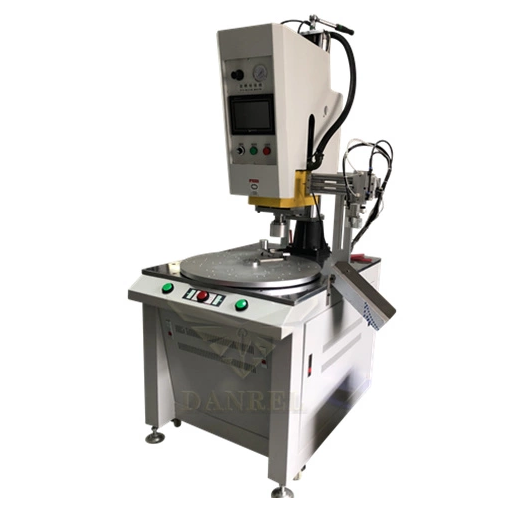
Why welding machine repair matters in industrial operation
Welding equipment works under demanding conditions: fluctuating loads, heat, dust, metal particles, and frequent duty cycles. Over time, these conditions can affect power components, control sections, connections, cooling performance, and output consistency. Repair work is therefore not only about fixing a machine that has stopped working, but also about identifying the root cause behind unstable operation.
For many businesses, repair is a practical option when the machine still fits the application, the installation is already integrated into the workflow, or replacement would create avoidable delays. In this category, users can explore service options related to welding equipment and compare them with other industrial repair needs such as cutting machine repair service when multiple production assets require maintenance planning.
Typical problems addressed by welding machine repair
Faults in welding systems may appear in different ways depending on the machine type and usage history. Common symptoms include failure to power on, unstable arc behavior, abnormal current or voltage output, poor wire feeding response, overheating, intermittent shutdown, or visible damage to connectors and internal assemblies. In some cases, the machine still runs but weld quality becomes inconsistent, which can be just as disruptive as a complete breakdown.
A structured diagnostic process is essential because the same symptom can come from different causes. For example, poor output may be related to internal electronic components, worn cables, thermal stress, contamination, or mechanical wear in supporting parts. Proper troubleshooting helps avoid replacing parts unnecessarily and supports a more efficient repair path.
Support for different brands and machine conditions
This category is suitable for businesses looking for repair support across a range of welding machine brands used in industrial and workshop settings. The available manufacturer context includes names such as Danrel, Telwin, YATO, Hồng Ký, Oshima, KOCU, TIEN DAT, and Weldcom, which reflects the practical diversity often found in real operating environments.
Where a specific example is useful, the Danrel Spin Welding Machine Repair Service illustrates the type of targeted service businesses may look for when equipment is application-specific. Repair requirements can vary significantly between general welding units and specialized welding systems, so matching the service scope to the machine’s operating role is an important first step.
What to consider before sending a machine for repair
Before arranging service, it is helpful to record the machine’s failure symptoms as clearly as possible. Details such as when the fault occurs, whether the issue is continuous or intermittent, recent overload events, environmental conditions, and any unusual sounds or smells can all support faster diagnosis. If the machine is part of a production line, noting the process impact also helps prioritize urgency.
Users should also consider the overall condition of the equipment. A repair decision is usually more effective when the machine’s frame, transformer or inverter platform, connectors, and core functional structure remain worth restoring. In industrial settings where several machine types are maintained together, repair planning may also be coordinated alongside services like shear machine repair service or hydraulic stamping machine repair service.
How repair service fits into equipment lifecycle management
In many factories and technical workshops, maintenance is not handled machine by machine in isolation. Welding equipment is often part of a larger production ecosystem that includes cutting, pressing, forming, and handling operations. A good repair strategy supports equipment lifecycle management by extending useful service life, improving reliability, and reducing the risk of repeated stoppages caused by unresolved faults.
Repair can also provide useful insight into operating conditions. Repeated thermal issues, contamination inside enclosures, or recurring cable and connection failures may indicate broader maintenance needs around installation, ventilation, power supply stability, or operator handling. In that sense, service work contributes not only to recovery, but also to better preventive maintenance decisions.
Choosing the right repair scope for your application
Not every welding machine failure requires the same level of intervention. Some cases may involve routine corrective work, while others require deeper inspection of power electronics, control boards, drive elements, cooling systems, or mechanical interfaces. For buyers comparing service options, it is useful to look at the machine type, the severity of failure, the production criticality, and whether the equipment is a standard shop unit or a specialized industrial machine.
If your operation includes several categories of machinery, service evaluation may also involve comparing priorities across departments. For example, a workshop that handles welding and metal forming may review this category together with mechanical power presser repair service to align maintenance budgets and downtime windows more effectively.
Who this category is intended for
This category is relevant for manufacturers, maintenance teams, fabrication workshops, service departments, and procurement staff sourcing repair support for industrial welding equipment. It is especially useful when the priority is to restore function, evaluate the condition of an existing machine, or keep a production asset operating without moving immediately to full replacement.
Because repair needs can vary widely by machine design and operating environment, the most effective approach is usually a clear review of symptoms, machine role, and service urgency. That makes it easier to identify whether a general welding machine repair path is sufficient or whether a more specific service example, such as the Danrel spin welding machine offering, better matches the application.
Final considerations
Repairing welding equipment is often a practical step toward restoring stable operation, maintaining weld quality, and controlling downtime in industrial settings. Rather than treating every fault as a replacement case, businesses can use this category to evaluate service options based on machine condition, application demands, and the wider maintenance picture.
For teams managing multiple production assets, a focused repair decision today can also support more predictable maintenance planning tomorrow. Exploring the right welding machine service path starts with understanding the fault, the equipment’s role, and the level of repair needed to return it to dependable use.
-
-
-
-
-
-
-
-
-
-
-
-
-
-
-
-
-
-
-
-
-
-
-
-