

Density and concentration meter Repair Service
Measurement problems in process control and laboratory work often start small: unstable readings, slow response, poor repeatability, or values that no longer match the actual sample condition. When that happens, timely support for Density and concentration meter Repair Service helps restore instrument performance and reduce the risk of incorrect decisions in production, quality control, and material verification.
This service category is intended for users who need practical repair support for instruments used to evaluate density, specific gravity, concentration, or related liquid properties. Whether the issue involves sensing accuracy, display behavior, response stability, or general instrument condition, professional repair can be an efficient alternative to premature replacement.
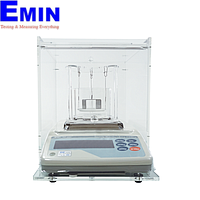
Why repair matters for density and concentration instruments
Devices in this group are commonly used where measurement consistency directly affects process quality. In food, beverage, chemical, laboratory, and industrial settings, even a modest deviation in density or concentration readings can influence formulation, batching, inspection results, or product acceptance.
Because these instruments may work with liquids of different viscosities, temperatures, and contamination levels, they can gradually develop issues caused by wear, sensor drift, handling impact, or environmental exposure. A proper repair workflow focuses on identifying the real source of the fault rather than treating every symptom as a calibration problem.
Typical issues addressed by the service
A repair request may begin when the instrument no longer powers on, shows unstable measurement values, responds slowly, or produces results that appear inconsistent with known reference samples. In other cases, the device may still operate but no longer deliver the level of repeatability required for routine inspection or process control.
For this type of equipment, service attention is often needed when there are signs of sensor instability, reading offset, display faults, communication problems, or general deterioration after long-term use. In practical maintenance, repair is also important when the instrument has been exposed to aggressive media, contamination, or handling conditions that may affect internal components.
Examples of supported brands and service references
This category can cover repair needs for instruments from manufacturers commonly used in industrial and laboratory environments. Examples in this page include skSATO, Centec, Cometech, and Malcom, depending on the type of device and the condition reported by the user.
Representative service references include the skSATO Liquid Refractometer Repair Service, Centec Density Sensor Repair Service, Cometech Densimeter Repair Service, and Malcom Gravity Meter Repair Service. These examples show the broader scope of this category: some instruments are designed for direct density measurement, while others support related concentration or gravity-based evaluation in process and laboratory applications.
How the repair process is typically approached
A reliable service process usually starts with fault assessment. This step helps clarify whether the main problem comes from the sensing element, electronics, signal handling, interface section, or mechanical condition of the instrument. For users, this is important because symptoms like drifting values or poor repeatability may have different root causes.
After diagnosis, the next priority is restoring measurement reliability in a way that matches the instrument’s intended use. For density and concentration meters, that may involve correcting hardware faults, resolving reading instability, checking response behavior, and verifying that the instrument functions normally again under appropriate operating conditions.
Choosing the right repair service for your instrument
Not every instrument in this category works on the same principle, so a good repair request should include the model, observed fault, application environment, and any recent event such as impact, liquid ingress, or abnormal readings against known samples. Clear information helps shorten troubleshooting time and improves the accuracy of the service assessment.
It is also useful to distinguish between a device that has completely failed and one that is still running but showing reduced confidence in results. In many cases, early intervention prevents more serious damage and helps protect the long-term value of the equipment, especially for instruments used in recurring inspection routines.
Related repair needs in the measurement workflow
Density and concentration measurement is often part of a wider quality and environmental monitoring system. Depending on the application, users may also need support for nearby instrument categories such as water activity meter repair or alcohol meter repair, especially when multiple sample properties are checked in the same workflow.
Looking at related service categories can be helpful when a process depends on several measurement points and one failing instrument affects broader product evaluation. This creates a more consistent maintenance strategy across the instruments used in testing, validation, and day-to-day production support.
When repair is a practical option
Repair is often worth considering when the instrument remains relevant to your process, the fault appears localized, and the cost of downtime is significant. For many B2B users, replacing a specialized meter immediately is not always the most efficient path, especially if the existing unit is already integrated into routine procedures or operator familiarity is important.
A well-managed service approach can help extend equipment life, improve operational continuity, and restore confidence in data quality. This is particularly valuable for organizations that rely on process measurement accuracy to maintain product consistency and internal quality standards.
Find repair support for density and concentration measurement equipment
If your instrument is showing abnormal behavior, inconsistent readings, or loss of stability, this category provides a focused starting point for service evaluation. The scope covers repair needs for density-related and concentration-related measurement devices, including examples from brands such as skSATO, Centec, Cometech, and Malcom.
By choosing the appropriate repair path early, you can reduce troubleshooting delays and improve the chances of returning the instrument to dependable operation. For users managing production, laboratory testing, or inspection tasks, that means less uncertainty and a more reliable measurement workflow overall.
-
-
-
-
-
-
-
-
-
-
-
-
-
-
-
-
-
-
-
-
-
-
-
-