

Chemical oxygen demand meter Repair Service
Reliable COD measurement is critical in wastewater treatment, environmental monitoring, industrial discharge control, and laboratory analysis. When a meter begins to drift, shows unstable readings, fails to heat correctly, or no longer completes tests consistently, repair work becomes more than a maintenance task—it directly affects data quality, reporting confidence, and daily operations. This page focuses on Chemical oxygen demand meter Repair Service for organizations that depend on accurate instrument performance.
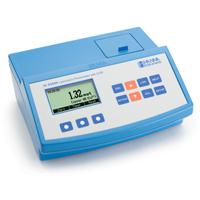
Why COD meter repair matters in routine operations
A chemical oxygen demand meter is used to assess the amount of oxidizable material in water or wastewater samples. In practice, users rely on stable optical measurement, correct digestion support, dependable electronics, and repeatable test workflows. If any part of that chain is compromised, the result can be inconsistent analysis, unnecessary retesting, or delays in process decisions.
Repair service for COD meters helps restore instrument functionality when performance issues appear during normal use. Common service needs may include display or keypad faults, communication problems, power instability, sensor or optical reading issues, and general wear from laboratory or field environments. A proper repair approach is especially important where instruments are used for compliance-related monitoring or internal quality control.
Typical issues seen in chemical oxygen demand meters
COD meters work in demanding conditions, often alongside reagents, heated digestion steps, and repetitive test cycles. Over time, this can lead to problems such as failed startup, irregular test completion, error messages, drift in measured values, or difficulty reading vials consistently. Mechanical damage from transport, contamination in the measurement chamber, or aging electronic components can also affect reliability.
In some cases, the instrument still powers on but no longer produces repeatable results. In others, users notice unstable operation after long storage, intensive daily use, or exposure to harsh laboratory conditions. A structured service process helps determine whether the issue is related to optics, internal electronics, power supply behavior, user interface components, or other functional assemblies.
Service support for major COD meter brands
This category covers repair support for instruments from established manufacturers used in environmental testing and water analysis. Examples include YSI, HANNA, WTW, and HUMAS, all of which are represented in this service range. Brand-specific familiarity is important because service requirements can vary depending on instrument design, operating logic, and measurement architecture.
Representative service listings in this category include the HANNA Chemical oxygen demand meter Repair Service, HUMAS Chemical oxygen demand meter (COD) Repair Service, YSI Chemical oxygen demand meter (COD) Repair Service, and WTW Chemical oxygen demand meter Repair Service. These examples help illustrate the scope of supported repair needs without turning the page into a simple product list.
What a COD meter repair process usually involves
A practical service workflow begins with fault assessment. This may include checking power behavior, display response, user controls, reading stability, and overall instrument condition. For laboratory instruments, technicians also look for signs of contamination, component fatigue, connector issues, or performance irregularities that can affect test consistency.
After diagnosis, repair work is typically focused on restoring measurement stability, dependable operation, and normal handling. Depending on the issue, this can involve replacing failed components, resolving electronic or interface faults, cleaning affected assemblies, and verifying that the instrument operates correctly after service. For users managing broader environmental testing equipment, related support categories such as dew point meter repair service may also be relevant when multiple instruments are maintained under the same quality system.
How to decide when repair is the right option
Repair is often the right next step when the instrument has known functional value but no longer performs as expected. This is common when the meter still has an intact housing, usable interface, and established place in the lab workflow, yet shows errors, weak repeatability, or incomplete test operation. For many facilities, restoring an existing unit can be more practical than replacing it immediately, especially when procedures, accessories, and operator familiarity are already built around that device.
It is also useful to seek service early, before minor symptoms become more serious failures. Intermittent faults, slow startup, unexpected shutdowns, or unusual reading behavior can point to issues that worsen over time. Early attention can help reduce downtime and improve planning for laboratories, utilities, and industrial users that depend on regular sample analysis.
Applications that depend on dependable COD measurement
COD analysis is commonly used in wastewater treatment plants, municipal water laboratories, industrial effluent monitoring, environmental consulting, and process control environments. In these settings, instrument reliability affects not only test throughput but also confidence in trend monitoring and decision-making. A faulty meter may lead to repeated sample runs, unnecessary troubleshooting, or uncertainty in day-to-day reporting.
Because many organizations operate several types of environmental instruments at once, maintenance planning is often broader than a single device. For example, some teams looking after COD systems may also need support for light meter repair service or other analytical and monitoring equipment used across the same site.
Choosing a service category that fits your equipment
When selecting a repair service, it helps to match the request as closely as possible to the actual instrument type and brand. That makes it easier to route the unit correctly, review the likely fault pattern, and align the service process with the equipment in use. For COD instruments, details such as the manufacturer, visible symptoms, and operating condition can all support faster evaluation.
If your organization manages a mixed fleet of environmental instruments, using clearly defined service categories can simplify maintenance coordination. This category is intended for users who need targeted repair support for chemical oxygen demand meters rather than general instrument servicing. The result is a more relevant path for diagnosis, repair handling, and restoration of normal measurement performance.
Practical next step for COD meter service needs
When a COD meter becomes unreliable, the most effective response is to address the fault before it disrupts testing schedules or compromises data confidence. This category is designed to support repair requests for commonly used instruments from brands such as YSI, HANNA, WTW, and HUMAS, with a focus on restoring dependable operation in real laboratory and environmental monitoring workflows.
For teams maintaining water and environmental testing equipment, a well-matched service category helps reduce uncertainty and keeps instrument support aligned with actual application needs. If your instrument is showing functional problems, unstable behavior, or inconsistent readings, this Chemical oxygen demand meter Repair Service category provides a clear starting point for the next step.
-
-
-
-
-
-
-
-
-
-
-
-
-
-
-
-
-
-
-
-
-
-
-
-