

Optical 3D Scanners Repair Service
When an optical 3D scanner starts producing unstable point clouds, misaligned scans, or inconsistent measurement results, the issue quickly affects reverse engineering, inspection, and digital archiving workflows. Reliable support matters because these systems are used where accuracy, repeatability, and uptime have a direct impact on engineering and production tasks.
Optical 3D Scanners Repair Service is intended for businesses that need practical maintenance and repair support for structured-light and related non-contact scanning equipment. Whether the problem appears in image capture, calibration behavior, connectivity, or scan consistency, a professional repair process helps restore dependable operation and reduce disruption across downstream design or quality activities.
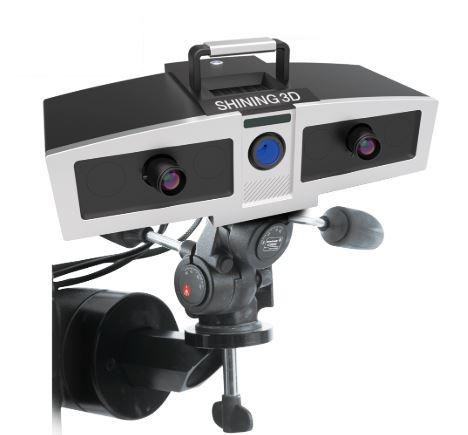
Why repair support is important for optical 3D scanning systems
Optical scanners are often integrated into workflows that depend on stable data acquisition and predictable software-to-hardware interaction. Even a small fault can lead to drift in scan quality, poor surface capture, unexpected interruptions, or difficulty completing full measurement sequences on parts with complex geometry.
Because these devices are used in technical environments, repair work is not simply about restoring power or replacing an obvious component. It also involves checking how the scanner behaves during operation, how it communicates with the system, and whether it can return to normal scanning performance under real use conditions.
Typical issues seen in this service category
Repair requests for optical 3D scanners usually come from symptoms that affect data quality or day-to-day usability. Examples can include unstable scan output, difficulty starting a scan session, recognition problems between device and software, or irregular calibration behavior after transport or extended use.
In some cases, the problem may be linked to optical alignment, internal electronics, connection interfaces, or other hardware-related causes. In other situations, the failure only becomes visible through poor reconstruction results, inconsistent capture of edges and surfaces, or repeated interruption during scanning workflows.
- Scan instability that affects repeatable capture
- Connection or communication faults between scanner and host system
- Calibration-related issues that influence measurement confidence
- Operational faults after frequent field use, relocation, or intensive production work
Supported brands and representative service examples
This category includes repair support for equipment from manufacturers such as Thunk3D and SHINING 3D, both of which are widely recognized in the optical 3D scanning space. Service coverage may be especially relevant for organizations already using these platforms in inspection, modeling, prototyping, or engineering documentation tasks.
Representative examples in this category include the Thunk3D Optical Scan 3D Scanners Repair Service and the SHINING 3D Optical Scan 3D Scanners RepairService. These examples help illustrate the scope of support available for branded scanning systems without turning the page into a simple product list.
How to evaluate a repair need before sending equipment
A clear description of the problem helps shorten troubleshooting time. It is useful to note whether the fault is constant or intermittent, whether it started after transport or setup changes, and whether the issue appears during initialization, calibration, live capture, or file generation.
For industrial users, it is also helpful to identify the operational context: part size, scanning frequency, workstation environment, and whether the scanner is used mainly for inspection or 3D modeling. These details can make it easier to distinguish between a hardware fault, a configuration issue, and a workflow-related problem.
If your operation uses related equipment in the same service ecosystem, you may also want to review options for 3D printer repair support or barcode scanner repair where mixed device fleets need coordinated maintenance planning.
Common use environments for optical 3D scanner repair services
Organizations that use optical 3D scanners often operate in manufacturing, product development, quality control, education, research, service bureaus, and technical documentation. In these settings, scanner reliability is tied to deadlines, inspection schedules, customer deliverables, and the ability to reproduce accurate digital data from physical objects.
Repair service is especially relevant when a scanner is part of a larger process chain that includes CAD comparison, prototype iteration, or dimensional validation. Restoring scanner function quickly can help protect workflow continuity and reduce the need for repeated captures, manual rework, or outsourced scanning work.
What to look for in a suitable repair service
A suitable service approach should focus on more than basic fault detection. For professional users, the priority is whether the equipment can return to stable working condition with consistent performance in realistic operating scenarios. That means the repair process should support functional diagnosis, careful handling of the optical system, and verification of normal operating behavior after service.
It is also important to consider whether the service is aligned with your equipment type and manufacturer ecosystem. When working with brands such as Thunk3D or SHINING 3D, familiarity with optical scanning platforms can be valuable in identifying scanner-specific behavior and narrowing down the root cause more efficiently.
Related service planning for technical equipment fleets
Many B2B users do not manage optical scanners in isolation. They may also maintain printers, terminals, and data capture devices across engineering, warehouse, or production environments. Looking at repair requirements across equipment categories can improve maintenance planning and reduce unplanned downtime across the broader operation.
Depending on your setup, related categories such as handheld terminal repair service may also be relevant when field data collection and digital traceability tools are part of the same workflow.
Choosing the right service path for your scanner
The right repair path depends on how critical the scanner is to your workflow, how the fault presents itself, and how tightly the system is integrated with inspection or modeling tasks. A well-scoped service request makes it easier to assess the issue, prioritize the repair, and return the equipment to dependable use.
For companies using optical scanning in professional environments, this category provides a focused starting point for restoring performance in non-contact 3D capture systems. If your equipment is showing signs of reduced reliability, inconsistent output, or operational faults, a dedicated optical 3D scanner repair service can help support continuity across your measurement and digitalization processes.
-
-
-
-
-
-
-
-
-
-
-
-
-
-
-
-
-
-
-
-
-
-
-
-