

Surface Resistivity Tester Calibration Service
Accurate concrete durability assessment depends heavily on reliable electrical measurements. When a resistivity instrument starts to drift, the resulting data can affect maintenance decisions, corrosion risk evaluation, and long-term condition monitoring. A professional Surface Resistivity Tester Calibration Service helps keep measurement results consistent, traceable, and suitable for technical inspection workflows.
For laboratories, civil engineering teams, contractors, and inspection providers, regular calibration is not only about instrument performance. It also supports better comparison between test campaigns, reduces uncertainty in field reporting, and helps ensure that surface resistivity readings remain meaningful when used alongside other concrete evaluation methods.
Why calibration matters for surface resistivity testing
Surface resistivity testing is widely used in concrete assessment because it provides a non-destructive way to evaluate conditions related to ion transport and potential durability concerns. Since these measurements are often used to support engineering judgment, even small deviations in instrument response can reduce confidence in the data.
Calibration helps verify that the tester reads within expected limits and performs correctly under controlled conditions. This is especially important when the instrument is used for repeated site inspections, quality control programs, research applications, or comparative testing across different structures and time periods.
Typical use cases for this service
This category is relevant for organizations using surface resistivity meters in concrete inspection, durability studies, and corrosion-related evaluation. Common users include materials testing labs, consultants, infrastructure maintenance teams, precast producers, and academic or R&D environments where dependable readings are essential.
Calibration is particularly useful after heavy field use, before critical projects, after transport or storage, or when measurement results appear inconsistent with previous testing. In practical terms, a calibration check can help distinguish between actual changes in concrete condition and issues related to instrument accuracy.
Instrument example within this category
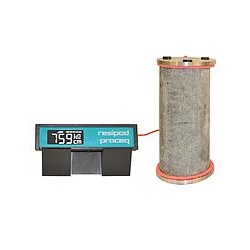
A representative service in this category is the Proceq Resipod Resistivity Meter Calibration Service. This type of service is intended for users who rely on a dedicated resistivity meter for concrete evaluation and need confidence that the device remains suitable for professional measurement work.
For customers working with equipment from PROCEQ, calibration can be a practical part of routine asset management, especially when the instrument is used together with other concrete testing tools in the same inspection program. Referencing the manufacturer ecosystem can also make it easier to align service planning across multiple devices.
What calibration supports in concrete inspection workflows
In many projects, resistivity testing is not used in isolation. It often contributes to a broader condition assessment process that may include rebound testing, cover measurement, ultrasonic evaluation, or corrosion-focused investigation. Keeping the resistivity meter properly calibrated helps maintain consistency when results are reviewed alongside other non-destructive testing methods.
This is valuable for teams preparing technical reports, comparing assets across sites, or building maintenance histories over time. A stable and verified instrument improves the reliability of trend analysis and reduces the chance that unexpected readings are caused by the tester rather than the structure under examination.
How to decide when calibration is needed
A fixed interval may be part of an internal quality system, but real operating conditions also matter. Frequent site deployment, harsh handling conditions, exposure to dust or moisture, and intensive project schedules can all increase the need for inspection and recalibration. If the meter is part of a documented testing process, maintaining a regular service cycle is usually a sensible approach.
It may also be time to schedule service when readings show unusual variation, when the instrument has experienced impact or transport stress, or when your team needs renewed confidence before audits, handover testing, or client-facing inspection work. In these situations, calibration supports both technical accuracy and operational readiness.
Related calibration services in the same testing environment
Concrete evaluation programs often involve multiple instruments, so calibration planning is more effective when viewed as part of the wider testing workflow. If your team also uses rebound-based equipment, the concrete test hammer calibration service may be relevant for maintaining consistency across mechanical surface assessment tools.
For projects focused more directly on reinforcement location or concrete cover verification, the cover meter and rebar detector calibration service can complement resistivity-related inspection work. Where corrosion assessment is part of the objective, the rebar corrosion detection calibration service is also a natural adjacent category.
Choosing the right service scope
When selecting a calibration service, it is useful to consider the instrument type, its application history, and how the data is used within your organization. A meter used for quick screening in the field may not follow the same service priorities as one used for formal reporting, laboratory comparison, or compliance-driven testing programs.
It is also worth checking whether your workflow involves only one tester or a broader fleet of concrete inspection devices. Planning calibration at the category level can simplify equipment management, reduce unexpected downtime, and improve consistency across projects that depend on comparable measurement data.
Supporting dependable concrete test results
Reliable measurement starts with a verified instrument. A well-timed surface resistivity tester calibration helps maintain confidence in concrete durability assessment, supports better reporting quality, and fits naturally into preventive maintenance for inspection equipment.
Whether you use a dedicated resistivity meter occasionally or as part of a larger non-destructive testing program, this service category provides an important foundation for trustworthy results. If your work also includes adjacent concrete testing methods, reviewing related calibration services can help build a more complete and consistent equipment support plan.
-
-
-
-
-
-
-
-
-
-
-
-
-
-
-
-
-
-
-
-
-
-
-
-