

Pressure Sensor Calibration Service
Stable pressure measurement is critical in process control, test benches, hydraulic systems, HVAC, and many industrial automation tasks. When a sensor starts to drift, the result is not only a wrong reading on screen, but potentially poor control accuracy, unnecessary downtime, and avoidable quality issues. This is why Pressure Sensor Calibration Service is an essential part of preventive maintenance for facilities that rely on dependable pressure data.
On this page, you can explore calibration support for pressure sensors used in industrial and technical environments. The goal of calibration is to compare the sensor output against a reference standard, identify deviation across the measuring range, and help confirm whether the device remains suitable for its intended application.
Why pressure sensor calibration matters
Pressure sensors are often installed in systems where measurement accuracy directly affects process stability, safety, or product consistency. Over time, normal use, temperature cycling, vibration, overload events, and environmental conditions can change sensor behavior. Even small deviations can become significant when the signal is used for monitoring, alarms, data logging, or closed-loop control.
A proper calibration process helps verify whether the sensor output still matches an accepted reference across defined points. This is especially important for plants and laboratories that follow maintenance schedules, quality procedures, or internal inspection requirements. In many cases, calibration also supports troubleshooting by distinguishing between sensor drift and faults elsewhere in the measurement chain.
Typical devices included in this service scope
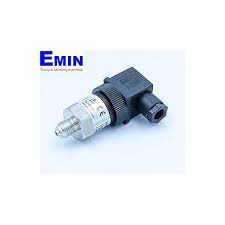
This category is intended for pressure sensors used to convert pressure into an electrical signal for monitoring or control. Depending on the application, these devices may be installed on machines, pipelines, test systems, hydraulic circuits, pneumatic systems, or production equipment.
In practice, pressure sensors may be evaluated at multiple calibration points to review linearity, repeatability, and output deviation relative to a reference instrument. The exact calibration method depends on the sensor type, measuring range, output format, and the conditions required by the application. For systems that use signal-converting field devices, you may also want to review our pressure transmitter calibration service for related instrumentation needs.
When calibration is usually required
Calibration is commonly scheduled at regular maintenance intervals, but there are also practical situations where it becomes necessary sooner. For example, a sensor should be checked after abnormal pressure events, after installation in a critical process, after long operating periods, or when measurement values appear inconsistent with expected system behavior.
Some companies also request calibration before audits, equipment qualification, or product validation activities. Where portable verification tools are used for field checks, it can be useful to maintain those devices as well through a portable pressure meter calibration service. Keeping both the working sensor and the verification instrument under control improves confidence in the full measurement workflow.
Key points evaluated during calibration
A pressure sensor calibration service generally focuses on how accurately the device responds to known pressure inputs. This can include checking output values at selected points across the range, reviewing zero and span behavior, and observing whether the response remains consistent during increasing and decreasing pressure steps. These checks help reveal offset, drift, hysteresis, or non-linearity that may affect real operating performance.
For industrial users, the most important outcome is usually not just a number, but a clearer understanding of measurement reliability. A calibrated sensor supports better maintenance decisions, more stable process control, and easier comparison between expected and actual operating conditions. In hydraulic applications, related service needs may also extend to hydraulic meter calibration where pressure verification is part of a broader test environment.
How to choose the right calibration approach
The right service scope depends on where and how the sensor is used. A sensor installed in a general utility system may have different tolerance expectations from one used in a controlled manufacturing process or a validation setup. Before arranging calibration, it is helpful to confirm the sensor type, measuring range, output signal, application criticality, and whether the device needs in-house verification or more formal documentation for quality records.
It is also worth considering the wider instrument chain. In some systems, the pressure sensor is only one part of the measurement path, alongside gauges, transmitters, indicators, or data acquisition equipment. If a fixed mechanical indicator is used in the same process, our fixed pressure gauge calibration service may be relevant as part of a more complete maintenance plan.
Applications across industry and automation
Pressure sensors are widely used in manufacturing, fluid handling, utilities, machine building, laboratories, and building services. They may monitor line pressure, support pump control, supervise pneumatic systems, protect equipment through alarm thresholds, or provide feedback to PLC and automation systems. In these environments, a sensor that has drifted out of tolerance can affect both process efficiency and maintenance response time.
Regular calibration supports more dependable trending, clearer diagnostics, and improved consistency in operational data. This is particularly useful where pressure values influence acceptance criteria, interlocks, or product quality. By keeping measurement devices checked at appropriate intervals, teams can reduce uncertainty and improve confidence in daily operation.
Documentation and maintenance planning considerations
For many B2B users, calibration is part of a larger asset management routine rather than a one-time activity. Keeping records of calibration dates, instrument condition, and service intervals helps build a more structured maintenance schedule. This is especially valuable for operations that manage multiple pressure points across production lines, service stations, or test equipment.
A planned approach also makes it easier to identify recurring drift patterns, decide when replacement is more practical than repeated adjustment, and maintain traceability within internal quality systems. For organizations using several pressure-related instruments together, aligning service intervals across those devices can simplify maintenance planning and reduce disruption.
Support more reliable pressure measurement
Choosing a suitable pressure sensor calibration service is ultimately about protecting the quality of the data your systems depend on. Whether the sensor is used for control, monitoring, testing, or maintenance verification, calibration helps confirm that the device is still performing in line with the needs of the application.
If you are reviewing service options for pressure instrumentation, this category provides a focused starting point for pressure sensor checks within a broader pressure calibration program. A well-planned calibration schedule can help extend instrument usability, improve confidence in readings, and support more consistent performance across industrial operations.
-
-
-
-
-
-
-
-
-
-
-
-
-
-
-
-
-
-
-
-
-
-
-
-